 by
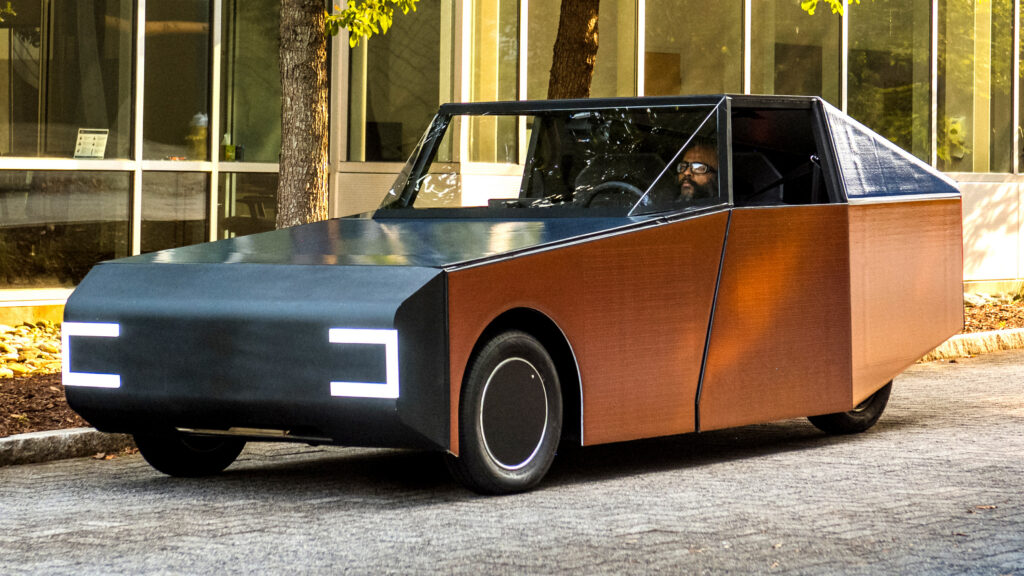
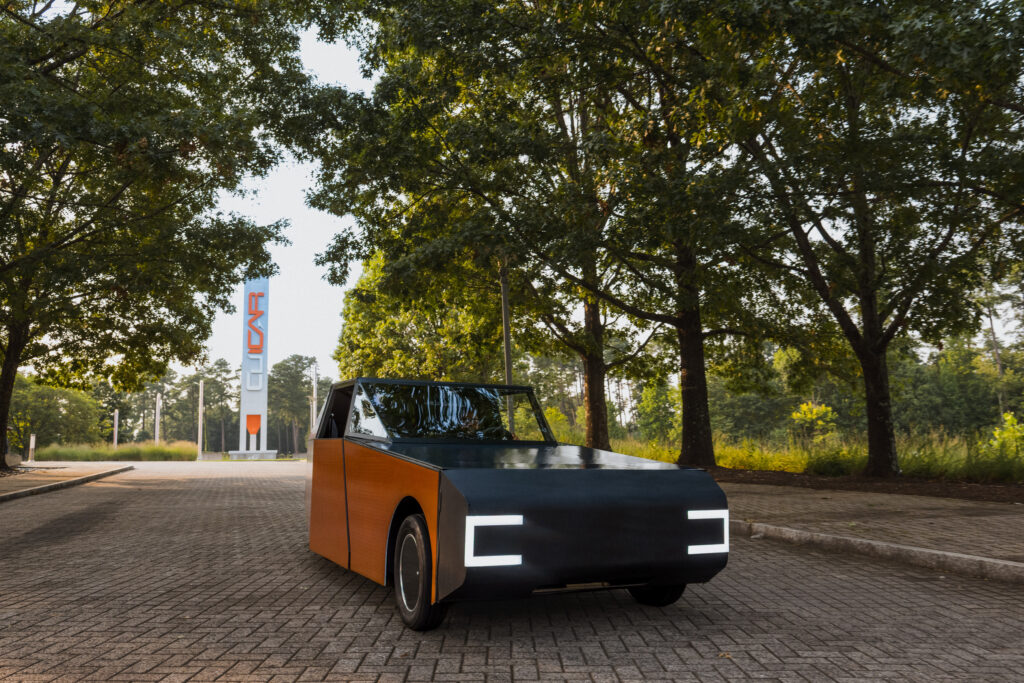
by Solar panels on an electric vehicle are usually one of those features that actually turns out to be far less useful than it sounds. The Deep Orange 17 project from Clemson University may change that perception. The team worked together with BMW to wrap more than 1,700 photovoltaic cells around a tiny electric coupe that looks like a homemade Cybertruck. According to them, the result is a car that gains more energy than it consumes during a regular day of city driving. But don’t get too excited—there are many nuances here.
What is Luminetta and who is it for
The prototype, developed by 16 graduate students together with BMW’s research team, is named Luminetta. The university says the car was designed for a daily commute of 12 miles (20 km). Of course, it’s unclear how many people have exactly such a route, but obviously it doesn’t fit most people. Nevertheless, the car is designed to absorb sunlight both while parked and while driving.
Technical solutions and extreme lightness
The main issue, of course, is that this is not exactly an ordinary car. In metal, it’s all flat angles and improvised panels. The Deep Orange 17 weighs only 1,212 lb (550 kg), which is about four times less than many production cars of similar size. Its multi-material structure combines steel, aluminum, carbon fiber and 3D-printed metal joints. Regenerative braking, torque distribution and optimized powertrain control algorithms—all aimed at one goal: to use as little energy as possible.
Testing in different climatic conditions
Together with partners from the Fraunhofer ISE Institute, Clemson researchers simulated solar radiation and weather conditions in four locations around the world: Greenville (South Carolina), Frankfurt (Germany), Madrid (Spain) and Mumbai (India). In these locations, according to the university, the solar system is capable of generating enough surplus electricity to add an average of 31 miles (50 km) of range every day. That’s a breakthrough achievement, despite all the other caveats.
Of course, many other innovations will be needed to apply such technologies to a modern production car. But this prototype proves: it is technically possible to get more energy than is consumed on very short… daily trips.
Photos: Clemson University / BMW
It is worth understanding that Deep Orange 17 is primarily a research platform, not a harbinger of an affordable production car. University projects of this kind exist to test bold ideas, and Luminetta does that job excellently. The main lesson to be learned is that solar energy, even at the current level of technology development, can be not just decoration but a real power source for low-mobility vehicles. If such solutions are combined with more efficient photovoltaic cells, lighter materials and smarter energy management, in the future we may see solar EVs that truly don’t need daily grid charging. There are many obstacles to overcome, but the first step has already been taken.