 by
by Subaru Introduced Two STI Concept Models
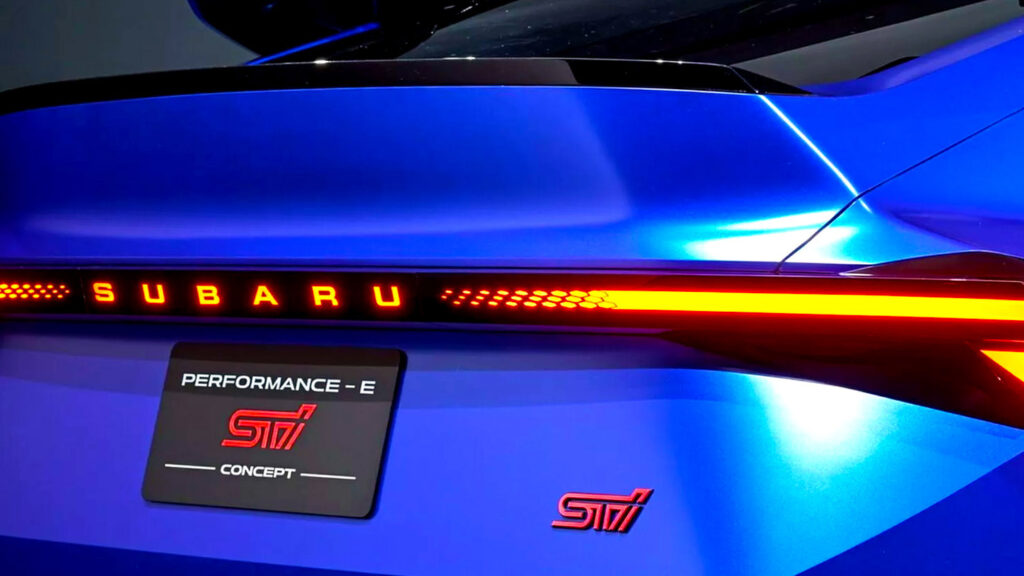
Subaru is not yet ready to finally choose between gasoline and electric directions for its line of sports cars. At the end of October, the company presented two stylish STI concepts: one with a battery and the other with an internal combustion engine. Each of them represents a different development path for the brand’s high-performance vehicle division.
Interestingly, despite the efforts and costs of developing these two new models, Subaru has not yet made a decision on which one to put into production. Instead, the company invites customers to express their opinion before making a choice.
Two Paths for the Future STI
The concepts, known as the Subaru Performance-E STI and Subaru Performance-B STI, explore what a future STI model might look like depending on which powertrain the manufacturer chooses.
Of this pair, the electric Performance-E STI concept made a stronger visual impression, built on a completely new platform not related to any current Subaru model. However, it was the internal combustion engine hatchback Performance-B, although based on an existing model, that caused the most excitement on forums and among fans.
The “Choice” Strategy and the Importance of Customer Opinion
During a recent conversation, Subaru Corporation’s General Manager of Products, Maasaki Kobayashi, emphasized that the company’s goal is to provide a “choice.”
That’s why we showed [two concepts] — one with an ICE, and the other with a battery. Of course, we are developing electric vehicles to achieve carbon neutrality, but on the other hand, there are customers who choose this car [Performance-B], so we want to provide them with such an option. That’s why we also created a car with an engine.
Kobayashi also made it clear that further steps would depend on public reaction.
We showed this to the public for the first time, so we probably want to know what customers think. Perhaps we will get feedback from customers and then consider [the issue of production versions].
Economic Aspects and the Future Decision
According to Kobayashi, Subaru is still working on business plans for one of the two models. Presumably, developing and producing the Performance-B would be cheaper since it is based on an existing model, unlike the Performance-E. Subaru could also easily adapt one of its current boxer engines for the Performance-B. In contrast, launching a fully electric STI would require finding a special high-performance battery and motor system, possibly from an external supplier.
Both paths have their advantages, and Subaru seems genuinely open to where consumer interest lies.
Subaru’s approach reflects the complex transitional period in the automotive industry, where manufacturers balance environmental commitments, technological challenges, and genuine buyer preferences. By asking for public opinion, the company not only collects valuable marketing data but also fosters a sense of shared participation, which could prove key to the success of whichever future model is chosen. This strategy also allows delaying the final decision while accumulating more information about market, technology, and regulatory developments.