
 by
by President Trump Threatens Canada with One Hundred Percent Tariffs
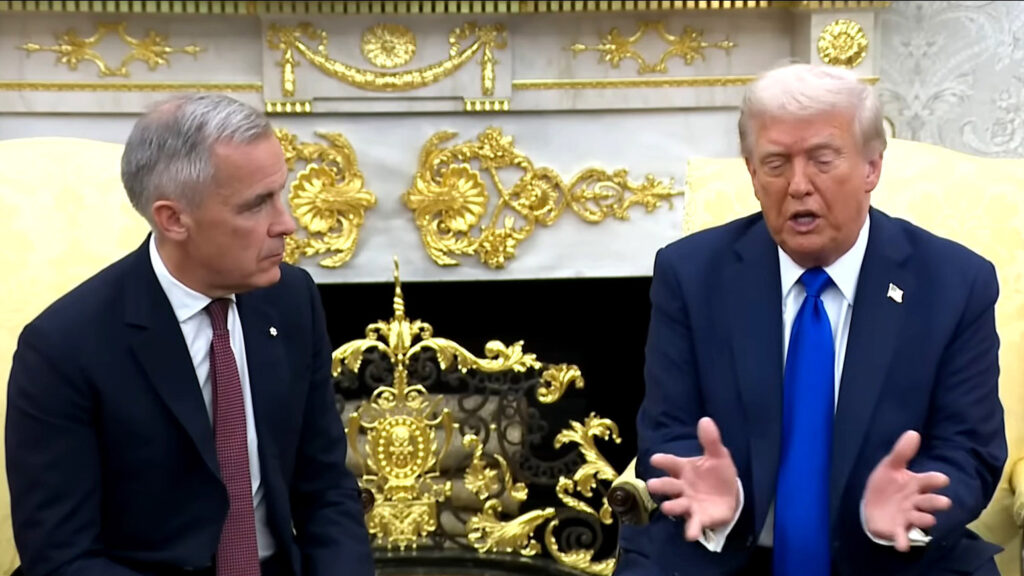
Having left behind tariff threats regarding Greenland, US President Donald Trump has found a new target, and this time it’s even closer – neighboring Canada. The reason was a recent trade agreement between Canada and China, which provoked a sharp reaction from the American leader.
Reaction to Canada’s Deal with China
Trump reacted sharply to the news of the deal, stating that “China will eat Canada alive, completely swallow it.” He also claimed that this deal would destroy Canadian business and their “entire way of life.” In response to the Canadian government’s actions, Trump threatens to impose one hundred percent tariffs on Canadian goods if the country implements the deal with China.
China will eat Canada alive, completely swallow it.
Trump is particularly concerned about the possibility that Canada could become a sort of “transit port” for Chinese goods, which would then enter the US market.
Changes in Canada’s Tariff Policy
In response, Canadian Prime Minister Mark Carney stated that this is not a free trade agreement with China, but merely a resolution of specific issues that have accumulated in recent years. However, the proposed changes are significant: in particular, it is planned to reduce the duty on Chinese electric vehicles from 100% to just 6.1%.
We buy Canadian and build Canadian.
Furthermore, Canada will allow the annual import of up to 49,000 Chinese electric vehicles, with a subsequent increase of this quota to approximately 70,000 units. In return, China will lower tariffs on Canadian exports such as pork, seafood, and canola oil.
Position of Automakers and Risks
The Canadian Vehicle Manufacturers’ Association spoke out against this step, stating that it “undermines the potential of the Canadian auto industry and poses risks to the future of the integrated North American supply chain.” It is worth noting that this association has only three members: Ford, General Motors, and Stellantis, which could lose a lot from competition with Chinese automobiles.
China’s Plans and Possible Consequences for the USA
Despite the risks to jobs, Prime Minister Carney stated that China will make “significant investments in the Canadian automotive sector” over three years, which may indicate plans by Chinese automakers to open plants in Canada.
Experts, including a professor from the University of Michigan, express concerns that American auto giants like Ford and GM could gradually turn into niche manufacturers, focusing exclusively on large pickups and SUVs popular in the USA. This could limit their presence on the global market.
Context of the Trade War
Some observers believe that Canada found itself in a difficult position due to strained trade relations with the USA, particularly because of the trade war started by the Trump administration and the upcoming complex review of the USMCA agreement. In search of alternatives and stability guarantees, Canada had to seek new partners, which led to a rapprochement with China. This situation demonstrates how geopolitical tensions between major economies can force allied countries to reconsider their strategic alliances and economic ties, which could have far-reaching consequences for global supply chains and markets, especially in such key sectors as automobile manufacturing.