 by
by Initial Plans and Reality
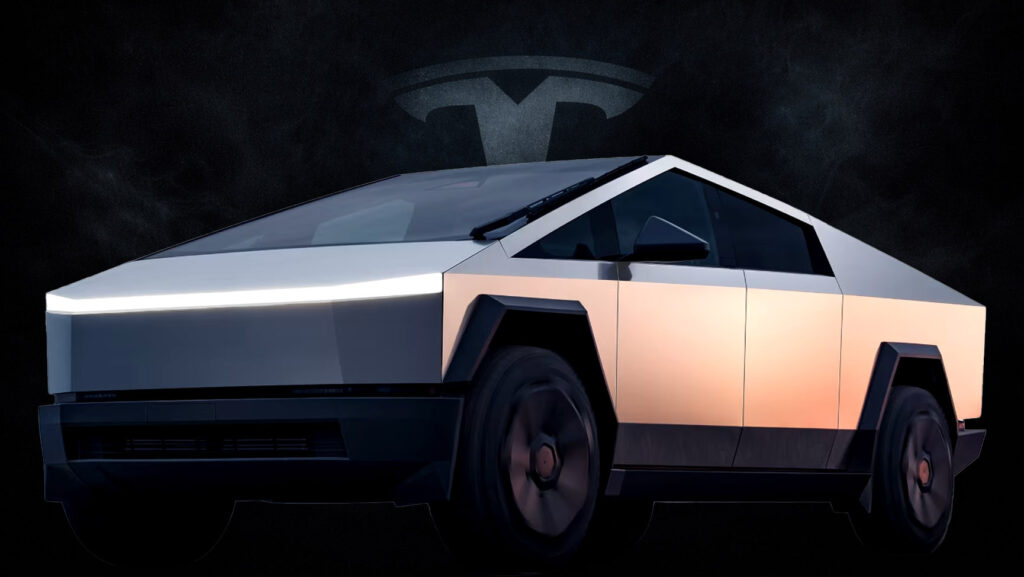
Several years ago, Elon Musk proudly stated that Tesla planned to sell up to 250,000 Cybertruck electric pickups annually. This vehicle was positioned as a revolutionary force capable of overturning the pickup truck market. However, reality turned out to be much more modest. This year, the company is expected to sell fewer than 20,000 Cybertrucks, which is less than 10 percent of the initial ambitious target.
Consequences for Suppliers
Although Elon Musk would never call the Cybertruck anything other than a resounding success, lower-than-expected sales are harming the company’s suppliers. One notable victim is the South Korean company L&F Co., a supplier of battery materials. It recently reported that its contract with Tesla was cut by 99 percent, partly due precisely to weak demand for the pickup.
Contract Reduced to a Minimum
Back in February 2023, L&F signed a major contract worth 3.83 trillion won (approximately $2.67 billion) to supply Tesla with high-nickel cathode material intended for Cybertruck batteries. However, this deal has now been reduced to a symbolic 9.73 billion won, or about $6,776 at the current exchange rate.

The initial contract was tied to Tesla’s 4680 battery cells, introduced in 2020. At the time, the company presented them as a major breakthrough, key to plans for rapid production scaling and the future launch of a $25,000 electric vehicle. That model still hasn’t appeared, and the 4680 cells are currently used primarily in the Cybertruck.
According to an unnamed source familiar with the contract terms, L&F only needed to supply small volumes of materials because the Cybertruck’s development was repeatedly delayed.
It is also reported that the contract was influenced by political and economic factors, including the cancellation of subsidies under the Inflation Reduction Act.
Help from SpaceX?
While Tesla continues to face weak Cybertruck sales, a familiar buyer has appeared on the scene. According to a recent report, SpaceX has already purchased over 1,000 Cybertrucks from Tesla, and this number may later rise to 2,000.
SpaceX has not stated why it needs so many Cybertrucks, but it is likely more related to excess inventory than an actual necessity.
In any case, this move shows how closely Musk’s companies interact and hints that Tesla may be offloading inventory through its own “back door.”

This contract situation clearly demonstrates the risks associated with excessive optimism at the planning stage and dependence on a single key product. The sharp drop in supply volumes for L&F is just one example of how market failures can have a cascading effect on the entire supply chain. Inter-company purchases among Musk’s firms may, on one hand, be a temporary solution for reducing inventory, but on the other hand, they raise questions about transparency and the real commercial demand for the product. The future of the Cybertruck will likely depend not only on marketing but also on adapting to real market needs and possible price policy adjustments.