 by
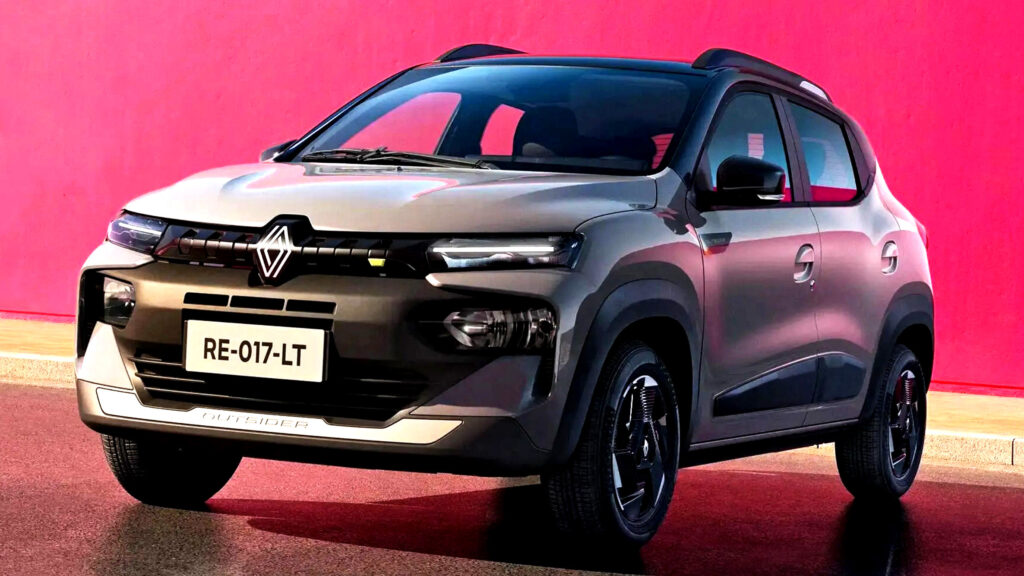
by Renault has carried out a comprehensive update of the Kwid for South America, redesigning its smallest hatchback and filling the interior with additional screens. The gasoline “relative” of the Dacia Spring electric car looks modern and is better equipped inside, although the manufacturer decided not to touch the technical components at all.
Despite the welcome changes, the most striking thing is how much the price of the same basic car differs across two markets. The Brazilian Kwid starts at R$ 82,790 ($16,000), more than three times the cost of the Indian version — Rs 4.53 lakh ($4,700).
A second chance at a new life
This update is already the second major transformation for the Kwid since the model appeared in 2016. The main highlight is the redesigned front bumper with a generous amount of plastic cladding. The split headlights remain in place, but new air intakes, a much narrower radiator grille and an updated skid plate bring the Kwid’s look closer to the French brand’s current design language.
Renault
The profile and rear body section have hardly changed, except that the taillights have received a new graphic and a shark-fin antenna has appeared on the roof. The top Outsider trim features roof rails, additional cladding along the sides and 14-inch alloy wheels with a two-tone finish.
Larger screens — but not on the cheap version
Inside, the South American model has received a much more serious update than the light facelift of the Indian version of the Kwid, which took place earlier this year. The dashboard now has a 10.1-inch touchscreen paired with a 7-inch digital instrument cluster. The air vents have moved to new positions, and the steering wheel bears a fresh Renault emblem.
There is one catch: the base Kwid Evolution trim has a plastic blanking plate instead of a display and lacks the color accents available on the mid-level Techno trim and the top-of-the-line Outsider.
Familiar hardware
Under the body, the Brazilian Renault Kwid retains the rather aged CMF-A platform. This architecture was created back in 2015 and is also used by the Chinese Dacia Spring and Dongfeng EV Nano Box, as well as the Indian Nissan Magnite and Renault Kiger/Triber.
The city hatchback is still powered by a naturally aspirated 1.0-liter three-cylinder engine capable of running on flexible fuel. The power unit produces 68 hp (51 kW) on gasoline and 71 hp (53 kW) on ethanol. Torque is sent to the front wheels exclusively through a five-speed manual gearbox.
Price dilemma
The Brazilian version of the Renault Kwid is produced at the Ayrton Senna Complex plant in Brazil. Prices start at R$ 82,790 ($16,000) for the entry Evolution trim and reach R$ 91,890 ($17,800) for the top Outsider. The Indian model, which received milder updates earlier this year, costs from Rs 4.53 lakh ($4,700) to Rs 5.61 lakh ($5,900) thanks to local production in Chennai.
Such a huge price difference is explained not only by localized assembly, but also by differences in economic and tax conditions. Brazil applies high import duties on components and strict vehicle safety requirements, while India actively stimulates the production of affordable cars domestically. In addition, in the Brazilian market the Kwid competes with other budget crossovers and hatchbacks, so Renault positions it as a more premium product compared to the Indian market. This situation once again demonstrates how the same car can differ dramatically in price and perception depending on the region of sale, and how manufacturers adapt model positioning to local demand and purchasing power realities.