 by
by The Problem with Emergency Door Release in Rivian
While Tesla receives the most criticism for its hard-to-access mechanical door handles, which can be problematic in an emergency, it is not the only company that does not pay enough attention to intuitive mechanical opening, especially for passengers in the rear seats. This issue is not just about convenience; it can become critical when every second counts.
Similar to Tesla, Rivian has also hidden the mechanical releases behind the door’s plastic trim, forcing owners to seek their own solutions.
Shortly after publications about how Tesla owners add various accessories and modifications to ensure easy exit in case of an accident or fire, a post by a Rivian owner appeared on Reddit, who did something similar. It’s not the most elegant solution, but if it can save a life, who will pay attention to its appearance?
The Hard-to-Reach Mechanical Release
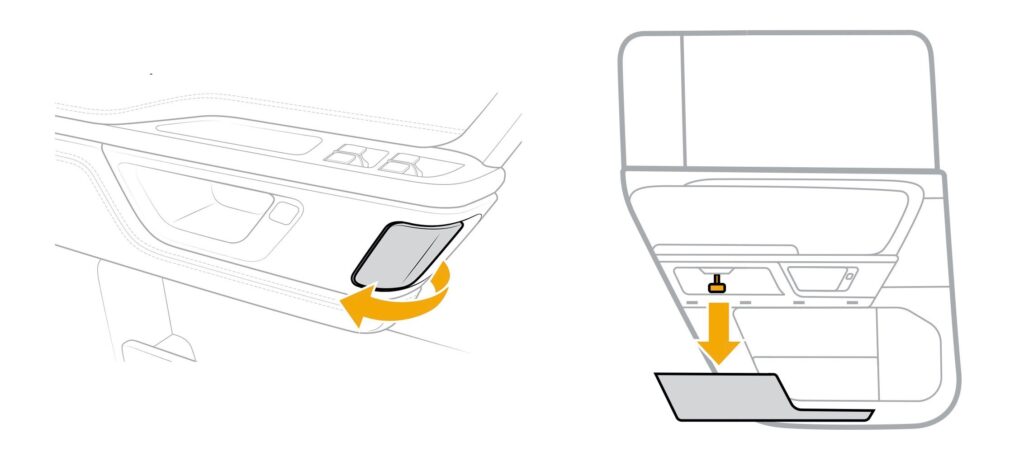
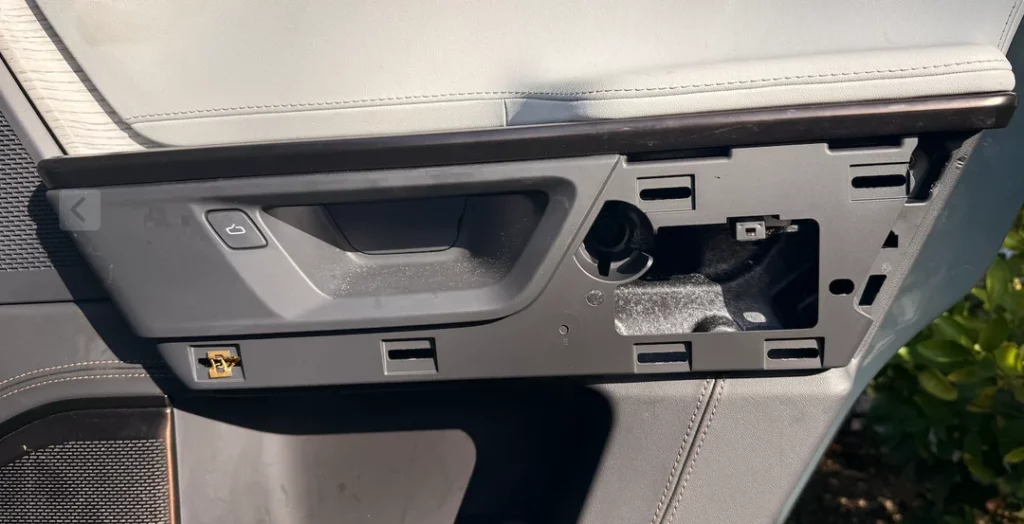
In the current second-generation Rivian R1S and R1T models, an easily accessible mechanical door handle is located in the front, as in modern Tesla models. In the rear seats, it’s more complicated. Passengers first need to remove a piece of plastic trim on the door panel and then pull the release cable.
Even worse, according to this owner, removing the plastic trim requires significant effort, necessitating the use of a pry tool. In an emergency, it’s unlikely a child could open the door.
How Are Owners Solving the Problem?
To bypass this issue, this owner tied a piece of red paracord to the release cable and routed it under the plastic trim piece that needs to be removed. Now the cord hangs from the door panel and is within reach if the electric doors fail to open after an accident.
Company Reaction and Future Models
In early October, Rivian confirmed that it will redesign the door handles in the future R2 model, positioning the mechanical release closer to the electric one. While this is good news for those planning to buy an R2, it does nothing for the tens of thousands of people who already own and drive an R1T or R1S.
This situation points to a broader problem in the automotive industry, where innovation and minimalist design sometimes conflict with basic safety and usability requirements. While manufacturers strive to create clean, modern interiors, it is critically important to ensure that basic safety features remain accessible to all passengers, regardless of age or circumstances. The Rivian story shows that even in high-tech vehicles, sometimes the simplest mechanical solutions—or owner improvisations—can be crucial. It also raises questions about manufacturers’ responsibility to update the designs of existing models when potential safety flaws are identified.