 by
by Lawsuit Against Tesla Over FSD System
Tesla’s Full Self-Driving (Supervised) system provides thousands of owners in the US with access to advanced semi-autonomous capabilities. This technology remains one of the most prominent in the automotive industry. However, despite its potential, the system is far from perfect, and, according to a recently filed lawsuit, it can also be dangerous.
The lawsuit, filed in Harris County court in Houston, Texas, alleges that Tesla Cybertruck owner Justine Saint Amour was using the FSD system in August of last year while driving on Highway 69 Eastex Freeway. As the electric pickup approached a Y-shaped interchange near the Houston Metro 256 Eastex Park & Ride station, the vehicle’s onboard systems were supposed to follow the highway’s right curve.
Alleged FSD Navigation Error
Instead, the lawsuit claims, the Tesla attempted to continue straight toward a concrete barrier. The driver reportedly took over control just before impact but failed to avoid the obstacle, and the Cybertruck crashed head-on into the barrier.
The driver claims the system targeted the concrete divider head-on.
As a result of the impact, the woman was reportedly diagnosed with two lumbar disc herniations, a cervical disc herniation, a wrist tendon sprain, and neuropathy. According to the Chron, dashcam footage captured the crash, showing the Cybertruck attempting to navigate the curve at the interchange but ultimately crashing into the barriers.
Criticism of the Camera-Only System
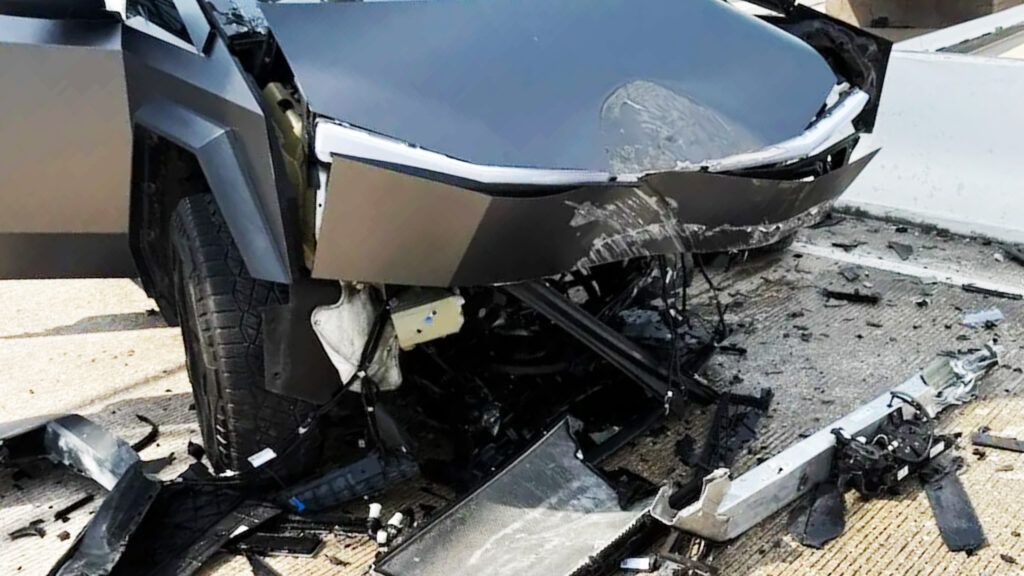
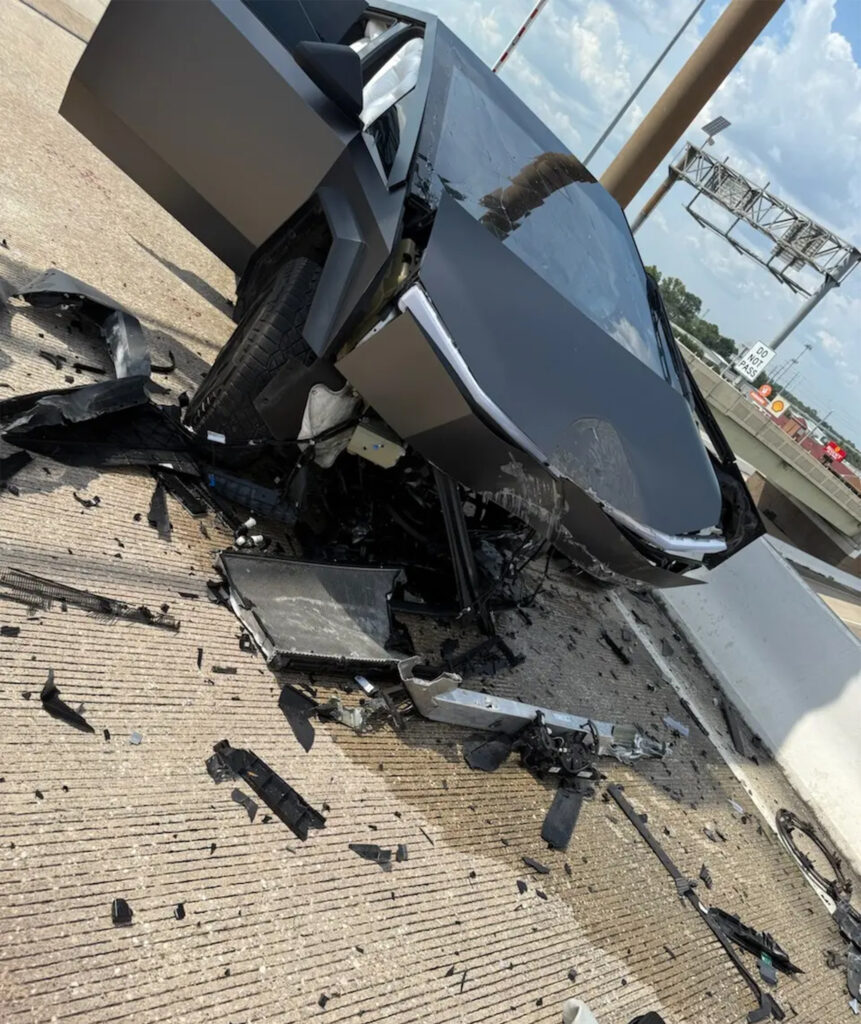
A photo taken after the accident shows that the front of the black Cybertruck sustained serious damage, with the front bumper shattered into pieces scattered across the road.
The lawsuit also alleges that Tesla’s decision to rely exclusively on a camera-based system for its self-driving technology, instead of integrating radar or lidar sensors, contributed to the crash. It also states that Elon Musk is an “aggressive and irresponsible salesman” with a history of “dangerous design choices.”
Tesla’s decisions made Justine’s crash inevitable, Saint Amour’s attorney Bob Hilliard told Chron. This company wants drivers to believe the lies and trust it with their lives: that the car can drive itself and that it can do so safely. It cannot and does not.
The lawsuit accuses Tesla of negligence and seeks over $1 million in damages.
This incident once again raises questions about the actual readiness level of semi-autonomous systems for mass use in real-world conditions. Technologies promising a transportation revolution are undergoing a complex testing path, where every accident becomes an important lesson not only for the manufacturer but also for regulators and society as a whole. Safety remains an absolute priority, and similar court cases could significantly influence the standards and approaches to certifying such systems in the future.