 by
by A New Approach to Pickups
While most automakers offer off-road versions of their mid-size pickups, Volkswagen has chosen a different path. The new Amarok W600, developed for the Australian market in collaboration with the local engineering firm Walkinshaw Performance, focuses on road handling and sporty character, rather than the ability to tackle difficult off-road terrain.
The new Amarok W600, developed for the Australian market in collaboration with the local engineering firm Walkinshaw Performance, focuses on road handling and sporty character.
The W600 continues the line of the previous generation W580, receiving a number of updates to the exterior and chassis. The model was first announced in November 2024 and has now been officially revealed. Sales are expected to begin between July and September 2026.
Exterior Changes and Equipment
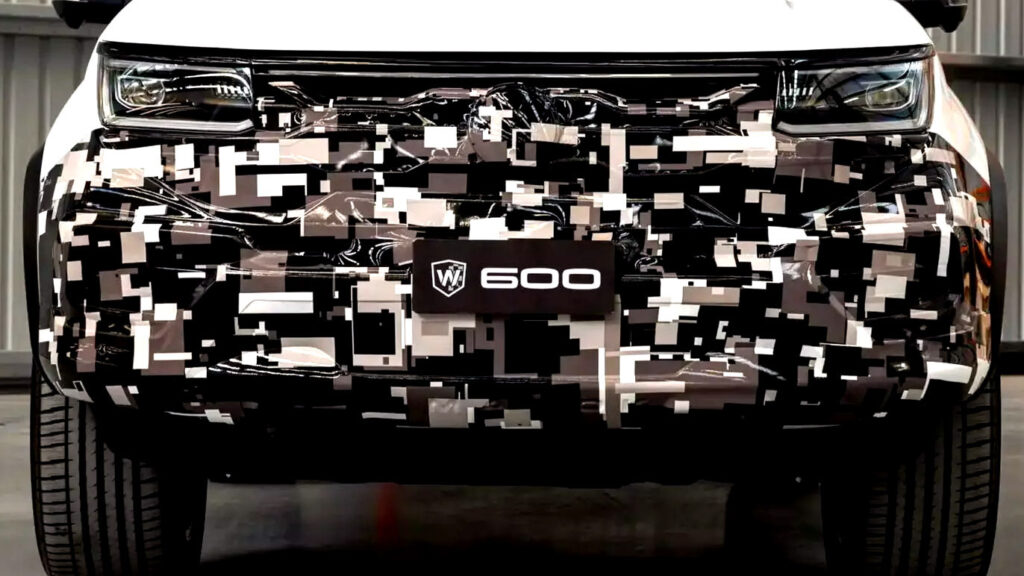
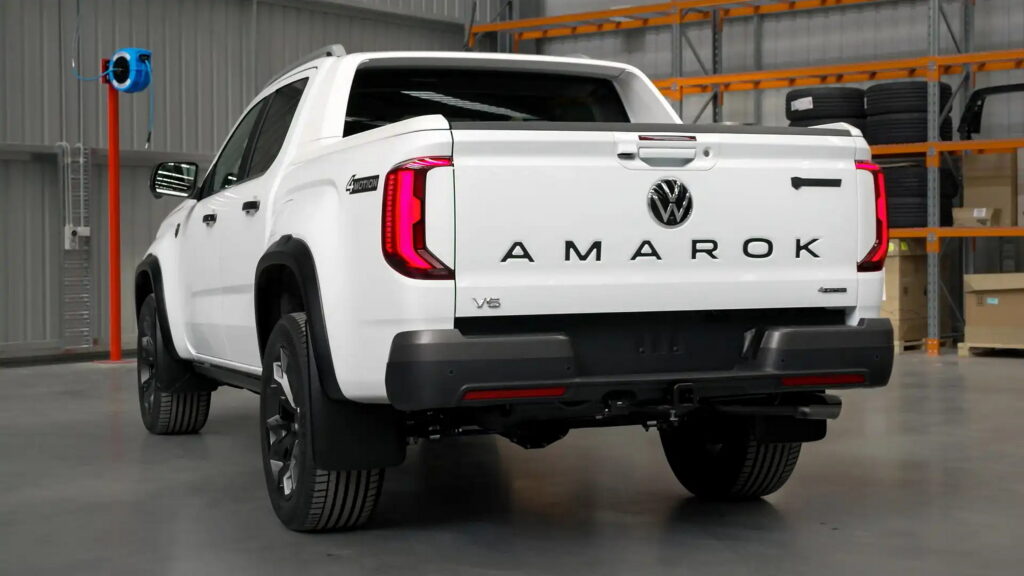
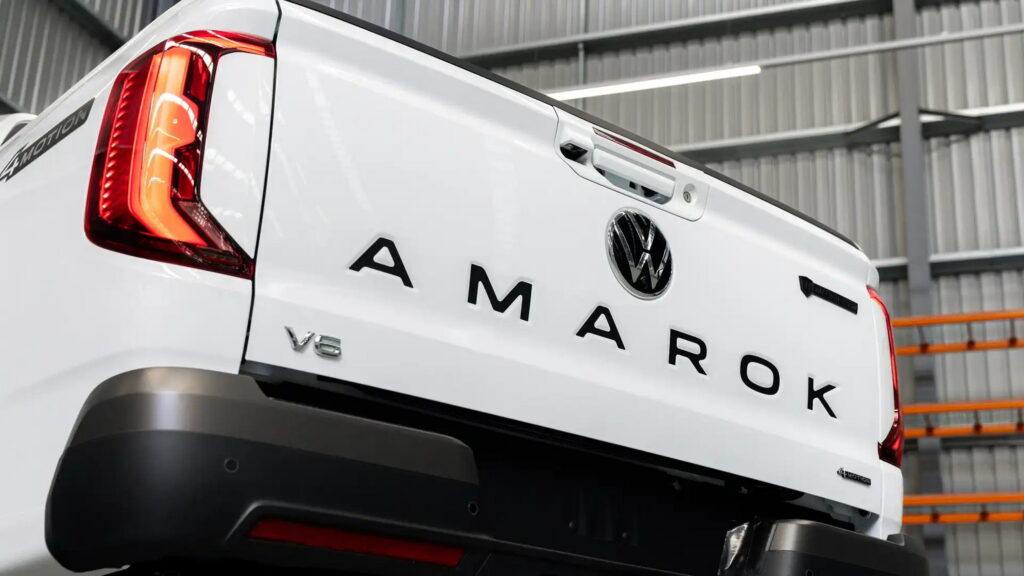
The preview reveals almost all details about the more powerful version of the Amarok, although the completely redesigned front end remains camouflaged. Besides the camouflaged bumper and radiator grille, key visual changes include 20-inch alloy wheels with high-performance Michelin tires, widened wheel arches for a wider track, a sport bar painted in body color, and unique model badges.
Other features are also worth noting. Electrically retractable side steps add theatricality and practicality, and dual exhaust tips hint at a more vibrant exhaust sound. Inside, the Walkinshaw brand appears on headrests, floor mats, and a footrest, along with a set of aluminum pedals that emphasize the tuned character of the pickup.
The Heart of the Changes: New Suspension
Perhaps the most important change lies under the body. The W600 receives a special suspension system developed with the involvement of Koni, including a new stabilizer bar. The new hardware, painted blue for easy recognition, is tuned for more precise handling and a smoother ride, without compromising the Amarok’s frame or its basic off-road capabilities.
The Powertrain Remains Unchanged
Despite the chassis updates, there are no modifications under the hood. The W600 retains the standard 3.0-liter turbo-diesel V6 engine producing 247 hp and 600 Nm of torque. It is a powerful unit, but it significantly lags behind the bi-turbo 3.0-liter gasoline V6 used in the related Ford Ranger Raptor, which in Australian versions delivers up to 392 hp.
Head of VW Commercial Australia Nathan Johnson confirmed that the more powerful V6 engine from the Raptor is simply “not available” for use in the Amarok.
He also noted that the 2.3-liter turbo-petrol and 2.0-liter bi-turbo diesel engines were considered, but the decision was ultimately made based on customer preferences and available data, which favored the diesel V6.
Future for Off-Road Enthusiasts
If the sport-tuned Amarok is not for you, and last year’s Desert Edition with a four-cylinder engine didn’t catch your attention, perhaps it’s worth waiting. Michael Chancy, Amarok product manager in Australia, stated that a more off-road-oriented version is not ruled out. He emphasized that the W600 is the current priority, but an off-road derivative is “never off the table.” A future Amarok W600X could eventually replace the now-discontinued W580X, likely bringing a tougher design and increased ground clearance to the new generation.
The only problem is that Walkinshaw’s special versions are available only to customers in Australia and New Zealand. The rest of the world can rely on tuners like Delta 4×4, which equip the VW pickup with wide arches, a lift kit, and new wheels shod with off-road tires.
The appearance of the Amarok W600 clearly demonstrates Volkswagen’s niche strategy in the pickup market, where instead of versatility, a bet is placed on specific, clearly defined qualities. The choice of road handling for a market traditionally dominated by off-road vehicles is a bold step. This may indicate a shift in priorities for a segment of buyers who value comfort and dynamics on asphalt without giving up the utility of a pickup. The success of this model could set a trend for other manufacturers, forcing them to diversify their off-road lineups, offering not only “capability” but also “speed.”