 by
by Several key facts from the study:
The Future of the Luxury Car Market
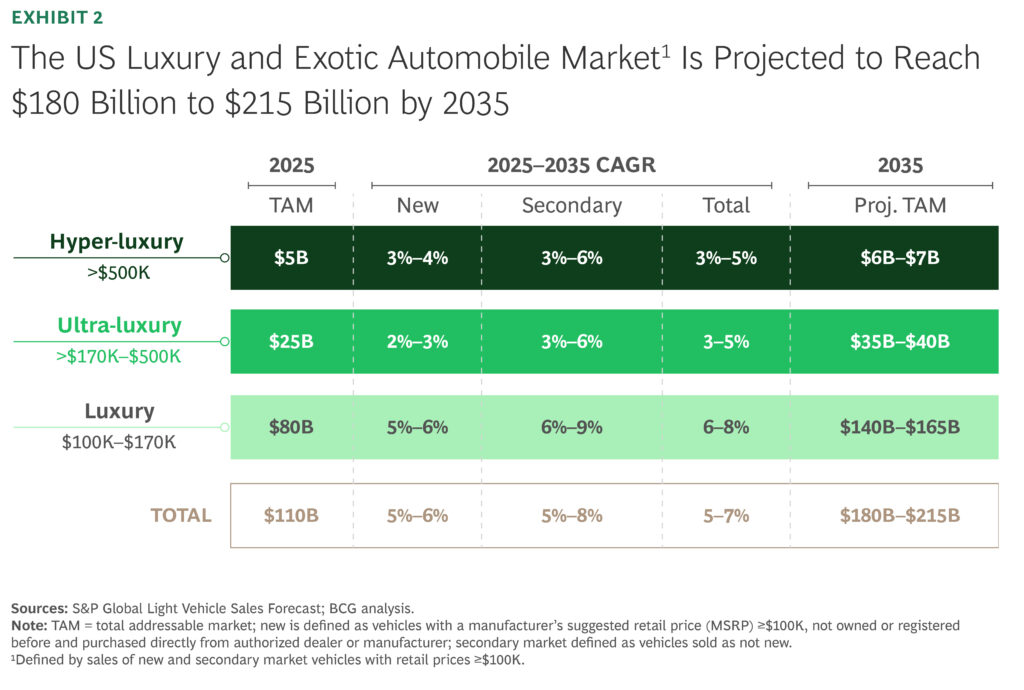
If you’ve ever wondered why there are so many expensive cars on American roads compared to the previous generation, and how people can even afford them, it seems this trend is only gaining momentum. A new in-depth study of the US luxury and exotic car world claims that the expensive car market, currently valued at approximately $110 billion, could grow to $180–215 billion by 2035, depending on demand trends and availability.
A study by Boston Consulting Group (BCG) and duPont Registry Group predicts the strongest sales growth for new and used cars in the price range of $100,000 to $170,000, where annual growth could be 6–8 percent.
Ultra-luxury and hyper-luxury cars above this threshold ($170,000+) will also grow, but significantly slower, perhaps because even the wealthiest Americans can only buy a limited number of such cars before they run out of garage space.
The Used Car Market Boom

The biggest boom is expected precisely in the used car market. Thanks to high residual value and the fact that luxury cars age differently than ordinary ones, used exotic models are expected to grow up to one and a half times faster than new ones over the next decade.
In particular, sales of used luxury and exotic cars are forecast to grow by approximately 5–8 percent annually, compared to 5–6 percent for new cars.
Buyers who may hesitate due to rising prices of new luxury cars are happy to consider the option of lightly used models. The report notes that such cars often change owners, as their appeal hardly diminishes with age.
The New Generation of Buyers

The explosion in popularity of luxury cars is also fueled by a new generation of buyers who behave completely differently from traditional ones. Representatives of the Millennial and Gen Z generations constantly browse listings, compare more brands, and are significantly less loyal to familiar, long-established market players.
In fact, about 80 percent of luxury car buyers state that they search for cars online weekly or even daily, often without any immediate purchase plan.
They are also much more open to digital purchasing: three-quarters of all luxury car buyers state they would consider the possibility of completing their next purchase entirely online. For dealers, this is both exciting and a bit frightening.
Market Resilience for the Affluent
Despite rising interest rates, inflation, and tariff concerns, the study reveals that the premium segment market is extremely resilient. Even the wave of electric vehicles is not expected to change the situation, although younger buyers show greater interest in electric luxury than older ones.
For all age groups, emotions play a central role: approximately every third buyer cites an emotional connection with the brand or design as the main reason for choosing their car.
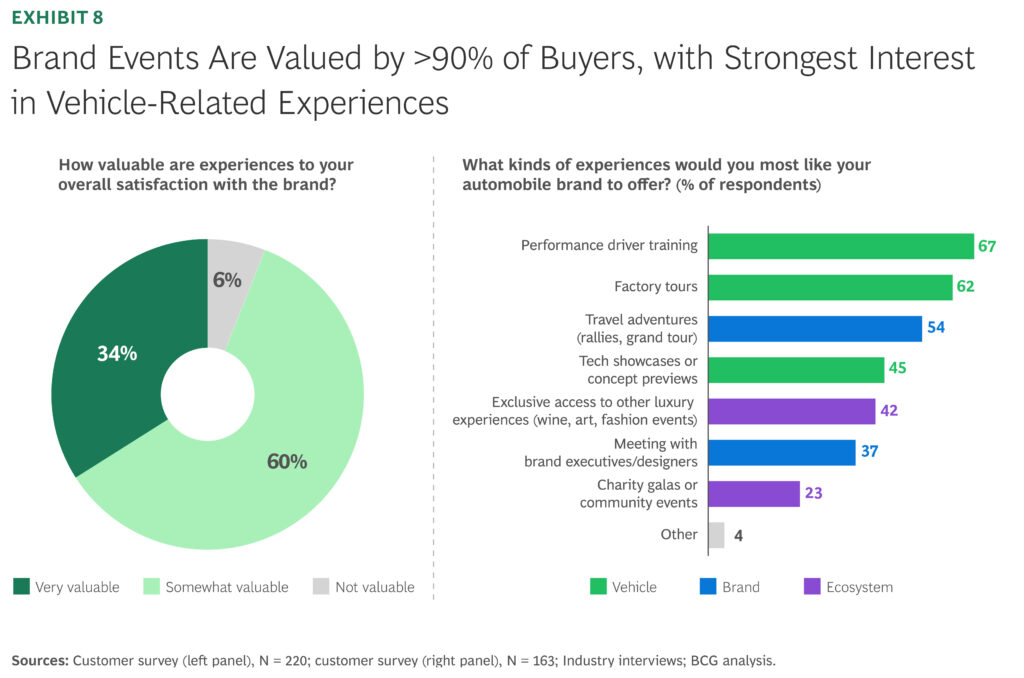
Although the ownership experience itself now carries almost as much weight as the car, the thrill of driving remains a central factor in why people spend large sums on these machines. In fact, over 90 percent of buyers state that events and driving programs organized by brands increase ownership satisfaction.
Accessibility for a Broader Audience
The idea of spending a six-figure sum on a car remains a dream for many Americans trying to find $30,000 for a new car. However, if the forecasts hold true, the next decade will bring more exotic cars to American roads than ever before.
And these cars will eventually become cheap enough for the rest of us with ordinary budgets to join this game. At least, we’d like to believe that.
The predicted doubling of the luxury car market by 2035 points to deeper socio-economic shifts. The growth in the share of used cars indicates the formation of a new level of accessibility for premium products, where a status car becomes attainable not only for the super-rich but also for the affluent upper-middle class a few years after release. The activity of the younger generation, which does not bind itself with loyalty to a single brand, forces manufacturers to constantly innovate not only in technology but also in communication and sales methods. This dynamic could lead to the very concept of “luxury” in the automotive industry transitioning from purely material attributes to a curated experience and digital integration, where the purchase itself becomes part of the entertainment.