 by
by Updated design and technology
The compact and affordable Honda City sedan has received a significant update in India. Despite the mechanical part remaining unchanged, the exterior appearance and technological equipment have been substantially improved.
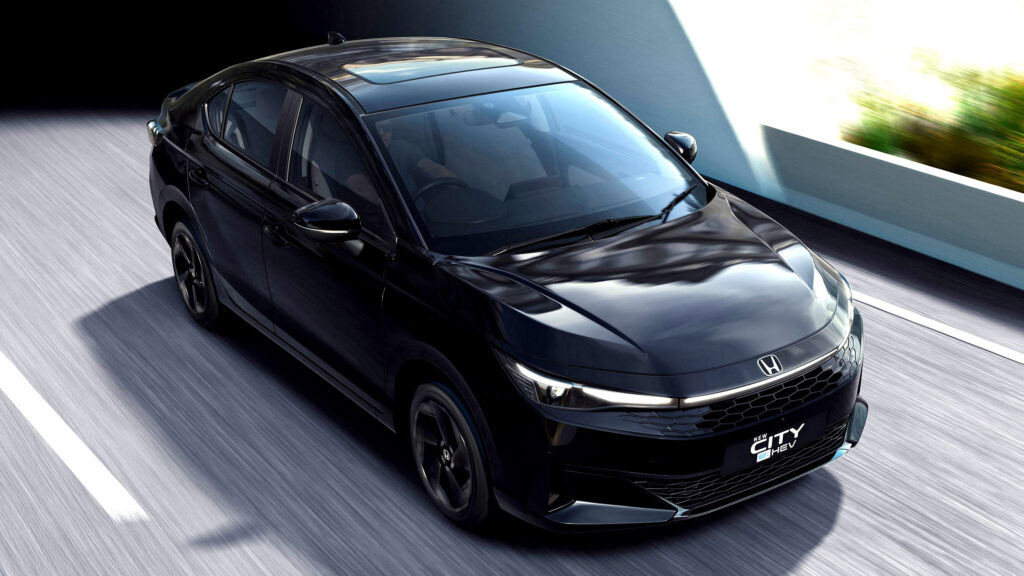
The most noticeable change is the front of the car, which borrows features from the older Accord and Civic models. The updated City gets narrower and more aggressive headlights, connected by an LED strip above the honeycomb grille. The chrome bar is gone, and the Honda emblem has moved lower, directly onto the grille.
Other exterior changes include more angular air intakes in the front bumper, rear taillights with clear glass and updated LED graphics, as well as a redesigned rear bumper with a diffuser. Honda has also added a new Crystal Black Pearl color and new 16-inch diamond-cut alloy wheels.
Interior and equipment
Inside, the sedan gets a larger 10.1-inch infotainment display, replacing the 8-inch unit of the previous model. The dashboard architecture around it remains unchanged, so the new screen looks somewhat out of place.
Notable additions to the equipment include ventilated front seats and a 360-degree surround-view camera. Top trims also get a sunroof, ambient lighting, wireless charging, an eight-speaker audio system, Ivory leather upholstery, and a Level 2 ADAS system.
Powertrains
Under the hood, nothing has changed. The car is offered with gasoline and hybrid engines. The naturally aspirated 1.5-liter four-cylinder i-VTEC produces 119 hp (89 kW) and is paired with a six-speed manual or a CVT with paddle shifters. The more efficient e:HEV hybrid develops a combined 125 hp (93 kW) and is exclusively paired with an e-CVT.
Prices and competitors
The updated Honda City retains a starting price of 11,99,900 Indian rupees (about $12,500) for the base SV trim with a gasoline engine and manual transmission. At the other end of the range, the top ZX+ Hybrid version costs 21.00 lakh rupees ($22,000).
This is the second update for the fifth-generation City, which has been on sale since 2019. Honda is banking on these changes to maintain its position in the fight against the popular Hyundai Verna, Skoda Slavia, and VW Virtus.
The Honda City update shows that manufacturers still see potential in the affordable sedan segment in developing markets. Instead of completely redesigning the model, the company focused on the aspects most noticeable to the buyer: design and technology. This allows the car to be refreshed without significant development costs, while maintaining an attractive starting price. At the same time, the lack of changes in the powertrain lineup could be both an advantage (proven units) and a drawback (lack of progress in efficiency). It remains to be seen whether these updates will be enough to outpace competitors that are actively offering new models and technologies.