 by
by Hyundai enlists robot dogs for security during the 2026 FIFA World Cup
When most people think of security at major sporting events, they likely imagine guards, cameras, and perhaps a few highly trained dogs sniffing out danger. However, at the 2026 FIFA World Cup, part of those four-legged duties will be carried out by robots. Sorry, Fido. It looks like the future has arrived, and it’s much more obedient and doesn’t beg for treats.
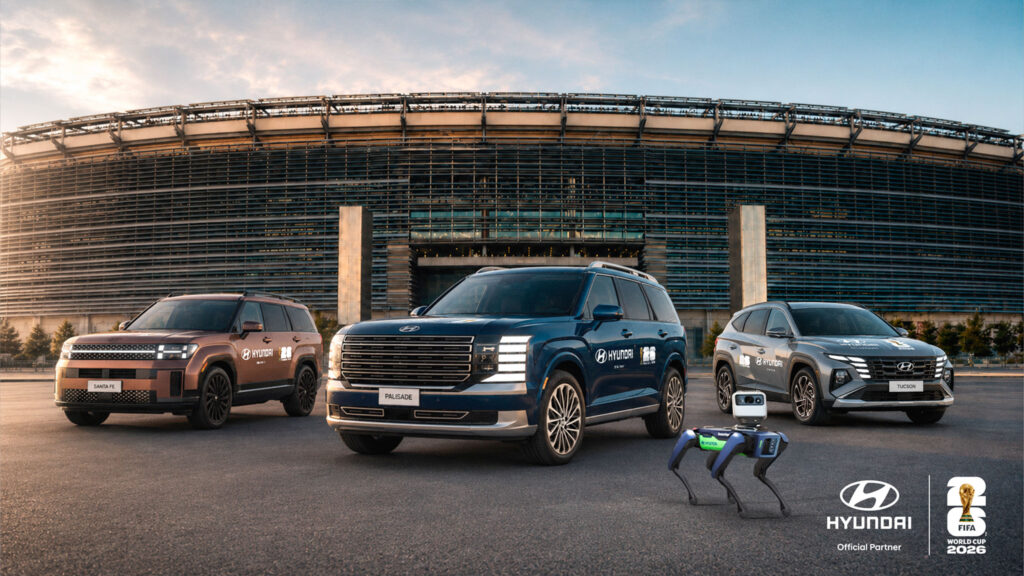
Hyundai has announced its largest-ever deployment for the World Cup through a long-term partnership with FIFA. While the headline numbers include nearly 1,500 cars and buses, the most unusual part of the plan is four specialized Spot robots from Hyundai’s subsidiary, Boston Dynamics, which will assist in security at tournament venues.
The robot dogs will be stationed at the International Broadcast Center in Dallas and at the New York-New Jersey Stadium. Their duties include autonomous patrolling, area monitoring, and inspection work, effectively acting as tireless security assistants that never need breaks, belly rubs, or cleanup.
Showcasing robotics ambitions
Of course, the robots aren’t there just because someone at Hyundai watched too much science fiction. This is an obvious real-world demonstration of the company’s robotics ambitions after it became FIFA’s official robotics partner. Hyundai has been using such dogs to patrol its own factories for several years, but high-profile events filled with people and TV cameras are precisely the kind of environment where companies can show the world how their autonomous systems can enhance efficiency and safety.
Cars, SUVs, and buses
While the robot dogs are exciting, Hyundai’s main task remains transportation. The automaker will deploy a fleet of 994 passenger vehicles and 506 buses across 16 host cities in the USA, Canada, and Mexico.
These vehicles will be responsible for transporting national teams, tournament officials, media representatives, and operational staff. The passenger vehicle lineup covers nearly every corner of Hyundai’s portfolio, including the Palisade, Santa Fe, Tucson, Santa Cruz, Kona, Sonata, Elantra, Creta, Creta Grand, and Genesis GV80. Some of them are hybrids.
The cars and buses will likely work much harder than the robots, but let’s be honest—when people look back on this World Cup partnership, there’s a good chance they’ll remember the robot dogs patrolling the stadiums far longer than which crossover carried officials from the airport.
This partnership between Hyundai and FIFA is a vivid example of how large corporations use global events to showcase their technological achievements. The Spot robots, initially developed for industrial needs, now get the opportunity to work in public spaces, which could be an important step toward their broader adoption in security and monitoring. At the same time, the large-scale deployment of the transport fleet underscores Hyundai’s logistical capability as a global player, able to provide mobility for one of the biggest sporting events in the world.