 by
by Kia Tasman “Correction Kit”: Did it manage to get rid of the “Sid from Ice Age face”?
Sales of the Kia Tasman pickup truck in Australia did not meet the manufacturer’s expectations. This forced the company to resort to sharp price cuts to regain buyer interest amid fierce competition. Since reviews of the technical specifications are mostly positive, the main reason for the lukewarm reception is considered to be the vehicle’s controversial design.
The author of the article, having an engineering background, decided to create his own “correction kit” for the Tasman. The goal of the project is to make the mid-size pickup truck more visually appealing without resorting to changing expensive stamped metal body panels.
Main Changes: Headlights and Fender “Brows”
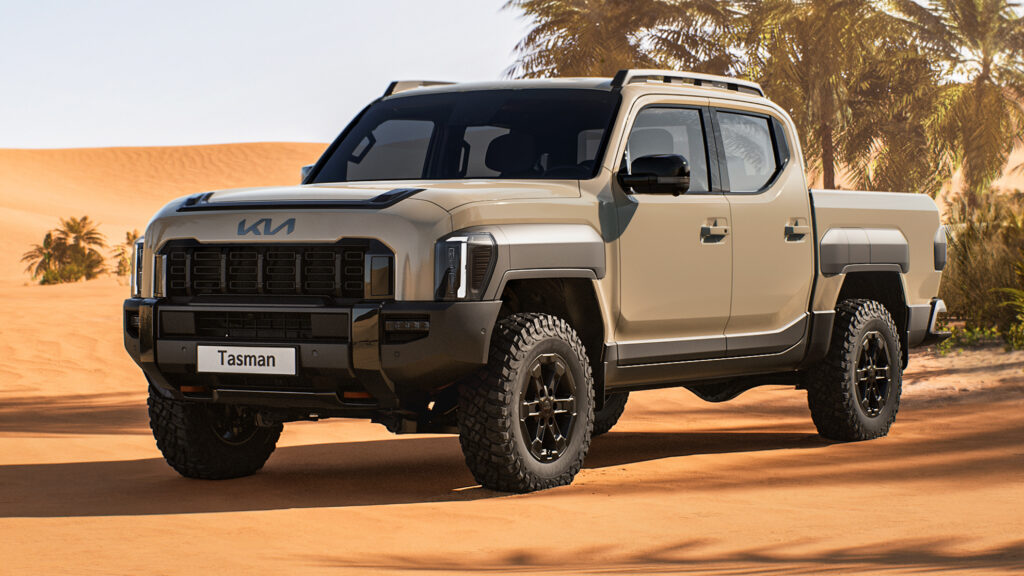
Attention was focused on two elements that are most often criticized: the horizontal “brows” above the wheels and the awkward headlights, which, according to many, make the car resemble the character Sid from the animated film “Ice Age.”
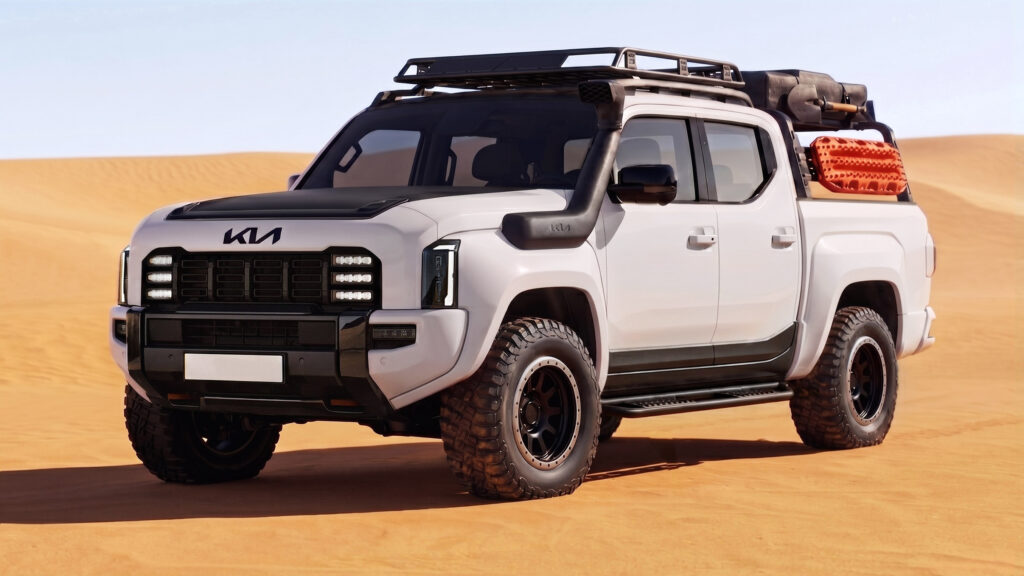
The first step was to install body-color fender covers. They cover both the original fender flares and the side part of the headlights, which, in the author’s opinion, has no practical function. The Kia Weekender concept had a similar idea, but here a more rounded shape was chosen, which better blends with the body.
New Lighting Signature and Grille
The semi-hidden headlights already made the pickup look smarter, but it lacked a more aggressive lighting pattern. Borrowing an idea from a member of the Australian Kia Tasman Facebook group, the author redesigned the grille by adding three horizontal LED strips on each side, echoing the pattern of the factory grille.
Front and Rear Details
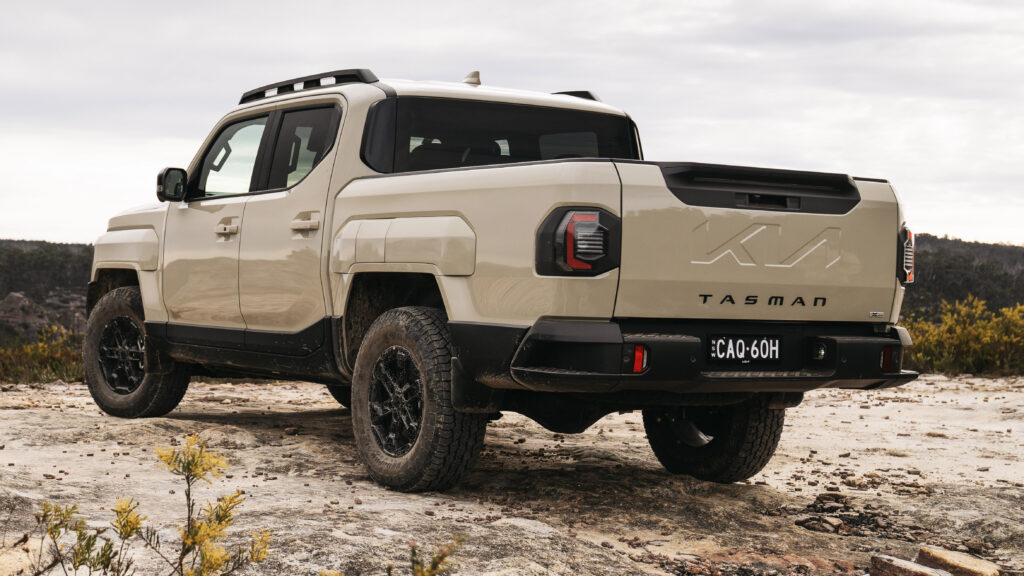
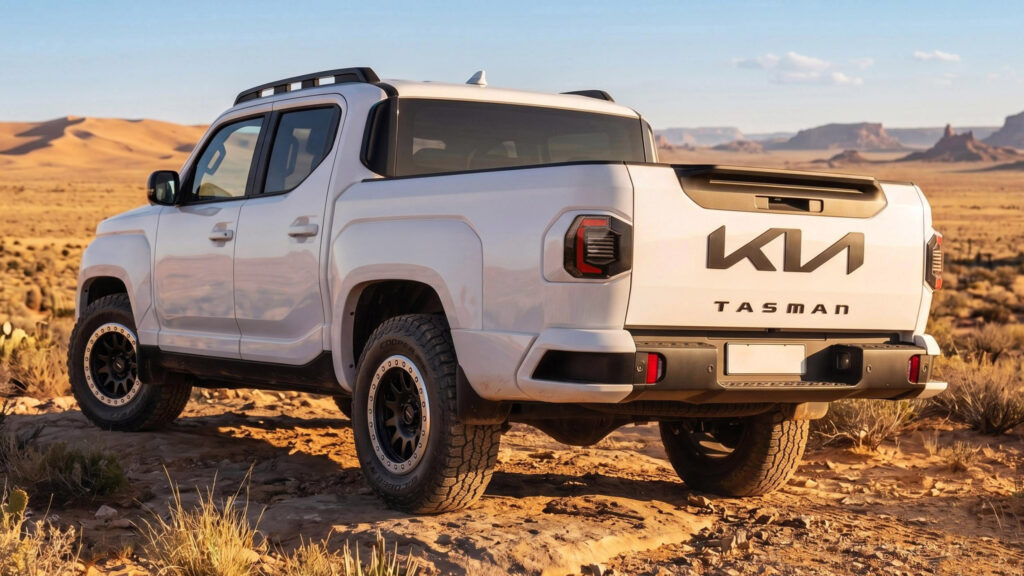
The next stage was applying body-color coating to the outer sections of the front bumper and matte black graphics to the hood. This solution serves two functions: it hides the awkward “horned” trim on the nose and visually extends the black protective plate and the modified grille.
At the rear, changes were limited to painting the taillight trim and the outer parts of the rear bumper in the body color, repeating the front styling. The attempt to camouflage the taillights themselves was unsuccessful, as they protrude too far beyond the body.
Off-Road Accessories and Work Version
For maximum effect, the author “installed” a set of off-road accessories: alloy wheels with beadlock rims for tubeless tires, a snorkel, a roof rack, and a cargo rack for the bed. However, it is noted that the “correction kit” works without them as well.
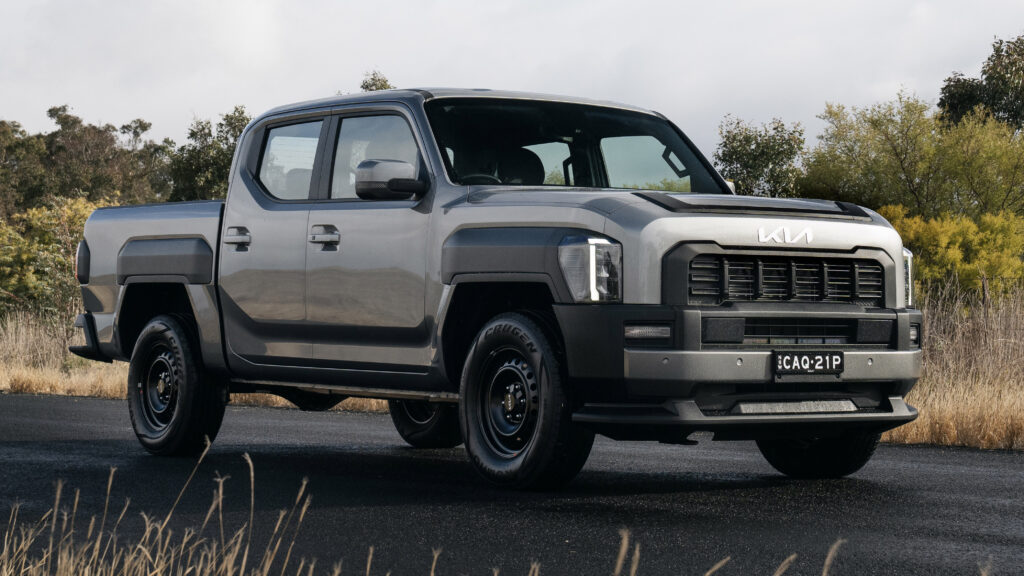
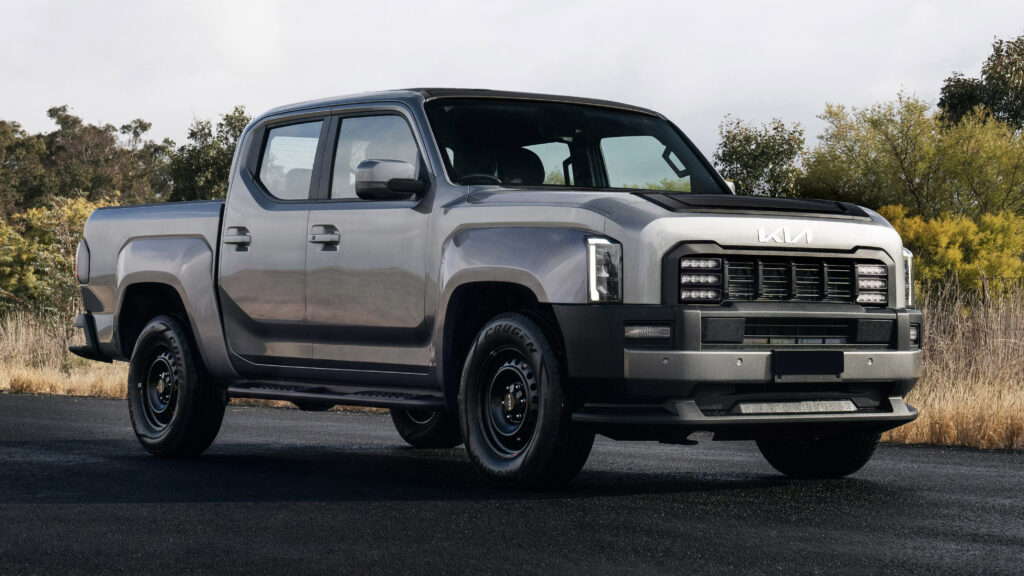
To prove versatility, the author applied the body-color covers and LED grille strips to the base 4×2 Dual Cab version, retaining the standard black steel wheels and unpainted bumpers. Some believe this work version looks even better than the flagship X-Pro.
Based on this, a render of the GT-Line version was created with a matte finish and wheels from the Kia EV6. The update was also applied to the Single Cab model.
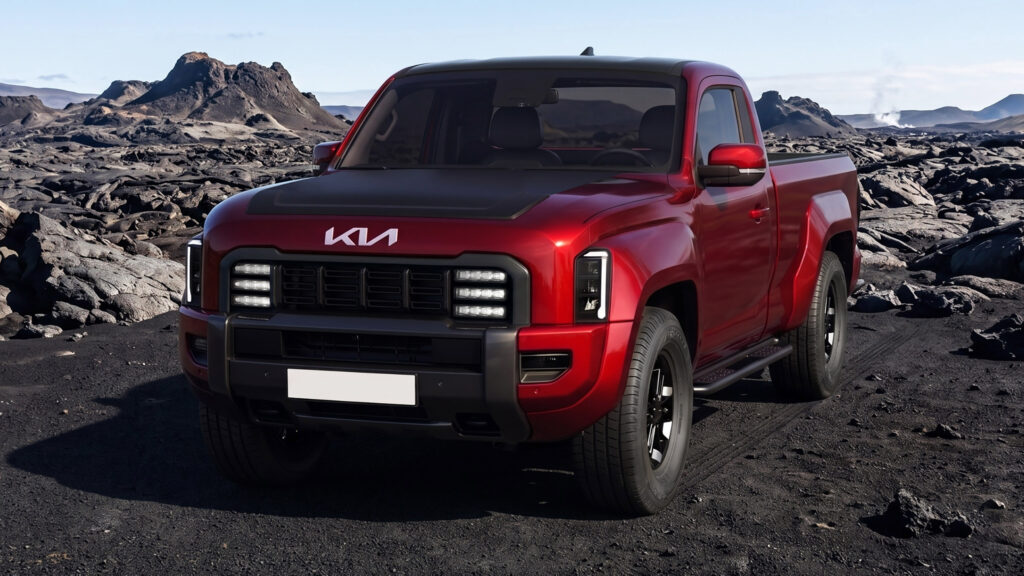
According to the author, the “correction kit” accomplishes its task, making the Tasman visually more pleasant. These changes could become the basis for a special series from Kia with local tuning, or be sold as optional accessories or an aftermarket kit. For now, it is just a digital concept, but the author has already contacted engineering firms, tuning studios, and body shops about bringing the idea to life, provided there is sufficient demand.
This project is a striking example of how a car’s design can become a decisive factor in its market success, even if the technical aspects are beyond reproach. The Tasman story shows that automakers sometimes take risks with bold decisions that do not always resonate with consumers. In response, independent projects emerge designed to “correct” the designers’ vision, indicating high enthusiast engagement and potential demand for alternative stylistic solutions. Whether Kia will go for an official facelift or leave room for creativity for tuning studios, time will tell.