 by
by Artificial intelligence helps to imagine the future of the Chevrolet Corvette. The current C8 model has been on the market for seven years, so engineers in Michigan have long been working on its successor. When the new generation finally arrives, it will bear the imprint of artificial intelligence.
A Look at the Future of the Corvette
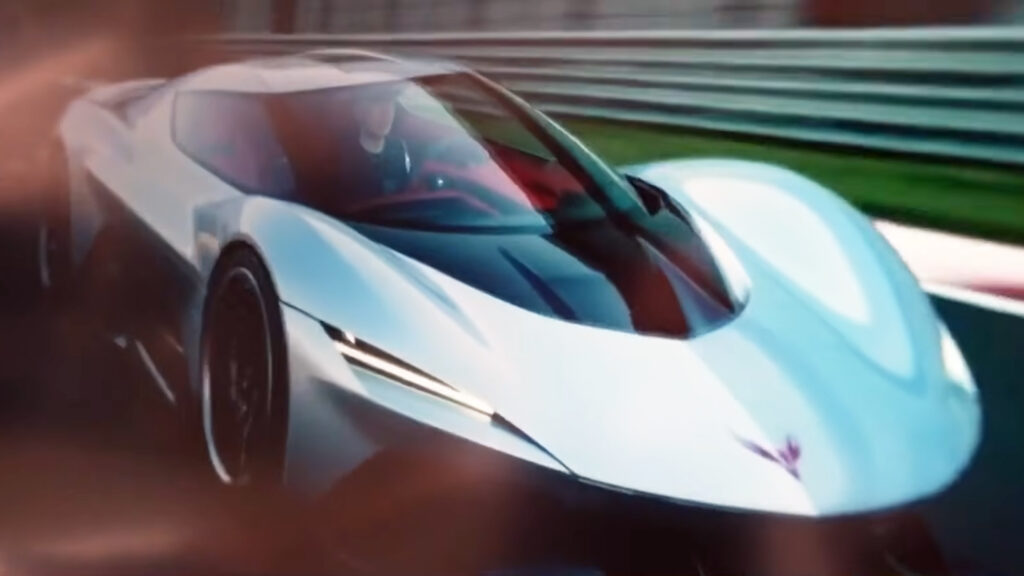
Recently, NBC News visited the GM Technical Center in Warren, Michigan, accompanied by CEO Mary Barra. Journalists saw some of the AI tools the company uses. During the report, a low, mid-engined Corvette appeared on the screen. Although this sparked speculation that we were seeing the first look at the C9 Corvette, it is actually the CX concept that Chevrolet introduced last year for the Gran Turismo 7 game.
However, Chevrolet confirmed that this car will define the future of Corvette design. With pronounced rear fenders, a short nose, and a panoramic windshield reminiscent of a Koenigsegg, it is an extremely attractive project. Unfortunately, we will most likely have to wait at least a few years before GM shows the real C9 Corvette.
AI Helps, Not Replaces
As GM explained back in April, the company does not use artificial intelligence to create cars from scratch, contrary to some concerns. Designers still have to draw cars the traditional way, but they can then use AI tools to turn those sketches into detailed renders and complex 3D animations that show what the car will look like on the road.
Additionally, GM engineers use a specialized AI-based tool that serves as a virtual wind tunnel. This allows for refining the design in the digital world before anything real is created. During the interview, Barra insists that such AI tools do not mean the company will be able to develop and produce vehicles with fewer people. Instead, she says, AI will allow them to do more with the employees they already have.
The use of AI in the automotive industry is becoming more common, and GM is one of the leaders in this area. Although the CX concept is not a direct precursor to the C9, it sets a visual tone for future models. The use of virtual wind tunnels and animation tools can significantly speed up the development process and reduce the number of physical prototypes, saving resources and time. At the same time, as management emphasizes, the key role of designers and engineers remains unchanged, and AI acts only as a powerful tool for realizing their ideas.