 by
by Overall Picture of Insurance Costs
The price difference between internal combustion engine vehicles and their electric counterparts continues to narrow; however, an EV will still hit your wallet harder than a gasoline model at the dealership. The expenses don’t end there. According to a new study by Insurify, insuring an EV also costs significantly more.
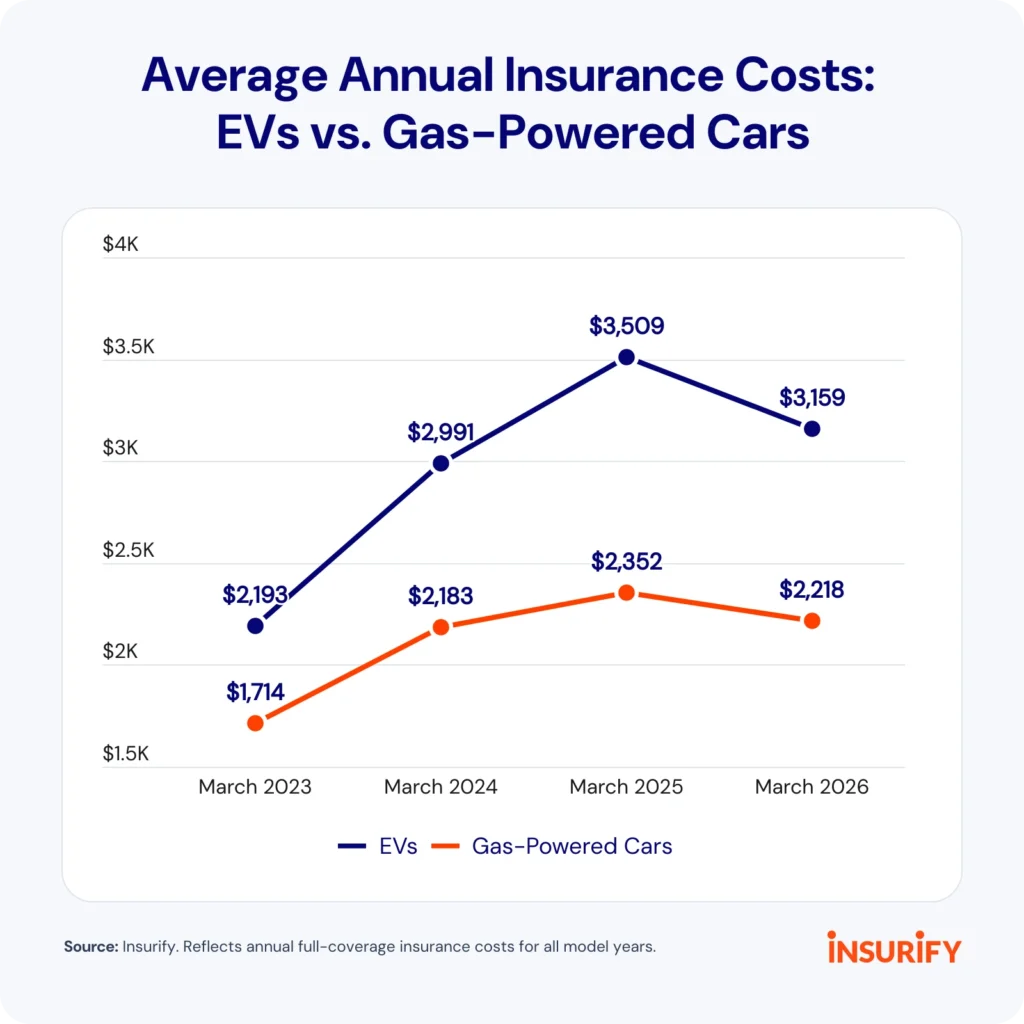
Currently, the average cost of insuring an EV in the US is a staggering $3,159. Although this is significantly lower than the peak of $3,509 in March last year, this amount is still considerably higher than the average annual insurance cost for a gasoline car, which is currently $2,218. The difference reaches 42 percent. However, when delving deeper into the data, the gap begins to shrink.
Vehicle Age and Its Impact on Premiums
The average EV on US roads is significantly newer than the average ICE vehicle, simply because electric cars have not been around as long. Insurify estimates the average age of vehicles in its database at 11.5 years, with older gasoline models lowering the overall figure.
Therefore, it is not surprising that a typical EV costs more to insure than its gasoline counterpart. The gap narrows sharply to 18 percent when comparing vehicles from the 2024 model year and newer of all types. In this case, the average premium is $3,293 for an EV compared to $2,792 for a gasoline alternative.
Regional Differences in Cost
Insurance premiums vary significantly depending on where you live. The Insurify analysis, which covers over 235 million insurance rates, shows that in some states, the difference between insuring a new EV (2024 model year or newer) and a comparable ICE vehicle can reach 50 percent.
Washington, D.C., is the most expensive location in the study: the average insurance cost for new EVs is $6,102, while for new gasoline cars it is $4,821.
EV owners in Massachusetts are also feeling the financial pressure. Although the average annual premium for a new EV is $3,560, for a new ICE vehicle it is only $2,318, making a gasoline car 54 percent cheaper. Insurify points to the dense urban environment, more expensive vehicles, and higher repair costs for EVs as key factors in Massachusetts. In New York, the difference is 45 percent: EV premiums reach $4,531 compared to $3,135 for a comparable gasoline model, which is higher than what drivers pay in Massachusetts.
Premiums in Rhode Island are also extremely high. Annual averages for new EVs are currently $6,043 compared to $4,344 for new ICE models, making gasoline cars 39 percent cheaper. According to Insurify, the state has also seen a 41 percent jump in car insurance costs since the beginning of 2024.
Most Expensive EVs to Insure
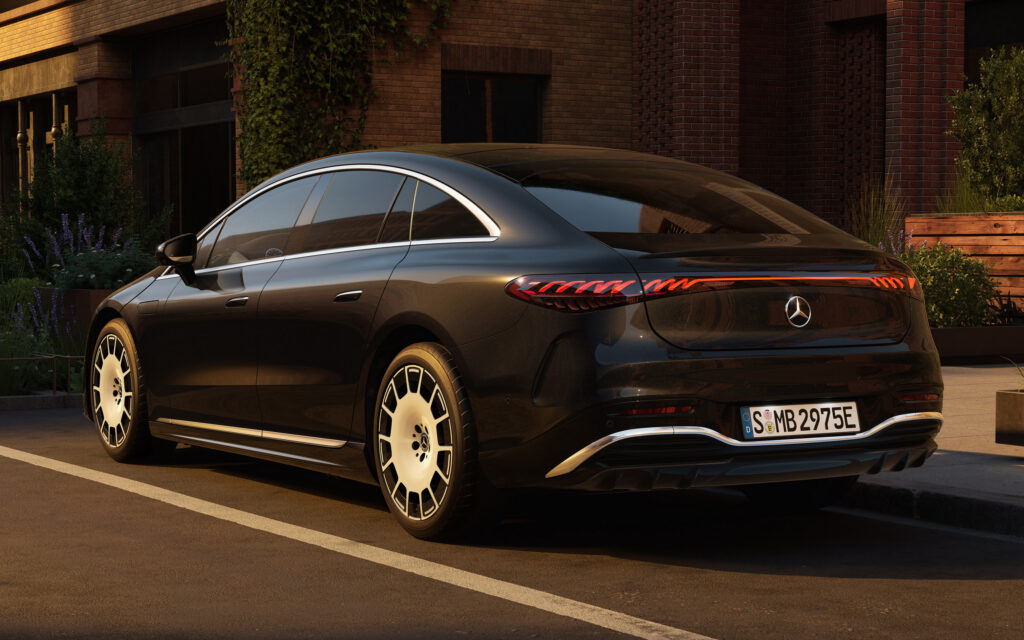
Luxury EVs dominate the list of the most expensive models to insure. The Mercedes-Benz EQS sedan tops the ranking with an average annual full coverage premium of $4,703, followed by the Tesla Model S ($4,558) and the BMW i5 ($4,554). According to Insurify, all five Tesla models are among the ten most expensive EVs to insure.
The comparison with gasoline cars is not always straightforward. Although most EVs in the ranking cost more to insure than their gasoline counterparts, the Mercedes-Benz EQS Sedan is actually cheaper to insure than the Mercedes-Benz S-Class, which has an average annual premium of $5,101.
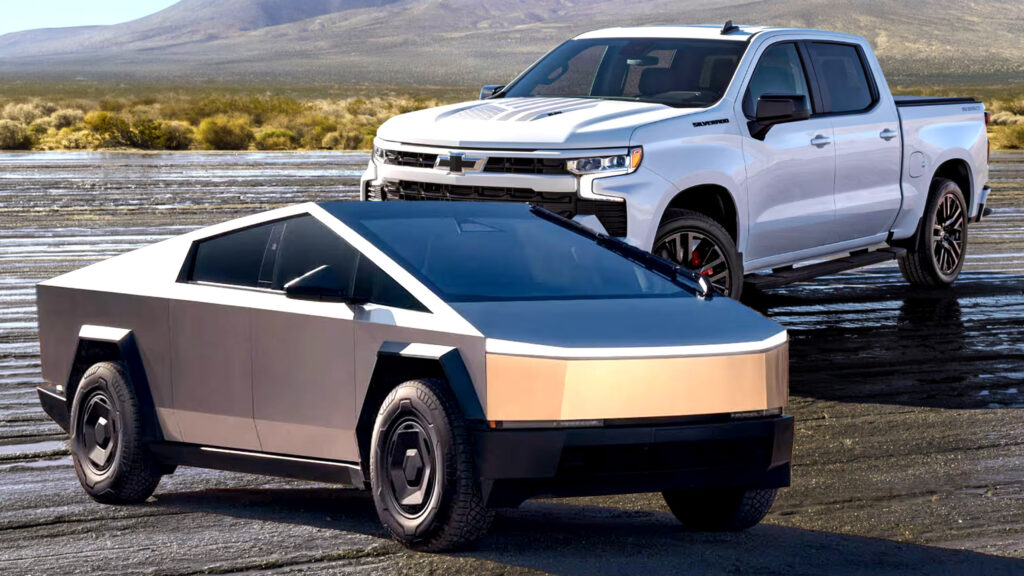
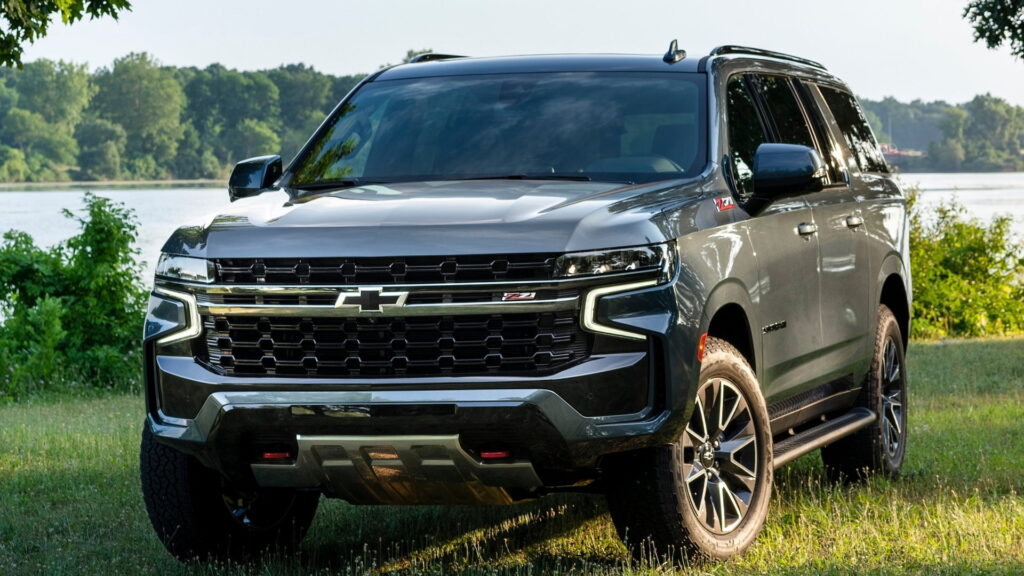
In other cases, the EV “penalty” persists. The Tesla Model S costs an average of $4,558 per year compared to $3,692 for the BMW 5-Series, while the Cybertruck costs $4,135 to insure compared to $2,754 for the gasoline Chevrolet Silverado. The Tesla Model Y also has a significantly higher premium of $4,021 compared to $3,011 for the Audi Q5.
States Where EVs Are Cheaper
Interestingly, there are some states where operating an EV is actually cheaper. Montana leads: there, EVs are 4 percent cheaper — $2,242 compared to $2,339 for gasoline cars. The difference is also 4 percent in West Virginia, where EV premiums are $2,062 and ICE model premiums are $2,148. Nebraska also slightly favors EVs: premiums for new EVs are $2,055 compared to $2,086 for gasoline cars.
Insurance Cost: EV vs. Gas Car
| STATE | Cost Difference EV vs. Gas | Average Annual EV Premium | Average Annual Gas Premium |
| Alabama | 5% | $2,327 | $2,222 |
| Arkansas | 7% | $2,588 | $2,414 |
| Arizona | 14% | $2,622 | $2,305 |
| California | 21% | $3,584 | $2,969 |
| Colorado | 22% | $3,977 | $3,249 |
| Connecticut | 15% | $3,640 | $3,174 |
| District of Columbia | 27% | $6,102 | $4,821 |
| Delaware | 30% | $4,046 | $3,123 |
| Florida | 18% | $3,954 | $3,352 |
| Georgia | 13% | $4,211 | $3,714 |
| Iowa | 16% | $2,022 | $1,745 |
| Idaho | 31% | $2,063 | $1,573 |
| Illinois | 16% | $2,709 | $2,333 |
| Indiana | 3% | $2,138 | $2,067 |
| Kansas | 27% | $3,073 | $2,411 |
| Kentucky | 9% | $3,393 | $3,102 |
| Louisiana | 11% | $3,626 | $3,274 |
| Massachusetts | 54% | $3,560 | $2,318 |
| Maryland | 23% | $4,919 | $4,012 |
| Maine | 16% | $2,154 | $1,856 |
| Michigan | 8% | $4,165 | $3,843 |
| Minnesota | 22% | $3,391 | $2,776 |
| Missouri | 27% | $3,884 | $3,065 |
| Mississippi | 6% | $2,846 | $2,674 |
| Montana | -4% | $2,242 | $2,339 |
| North Carolina | 28% | $2,374 | $1,848 |
| Nebraska | -1% | $2,055 | $2,086 |
| New Jersey | 36% | $5,632 | $4,145 |
| New Mexico | 12% | $2,189 | $1,961 |
| Nevada | 26% | $4,142 | $3,286 |
| New York | 45% | $4,531 | $3,135 |
| Ohio | 2% | $1,677 | $1,649 |
| Oklahoma | 9% | $2,880 | $2,637 |
| Oregon | 36% | $3,346 | $2,454 |
| Pennsylvania | 19% | $2,466 | $2,077 |
| Rhode Island | 39% | $6,043 | $4,344 |
| South Carolina | 21% | $4,174 | $3,460 |
| Tennessee | 18% | $2,494 | $2,120 |
| Texas | 10% | $3,227 | $2,926 |
| Utah | 17% | $2,142 | $1,838 |
| Virginia | 24% | $3,640 | $2,931 |
| Washington | 30% | $3,260 | $2,515 |
| Wisconsin | 1% | $1,774 | $1,761 |
| West Virginia | -4% | $2,062 | $2,148 |
Source: Insurify
EV Models vs. Gas Counterparts
| EV Model | Average Annual Full Coverage Premium | Comparable Gas Vehicle | Average Annual Full Coverage Premium |
| Mercedes EQS Sedan | $4,703 | Mercedes S-Class | $5,101 |
| Tesla Model S | $4,558 | BMW 5-Series | $3,692 |
| BMW i5 | $4,554 | BMW 5-Series | $3,692 |
| Tesla Model 3 | $4,489 | BMW 3-Series | $3,689 |
| Tesla Model X | $4,474 | Audi Q7 | $3,332 |
| Dodge Charger Daytona EV | $4,183 | Dodge Charger | $3,831 |
| Tesla Cybertruck | $4,135 | Chevrolet Silverado | $2,754 |
| BMW i4 | $4,081 | BMW 4-Series | $3,666 |
| Tesla Model Y | $4,021 | Audi Q5 | $3,011 |
| Mercedes EQE Sedan | $4,013 | Mercedes E-Class | $3,441 |
Source: Insurify
This data shows that, although the overall trend points to higher insurance costs for EVs, the situation is much more complex. The age of the vehicle, regional characteristics, and even the specific model can dramatically change the picture. For example, the fact that in some states EVs are cheaper to insure may be related to local support programs for “green” transport or fewer expensive accidents involving EVs. It is also worth noting that premiums for luxury gasoline models, like the Mercedes S-Class, can be even higher than for their electric counterparts, which shatters the stereotype of a clear “penalty” surcharge for EVs. Over time, as the EV fleet ages and their repair costs decrease, this gap will likely continue to shrink, making EVs more affordable not only in operation but also in insurance.