 by
by How to save your car interior from hellish heat: ADAC test results
Deep summer is currently underway in the Northern Hemisphere, and the heat in Europe has risen so much that opening the door of a parked car is like opening an oven. Europe’s largest automotive association, the German ADAC, decided to find out which accessories actually help curb the greenhouse effect, conducted real-life tests, and published the results.
How the test was conducted
The study dates back to 2021 and was conducted at the ADAC Technical Center in Landsberg am Lech, Germany. Engineers left cars under the scorching midday sun and measured how different sun protection methods, window tinting, and body color affect the final result.
Baseline readings without protection
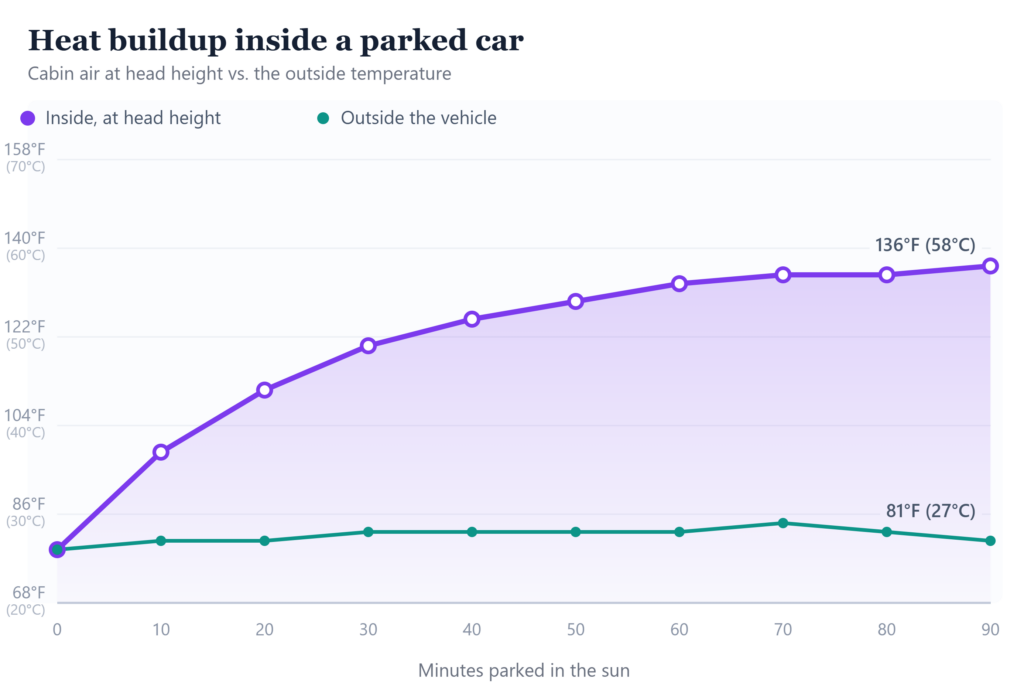
A car without any protection set a grim baseline. After 30 minutes in the sun, the cabin temperature reached 50°C (122°F), and after 90 minutes, a brutal 60°C (140°F). Even worse: the dashboard, steering wheel, and gearshift lever, which are under direct sunlight, can heat up to 70°C (158°F) on the surface, enough to burn the skin.
Winner: External half-cover
The most effective solution among those tested turned out to be a traditional half-cover that covers all glass surfaces and the roof from the outside. With this covering, the cabin temperature remained at a much more acceptable 43°C (109.4°F), which is a full 10°C (18°F) cooler than a bare car. This proves that the simplest answer is sometimes the best.
Tesla
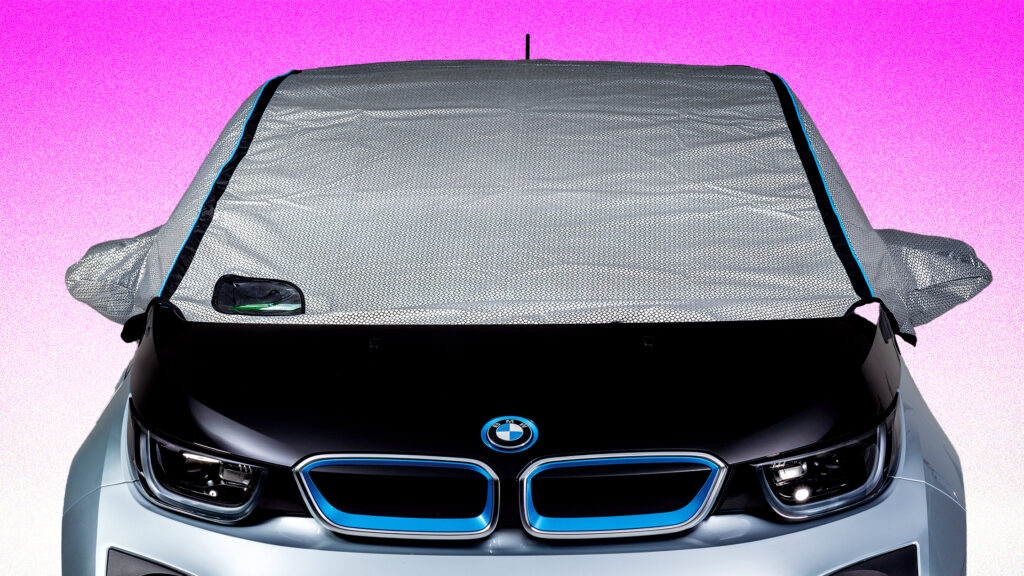
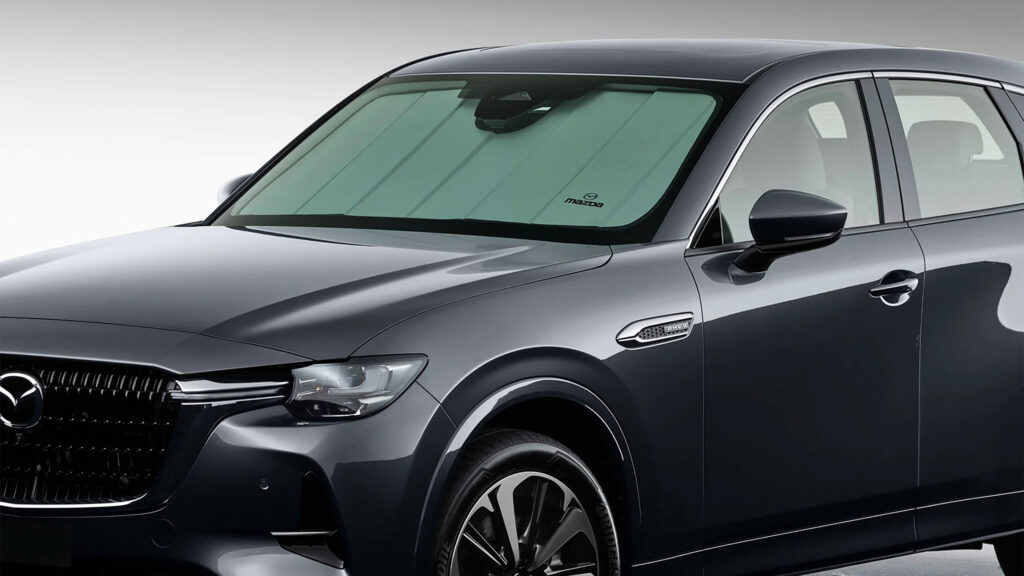
Drivers who don’t want to bother with a large cover have a reliable alternative — a reflective film installed externally on the windshield. By blocking solar radiation before it passes through the glass, such a screen maintained cabin air temperature at 45°C (113°F), 8°C (14°F) better than the baseline and only one step behind the full cover.
Mazda
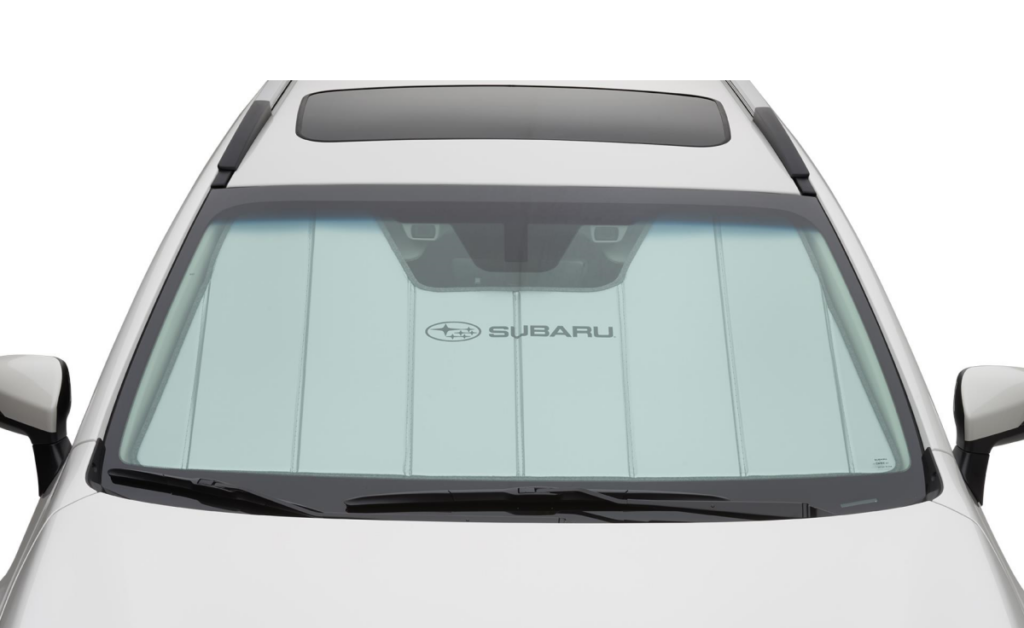
Interestingly, the more common internal accordion reflective screens came in third place. They reduced cabin temperature to 49°C (120.2°F), a modest reduction of 4°C (7.2°F) compared to the baseline. Placing a simple white cloth or towel on the dashboard proved to be the least effective cooling method, providing an interior temperature of 50°C (122°F).
Where internal shades are truly useful
Internal shades justify themselves in another way: even if they have almost no effect on air temperature, they dramatically change the temperature of surfaces you touch with your hands. A steering wheel protected from direct light can cool down by as much as 26°C (46.8°F). This is the difference between a car that can be driven immediately and one that burns your palms.
Effect of window tinting
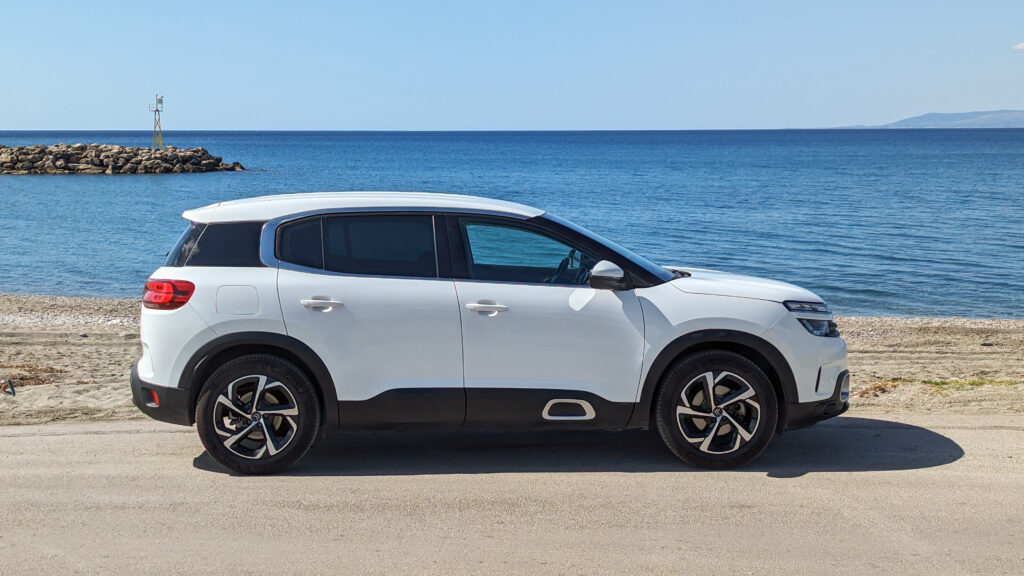
The study also assessed the impact of factory and aftermarket window tinting. While tinting the rear window reduces the air temperature in the front of the cabin by only about 2°C (3.6°F), its effect on the temperature of rear surfaces is enormous. In the test, the rear seat of a car without tinting reached 57°C (134.6°F), while in the tinted car, that surface remained at 48°C (118.4°F).
How car color affects the heat
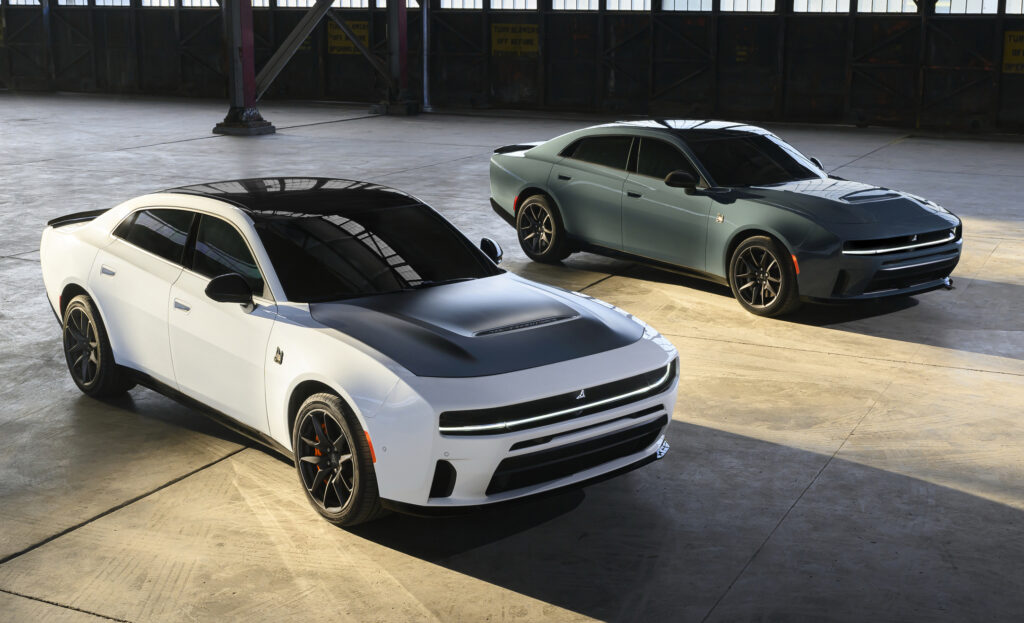
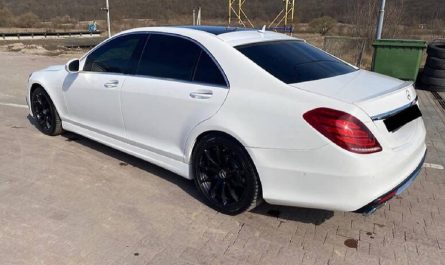
Finally, the paint color itself plays a measurable role in how much heat the car absorbs. The ADAC team tested identical black and white cars and found that the body panels of the black car reached a scorching 65°C (149°F), while the white one remained at 44°C (111.2°F). This difference translated into the cabin, leaving a gap of 5°C (9°F) between the two cars: the black one showed 53°C (127.4°F) versus 48°C (118.4°F) for the white one.
Expert recommendations
Ultimately, experts recommend combining a quality windshield screen with rear window tinting, and also always taking a few minutes to thoroughly ventilate the car before turning on the air conditioner to get rid of the hot air.
These results are especially relevant for electric vehicle owners who seek to minimize energy consumption for cabin cooling in the summer, because effective sun protection can significantly reduce the load on the climate control system and increase the driving range. Additionally, it’s worth remembering that even the best accessories cannot replace the habit of parking in the shade when possible, as well as using special sun protection films on all windows, which can be a compromise between effectiveness and convenience.