 by
by Record deliveries and historic drop in Tesla shares
Tesla recently released its second-quarter financial results, which turned out to be contradictory. On one hand, the electric vehicle manufacturer set a new record for the number of cars delivered, but on the other, its shares experienced the largest one-day drop in history.
Earlier this month, the company reported that second-quarter sales had sharply recovered after extended periods of stagnation last year, allowing it to set a record. However, after the release of the earnings report on Wednesday, shares fell 14.5% to $319.69 by the close of trading on Thursday, resulting in a loss of $214.5 billion in market value in a single session. According to WSJ, this is Tesla’s worst day ever, and the amount of losses exceeds the current market capitalization of any other automaker.
Record deliveries and geography of growth
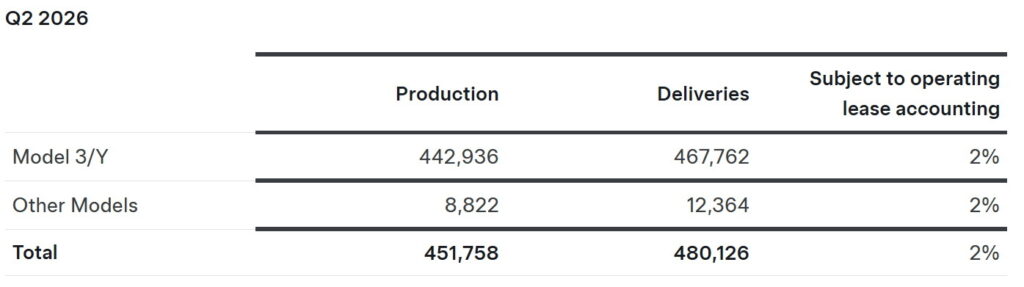
Between April and June this year, Tesla produced 451,758 vehicles and delivered 480,126 units. This is the best second-quarter result in the company’s history, surpassing the figures for the same period last year by 25%. The growth came after several consecutive quarters of declining deliveries year-over-year.
As expected, the bulk of sales consisted of the Model 3 and Model Y. Of the 480,126 vehicles delivered, 467,762 were these models. The remaining 12,364 units accounted for the discontinued Model S and Model X, as well as the Cybertruck and Semi.
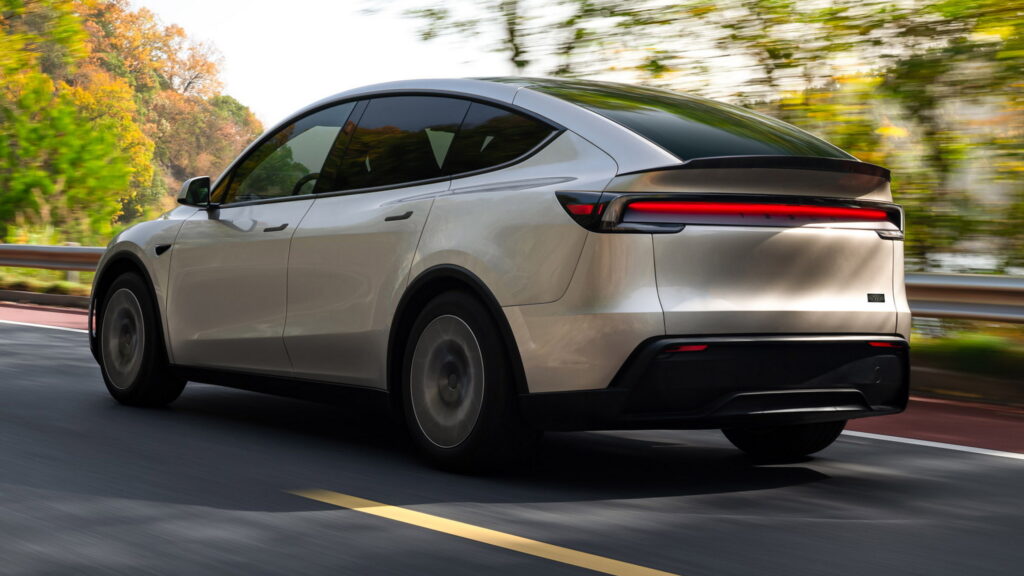
Strong overall sales figures were bolstered by a surge in demand in several European countries, notably Portugal, Slovenia, and Lithuania, as well as strong results in the Asia-Pacific region: Australia, South Korea, Japan, Taiwan, and Thailand. The new three-row Model Y L undoubtedly played a role in this growth, although Tesla did not report how many such vehicles were shipped and delivered during the quarter. Additionally, higher gasoline prices associated with the US war in Iran pushed more European buyers towards electric vehicles in the first half of the year.
Financial indicators: Revenue growth and profit decline

Tesla’s total revenue rose 26% year-over-year to $28.24 billion, exceeding forecasts. Of this amount, $20.52 billion came from the automotive segment, up 23%. The energy business, which covers solar energy and battery storage, brought in $3.14 billion (up 13%), while revenue from services and other areas grew 50% to $4.58 billion. Despite the increase in revenue, gross margin declined from 17.2% to 16.8%, and GAAP net profit fell 5% to $1.11 billion. Analysts had forecast a gross margin of 19.4%.
The decline in profit was driven by several factors. Most notably, operating expenses grew faster than revenue due to significant investments in artificial intelligence, as well as other important research and development projects. Additionally, Tesla earned less from regulatory credits than in the past, and the average selling prices of its electric vehicles also decreased.

Thus, record deliveries serve as a vivid testament to Tesla’s production capabilities and global demand for its products, especially against the backdrop of market recovery. However, aggressive investments in future technologies, particularly in AI, and declining margins due to price competition and reduced revenue from regulatory credits have put pressure on profitability. The market reaction shows that investors are more focused on current profitability and costs than on record sales volumes, posing a challenge for the company to balance scaling with financial efficiency in the near term.