 by
by How musical roads work: safety and entertainment on asphalt
Infrastructure exists primarily to keep people safe and help them reach their destinations efficiently. In some rare cases, it can also add a bit of fun to a journey. It is at this intersection that musical roads arise. Instead of producing an unpleasant hum, these special rumble strips play a melody. The only condition is that you must be traveling at the permitted speed to hear it.
If you have never encountered one, this might sound like an urban legend. If you drive too slowly, the melody slows down. If you drive too fast, it turns into unintelligible noise. But if you stick exactly to the speed, your tires suddenly become part of the world’s largest vinyl record. Let us break down how this works.
The principle behind musical roads
The concept of a musical road is surprisingly simple. Vibrations create all sounds, and pitch depends on the frequency of these vibrations, explains Road-Tunes.com. Engineers create a melody by cutting grooves into the road surface at carefully calculated intervals. When your tires roll over these grooves, they generate vibrations that travel through the suspension into the cabin. The distance between each groove determines the musical note.
For example, the note “E” requires approximately 330 vibrations per second. At a speed of 45 mph (72 km/h), this means the grooves must be spaced about 2.4 inches (61 mm) apart. Different notes simply require different spacing, and longer notes are created by extending this pattern over a greater distance. The result is essentially a giant mechanical music player embedded in the road itself.
The real purpose
While they may seem like roadside curiosities, musical roads are usually built with safety in mind. Most are installed to encourage drivers to maintain a consistent speed, especially on rural highways where speeding and driver fatigue can be serious issues. If motorists want to hear the song correctly, they must adhere to the speed limit. This is a much friendlier nudge than another flashing radar sign.
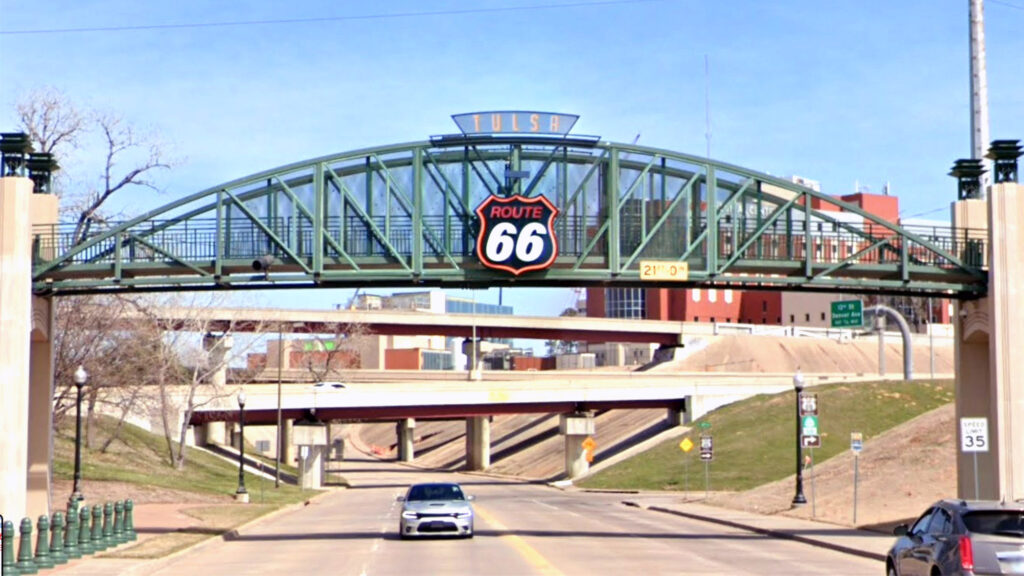
One of the most famous examples was along historic Route 66 near Tijeras, New Mexico. Installed in 2014 with support from National Geographic, this quarter-mile stretch played “America the Beautiful” when drivers traveled at exactly 45 mph (72 km/h). Unfortunately, the grooves gradually wore down, and the New Mexico Department of Transportation ultimately decided that restoration would be too expensive.
Where to find them
In the United States, only a small number of musical roads have existed, each with its own character. Lancaster, California, opened America’s first musical road in 2008. Initially built to play the finale of the William Tell Overture, it quickly drew complaints from residents due to the constant noise. The city eventually relocated it farther from homes, although many visitors noted that the melody never sounded quite right due to a design miscalculation.
Auburn University took a more academic approach in 2019, installing a short stretch that plays the opening notes of the famous “War Eagle” fight song for the Tigers fans when they arrive on campus. Unlike previous examples, it was designed using a surface application that avoided deep cutting into the pavement.
The newest addition appeared in 2023 in Palmdale, California, where a 2,500-foot (762 m) section on R. Lee Ermey Avenue honors the late Marine, actor, and star of the film “Full Metal Jacket” by playing approximately 30 seconds of the Marines’ Hymn. Drivers hear this tribute only when traveling at around 45 mph, turning an ordinary stretch of road into a moving memorial and tourist attraction.
Beyond the United States
Musical roads have appeared in more than a dozen countries, including Japan, South Korea, China, Hungary, India, Spain, and the United Arab Emirates. Some play folk songs, others national anthems, and some even feature famous movie themes. Japan alone has over 30 “Melody Roads,” many created as tourist attractions, while countries like South Korea and China rely more on their safety benefits.
Whether they encourage drivers to slow down, help perk up drowsy motorists, or simply bring an unexpected smile to travelers, musical roads prove that even something as ordinary as rumble strips can turn into an engineering curiosity.
Interestingly, musical roads are a vivid example of how functionality can be combined with creativity. They not only serve a practical role in regulating speed but also add an element of surprise and joy to everyday drives. Despite challenges with wear and tear and noise complaints, these engineering solutions continue to attract attention and inspire new projects around the world, demonstrating that even asphalt can become a canvas for art.