 by
by Greek drivers risk their lives on a collapsed bridge
If you have ever complained about a pothole or a speed bump on your morning commute, a look at central Greece might change your perception of the scale of the problem. Residents and farmers near the city of Larissa have taken a risk that few would dare: they drive on a concrete bridge that officially collapsed nearly three years ago and has never been repaired. What should be a cordoned-off danger zone has become part of the local route.
History of destruction: Storm Daniel
The problem dates back to September 2023, when the devastating Storm Daniel swept through Greece, Bulgaria, Turkey, and Libya, leaving thousands of casualties and destroying infrastructure in the region. Thessaly in north-central Greece was hit hardest, with floods so severe that 79 bridges collapsed.
Condition of the Palaiopyrgos Bridge
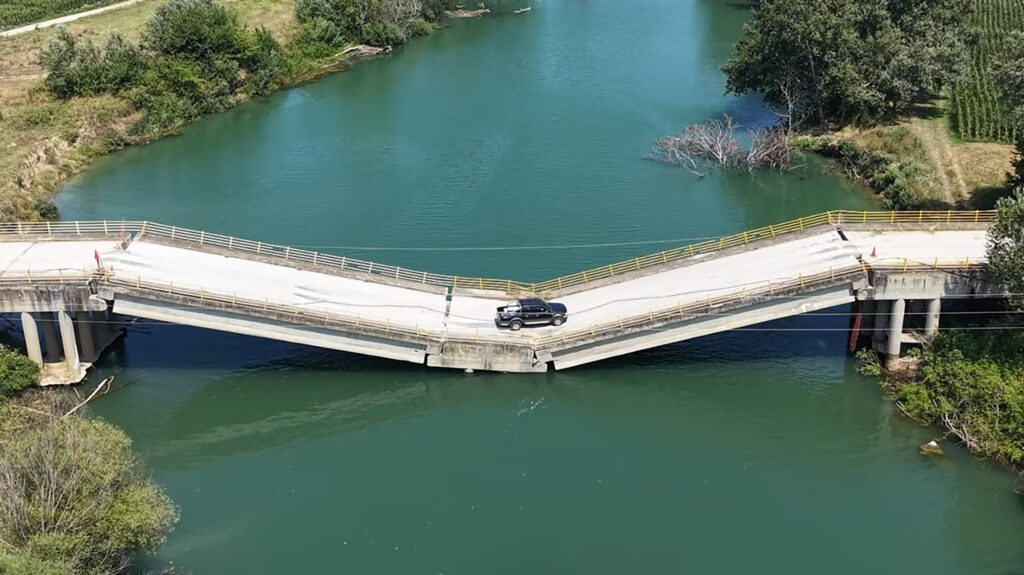
Among the affected structures is the curved Palaiopyrgos Bridge, whose central section has sagged nearly down to the Pineios River below. The deformation is impossible to miss, yet drivers continue to use the crossing in pickup trucks and SUVs as if nothing has happened.
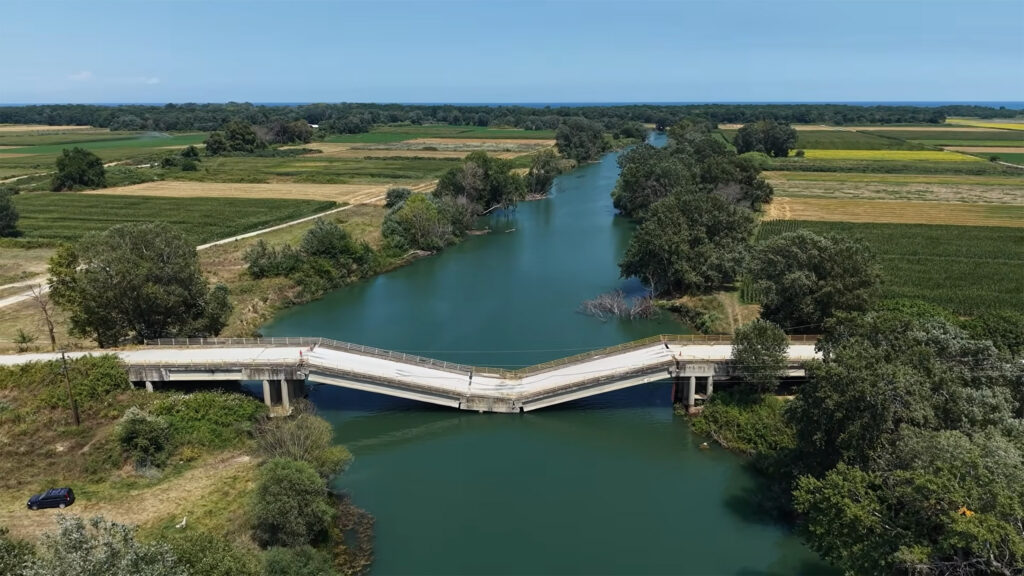
Current condition of the bridge. Photo: Thanasis Kaliakoudas / LarissaNet
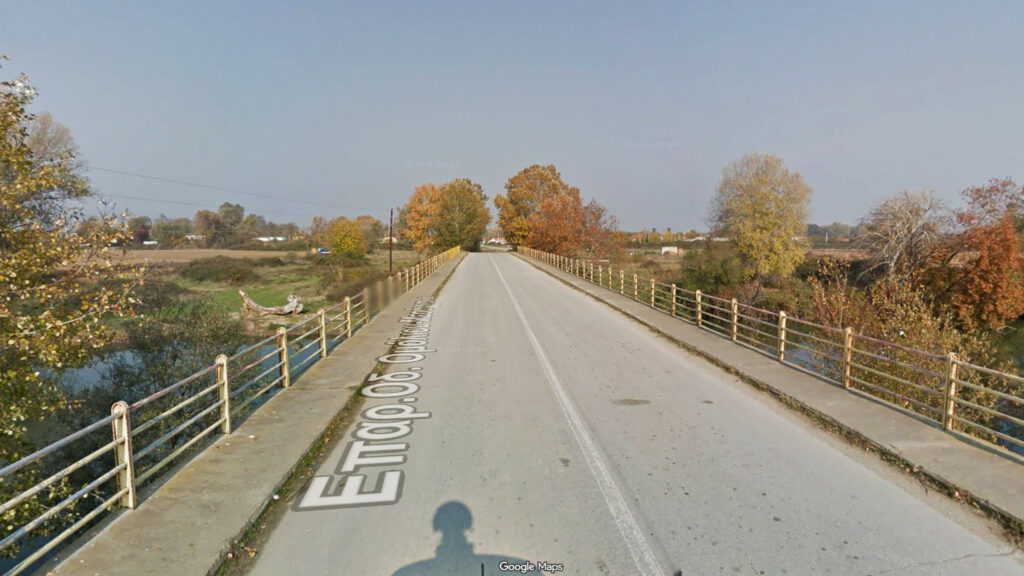
Bridge before the collapse (Google Maps)
What the crossing looks like
A drone video captured by local news outlet LarissaNet shows a Ford Ranger descending one steep slope and climbing the other, looking as if the truck is navigating off-road terrain rather than a public road.
Why people take the risk
For local residents, ignoring the danger of the collapsed bridge comes down to plain convenience. The only other way to cross the river is a slow detour via the National Highway, and for farmers watching their time and fuel consumption, those costs add up quickly. Of course, the flip side is that every trip across the ruined bridge carries the risk of turning into a rescue operation.
Lack of physical barriers
Three years after the storm, locals know the infrastructure is damaged, but tourists have no such awareness. Traffic is officially banned, yet without physical barriers, warning signs are easily ignored. Navigation systems regularly direct travelers to the destroyed crossing, forcing them to brake sharply and turn around when the cracked concrete ramp appears before them.
Hope for change
Hopefully, the viral video will finally push local authorities to install proper physical barriers and prevent a serious accident before it happens.
It is worth noting that such cases are not uncommon in regions affected by natural disasters. The lack of funding for infrastructure restoration often forces locals to take risks to avoid wasting extra time and resources. This situation also highlights the problem with navigation services that do not update data on closed roads, which could lead to accidents involving tourists unaware of the danger.