 by
by Norwegian company Zyrus Engineering, which made a name for itself almost six years ago with a radically reworked Lamborghini Huracan, is preparing something even more incredible. The new model, named the Strada R³, has been shown in teasers ahead of production scheduled to begin in July.
Power and Design
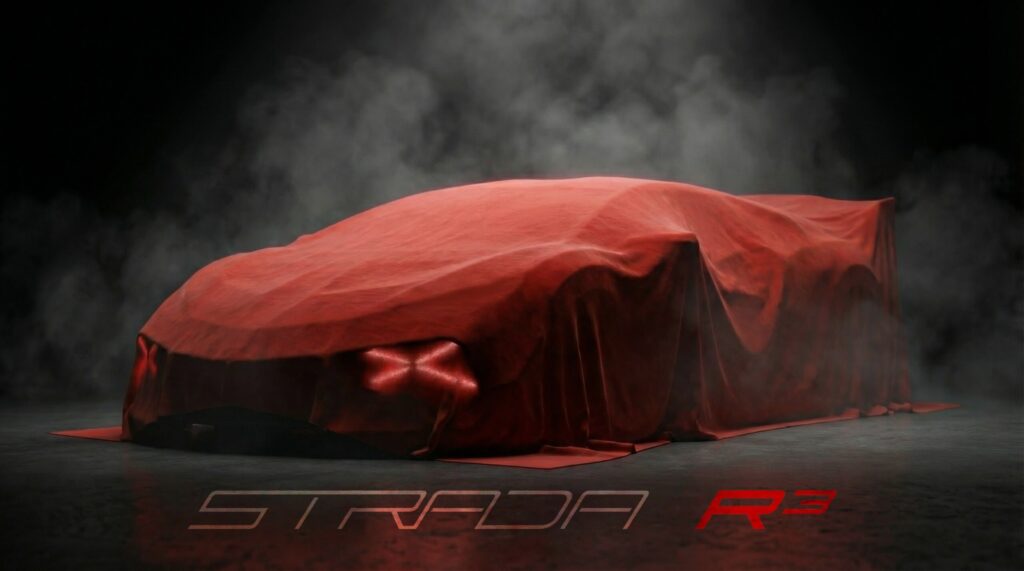
The car has received a bi-turbo V10 engine, the power of which reaches the level of Koenigsegg supercars – 1500 horsepower. Preliminary images show a mid-engine car with X-shaped LED daytime running lights at the front and similar rear lights.
Affinity with Lamborghini
Although it is possible that this is a completely new development, the Strada R³ has obvious similarities to the Lamborghini Huracan, indicating its basis. The shape of the headlights and the overall pointed shape of the front end are very reminiscent of the Huracan. However, Zyrus has added X-shaped LED daytime running lights to the massive air intakes and developed a unique hood to improve aerodynamics.
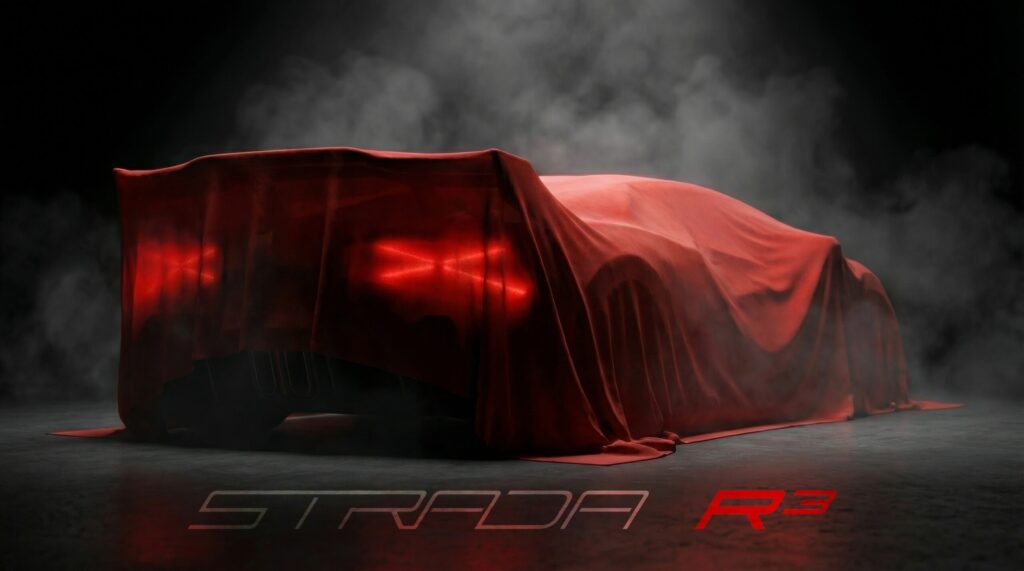
When viewed from a rear three-quarter perspective, the Strada R³ appears wider than the Huracán, approaching the scale of the Aventador. The car features a huge fixed rear wing and X-shaped rear lights that echo the design of the front ones.
The Supercar’s Heart
The fact that the car is equipped with a unique, albeit bi-turbo, V10 engine also confirms its connection to the Huracan. This engine develops 1500 hp. The combination of such power with a low weight of 1424 kg and the ability to generate enormous downforce makes it a very attractive proposition.
The Strada R³ is a tribute to ten years of pushing the boundaries of design, engineering, and performance. With a bi-turbo V10 at its heart and carbon fiber in its DNA, this supercar sets a new standard on our journey.
The emergence of the Strada R³ from Zyrus Engineering could become one of the most interesting phenomena in the niche segment of extreme supercars. This is not just a modification, but a serious bid to create its own name using a proven platform. Preserving the atmospheric V10, even in turbocharged form, is a bold step in an era when even Lamborghini has switched to hybrid V8s. This indicates a desire to preserve the character and emotions inherent in ten-cylinder engines, while enhancing them to an entirely new level. The success of this project may show whether there is a solid market for such highly specialized, powerful, and likely very expensive cars created outside of major automotive corporations.