 by
by Trump administration did not extend USMCA, but negotiations continue
The administration of former US President Donald Trump has decided not to extend the United States-Mexico-Canada Agreement (USMCA) in its “current form.” At the same time, negotiations with neighboring countries will continue to address the so-called “shortcomings” of the trade agreement. The main sticking points are trade deficits, requirements to increase the share of local components, and the desire to reach a new deal that would better serve American interests.
Ford CEO demands punishment for competitors over imports
This will likely be a tough sell to Canada and Mexico, but Ford CEO Jim Farley already hopes that a new agreement will hurt competitors. In a comment to CNBC, he stated:
It is critical that any new agreement makes it easier, not harder, to compete with American manufacturers who import from Japan, South Korea, and global competitors importing from those regions.
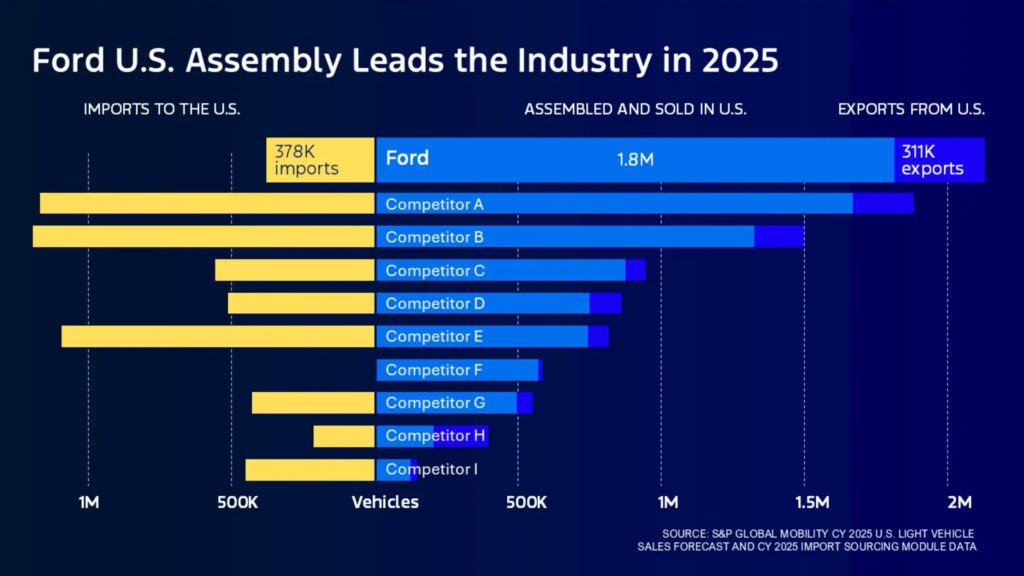
This is a not-so-subtle jab at competitors that rely heavily on imports. The publication noted that GM imported 1.17 million vehicles last year, accounting for 41% of their domestic sales. Key models include the Chevrolet Trax and Equinox, as well as most of the Buick lineup.
While Toyota has several plants in the US, it imported over 1.19 million vehicles in 2025. Thus, 47% of cars sold in America were imported.
Ford insists on rewards for US production
Ford has an issue with this, as the company claims it assembles “more than six vehicles in America for every one imported, making it an industry leader.” Last year, the automaker also produced over 2 million vehicles in America, and 83% of vehicles sold in the US are manufactured here. Of course, production in America is typically more expensive compared to countries with lower wages, such as Mexico.
According to rumors, Farley believes the company should be rewarded for manufacturing in America, or competitors should face penalties for their reliance on imports. He evidently thinks this would “level the playing field,” but only time will tell what comes of this in the future.
Ford’s position is clear: the company has invested heavily in US production capacity and now seeks a competitive edge through trade policy. However, such calls could strain relations with key trade partners and provoke retaliatory measures from other countries. Additionally, consumers may face limited choices and potential price increases for vehicles if imported models become less accessible. Balancing the protection of domestic manufacturers with market interests remains a complex issue in a globalized economy.