 by
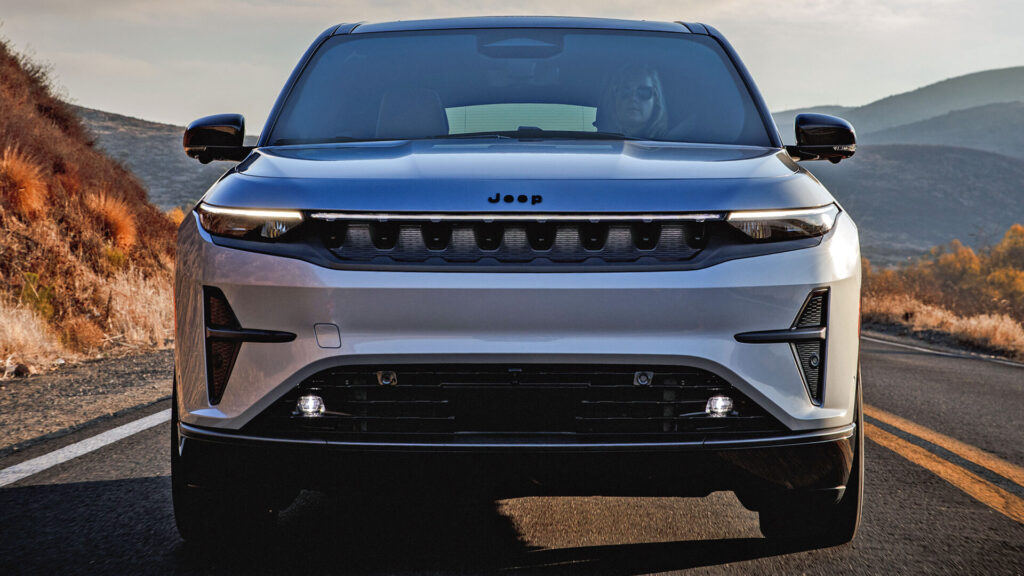
by The electric SUV Jeep Wagoneer S will skip the 2026 model year. The vehicle will return to the market in 2027 with an NACS standard charging port and a number of updates. Model sales fell to just 175 units in the first quarter of 2026.
A Challenging Sales Situation
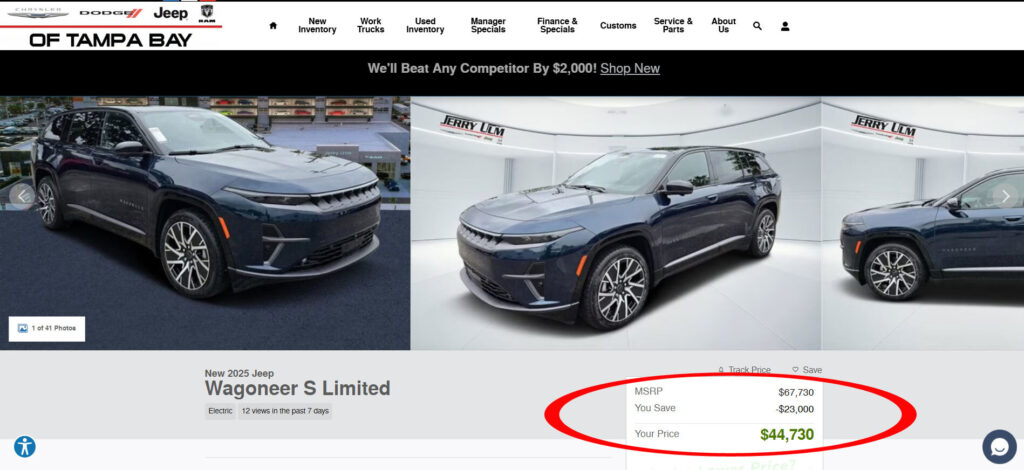
The Jeep Wagoneer S has been a constant disappointment, and some dealers are offering discounts of nearly $25,000 to clear inventory. This sell-off allowed Stellantis to sell 10,864 vehicles in the US last year, but sales plummeted after the federal tax credit was canceled.
In the fourth quarter of 2025, dealers sold only 438 crossovers. This figure dropped to a meager 175 units in the first quarter of 2026, putting the company on track to sell only about 700 vehicles for the entire year.
However, even this sad number now seems optimistic, as the Wagoneer S disappears for the 2026 year.
The story was first reported by Automotive News and later confirmed by Car & Driver magazine.
Return with Updates
While the slow-selling crossover is taking a break, much like the Volkswagen ID. Buzz, it will return in 2027. It is expected to become slightly more attractive when it reappears. A company representative stated that they are “adjusting production of the all-electric Jeep Wagoneer S to support future improvements in battery performance, software, and capabilities.”
These improvements will be timely, but the biggest change seems to be the implementation of the NACS port. This will allow owners to access Tesla Supercharger stations without the need for an adapter.
The Price Question
These changes sound good, but the biggest obstacle likely remains the price. The Wagoneer S starts at $65,200 and goes up to $70,200 for the Launch Edition, which has increased power of 600 hp.
This is a fairly high price, considering that the Mustang Mach-E GT starts at $53,395 and can be equipped with the GT Performance Upgrade package for an additional $1,295. Although the Ford has significantly lower power at 480 hp, it is slightly faster than the Wagoneer S, accelerating from 0 to 60 mph in 3.3 seconds compared to 3.4 seconds for the Jeep.
The temporary discontinuation of the model is a logical step for Stellantis to rethink its strategy in the increasingly competitive electric SUV market. The success of the updated version in 2027 will depend not only on technical improvements but also on the company’s ability to offer a compelling price-to-value ratio to compete with models like the Mustang Mach-E. Adding access to the Supercharger network could be a significant argument for buyers concerned about charging infrastructure.