 by
by New electric Opel crossover on Chinese Leapmotor platform
Stellantis has found a new way to benefit from its partnership with Leapmotor, with Opel playing a key role. The German automaker has officially confirmed plans for a new electric compact crossover built on the platform of the Chinese electric vehicle manufacturer. This confirms rumors that surfaced earlier this year.
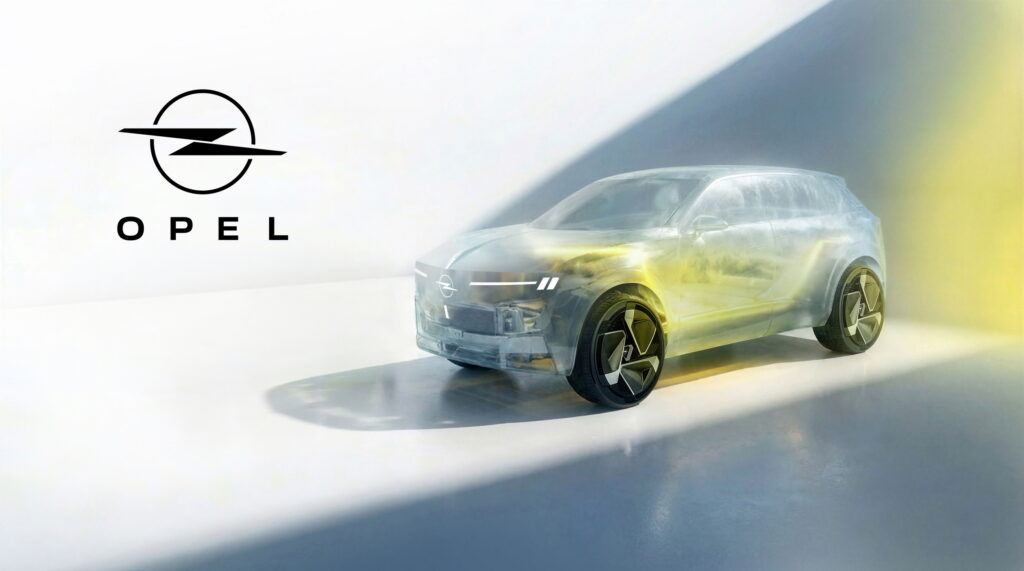
The new crossover, whose name is not yet known, is planned to launch in 2028. Development will take less than two years — from start to arrival in showrooms. The car’s design is being developed by the Opel team in Rüsselsheim, which will rely on the brand’s modern visual language. The first teaser shows a sporty SUV with large wheels, short overhangs, and the familiar Opel Vizor front end with integrated LED lighting.
According to Opel CEO Florian Hüttl, the new SUV will be “developed by international teams located in Germany and China.” It will use “key components of the latest electric architecture and battery technologies from Leapmotor,” with Opel’s contribution limited to design, chassis, lighting, and seat technology.
Production and positioning
Production of the future electric car will take place at the Figueruelas plant in Zaragoza, Spain, starting in 2028. The same facility produces the Opel Corsa, Peugeot e-208, Lancia Ypsilon, and Leapmotor B10.
The new model will expand Opel’s SUV lineup, which already includes the Mokka, Frontera, and Grandland, and will target the highly competitive C-SUV segment in Europe.
Technical specifications and price
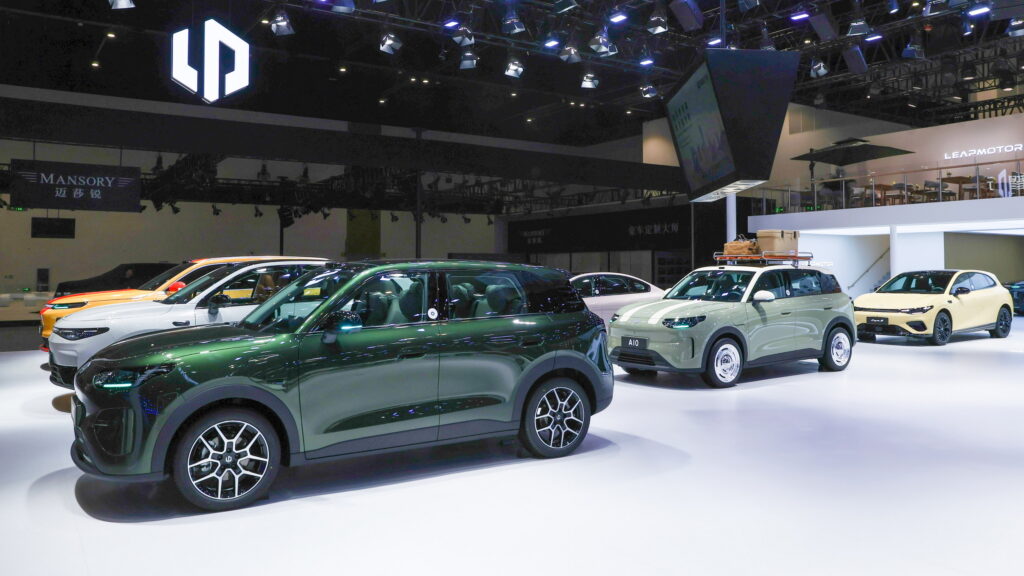
Although Stellantis has not provided detailed technical specifications, the new Opel will most likely be based on the Leapmotor B10. This electric SUV has a length of 4,515 mm, placing it between the Frontera and Grandland in terms of size.
The Leapmotor B10 is equipped with a single electric motor producing 215 hp (160 kW) and offers two battery options: 56.2 kWh and 67.1 kWh, providing a range of up to 434 km. A version with a range extender will also be available, capable of covering up to 900 km.
Stellantis stated that the Leapmotor B10 has undergone “rigorous testing” at the Balocco test track in Italy, so the European version may differ from the model sold in China.
Importantly, the Leapmotor B10 starts at €29,900 in the German, French, and Spanish markets, which is €4,000 cheaper than the rival Skoda Elroq. While it is too early to talk about the price of the Opel version, the company promises an “affordable” electric car, noting that the use of Leapmotor components “will significantly enhance affordability for European customers.”
Engineer reductions and strategy shift
Stellantis recently announced plans to cut 650 engineering positions at Opel’s historic headquarters in Rüsselsheim, leaving about 1,000 technical specialists. In 2017, this facility employed over 7,700 engineers involved in key research and development for the PSA Group. Now their scope has narrowed to areas such as artificial intelligence, software, ADAS, battery technology, and digital lighting systems. Although not directly related, the agreement with Leapmotor allows Stellantis to significantly reduce research and development costs, as well as the time required to bring a new product to market.

Leapmotor International joint venture
Stellantis acquired a 21% stake in Leapmotor in October 2023, becoming the largest shareholder of the Chinese brand. The joint venture LPMI (Leapmotor International) is 51% owned by Stellantis, which has exclusive rights to sell and manufacture Leapmotor products outside of China.
The European launch has proven quite successful: Leapmotor delivered 40,000 units in 2025, and the first quarter of 2026 ended with 24,751 registrations. In addition to Europe, the LPMI joint venture has expanded its operations to South America, Mexico, the Asia-Pacific region, the Middle East, and Africa.
This move by Stellantis demonstrates a pragmatic approach to global competition in the electric vehicle sector. Using Chinese technology for a European brand allows for the quick and relatively inexpensive launch of a competitive product, especially at a time when European automakers face high costs for their own development. However, it also raises questions about long-term strategy: could such dependence on Chinese partners lead to a loss of their own engineering competencies and technological independence for European brands? The reduction of engineering staff in Germany, against the backdrop of active engagement with Chinese technologies, may indicate a shift in Stellantis’ priorities, where speed to market and cost savings become more important than maintaining local research centers. For Opel, this could be both an opportunity for revival through affordable electric cars and a risk of losing its identity as a German engineering brand.