 by
by Ford used artificial intelligence to recreate the debut of its futuristic 1964 Aurora concept. This car predicted technologies that are now common in many modern production cars. Although some ideas remained fantasy, its vision turned out to be remarkably accurate.
How Ford Used AI for Retro Promotion
Artificial intelligence is rapidly changing how automakers design, develop, and even sell their cars. To mark National AI Day on July 16, Ford chose an unusual approach. Instead of showcasing the latest software or driver assistance systems, the company looked back, using modern AI-powered filmmaking tools to give one of its most ambitious concept cars the debut it never had.
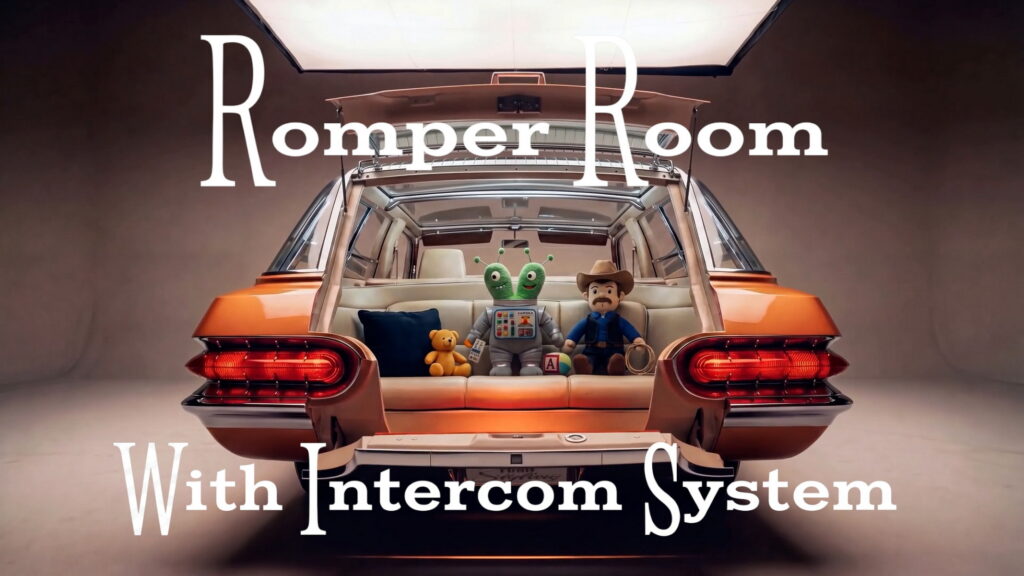
The result was a short promotional film in the style of the 1960s, dedicated to the 1964 Ford Aurora — a concept that first appeared at the New York World’s Fair. Created using archival photos, design materials, and original press information, this video shows how Ford might have presented a futuristic station wagon if the 1960s advertising industry had access to modern AI-based tools. However, what is most striking is not the AI itself, but how many aspects of the Aurora later appeared in production cars.
Technologies That Were Ahead of Their Time
The Aurora was never intended for production. It was one of the brand’s “X-Cars,” created solely to explore new ideas in design, technology, and more. The Aurora practically predicted what cars would be like decades later. Of course, today we don’t have many cool station wagons, but one only needs to look at the features offered in this concept.
Long before the invention of GPS, the Aurora had a primitive navigation system. It also had a glass roof that could become transparent or opaque at the push of a button. In 1964, this seemed nearly impossible, but electrochromic glass later appeared in production, for example, on the Cadillac Celestiq and in various forms in the luxury segment.
Inside, Ford imagined an interior that functioned more like a living room than a traditional station wagon. It had multiple climate control zones, a refrigerator, a rear-seat entertainment system, lounge-style seating, and enough space for passengers to relax rather than just travel. If this sounds familiar, it should.
Size and Innovations
Such space was made possible by its significant dimensions: the Aurora was 227 inches (5,766 mm) long with a wheelbase of 131 inches (3,327 mm). This is longer than Ford’s largest SUV today — the extended Expedition MAX, which measures 221.7 inches (5,631 mm) with a nearly identical wheelbase of 131.5 inches (3,340 mm).
Although no brand except Tesla has fully embraced this idea, the Aurora even had a yoke instead of a steering wheel. Ironically, Ford emphasized that it offered a simple half-turn lock-to-lock rotation. This is almost identical to how Tesla implemented its steering system in the Cybertruck.
Ideas That Have Yet to Be Realized
Not all predictions were accurate. Ford envisioned a separate children’s playroom, separated from the rest of the cabin by a power-operated glass partition, with its own radio and climate control. The concept also had luminous electroluminescent body panels and swiveling seats.
But that is the essence of concept cars. They are less about predicting an exact production car and more about testing ideas that may eventually find their way into future models. In this case, Ford’s engineers were simply decades ahead of their time.
Interestingly, the story of the Aurora shows how bold concepts can serve as a guiding star for entire generations of cars. Even if not all ideas are implemented immediately, they set the direction for development. Today, as AI helps accelerate innovation, it is worth remembering that true breakthroughs often begin with the imagination of designers and engineers who are not afraid to dream about the impossible. And the fact that a 1964 concept predicted navigation, electrochromic glass, and a yoke only underscores how far-sighted such projects can be.