 by
by Overview of the New Lexus ES 2026: Hybrid and Electric in One Body
For decades, the Lexus ES existed in its comfortable “bubble.” Buyers loved it for its quietness, reliability, space, and almost aggressive reluctance to bother anyone. It wasn’t sporty, it wasn’t particularly bold, and if you asked enthusiasts about it, many would respond with a shrug and comments about retirement communities.
That wasn’t a criticism. Lexus knew exactly what the ES was and, more importantly, who it was for. The formula worked so well that the brand had little reason to change it. Why rethink a luxury sedan that had been quietly generating profit for years? Now Lexus says it has expanded the ES formula.
After test-driving the all-new 2026 ES family near San Diego, which included the ES 350h AWD hybrid, the ES 350e, and the range-topping ES 500e AWD, there’s evidence that the company wasn’t just tossing around marketing slogans. The eighth-generation ES is a big change. It is literally larger in every direction, rides on a new multi-path architecture that supports both hybrid and electric variants, and for the first time, gets fully electric versions.
This also created an unusual challenge for this review. The new ES is really two different cars wearing nearly identical sheet metal. One relies on Lexus’s latest hybrid system, while the other embraces full electrification, and they offer vastly different experiences behind the wheel. So, instead of lumping them into one big driving section, we will split this part of the review into two: one set of impressions for the hybrid and another for the EVs.
Fast Facts
Because, after spending a day switching between all three variants, one thing became clear: they may look nearly identical, and the seating creates the same ambiance… but they feel absolutely nothing alike once they start moving. So, has Lexus finally built an ES with character? Or is it just an upgraded appliance for those who don’t really like driving? Read on to find out.
Style
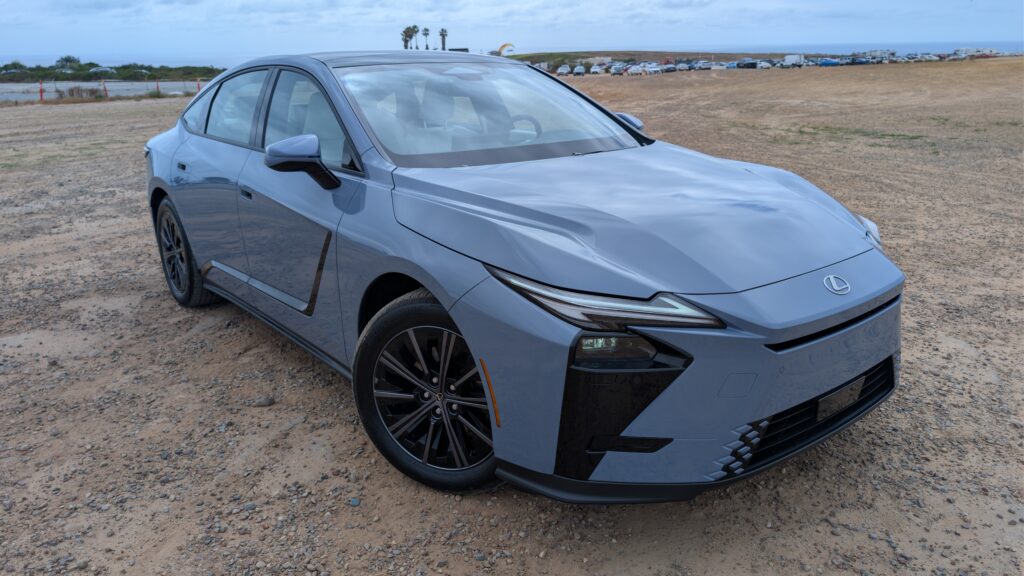
Aside from actual ES owners and die-hard fans, most people probably couldn’t provide many details about how ES generations look one from another. Most of them blended into traffic so effectively that you could lose such a car in a Costco parking lot in minutes. But not this one.
The new ES truly looks striking. During our drive, it repeatedly drew attention, and at one point, a Mazda driver seemed more interested in staring at the Lexus than the road ahead. That’s anecdotal, of course, but the point is clear. People noticed it.
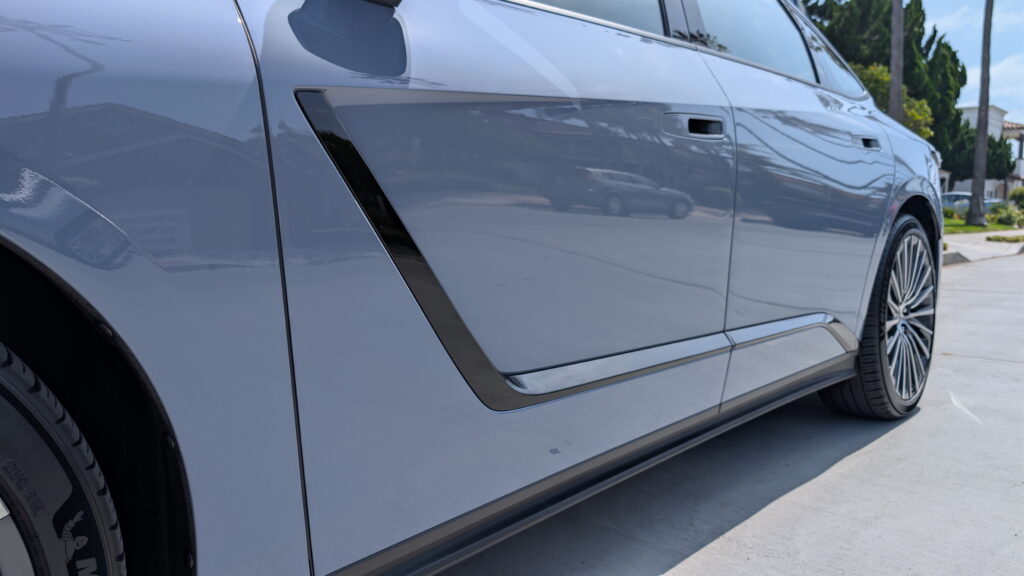
The side profile is dominated by a huge character line that looks very Lexus. It reminds me a lot of the Maxwell tape “Blown Away Guy” ad. Some people will hate it. Others will love it. That’s fine. Lexus has been pushing design further than Toyota for years and continues to do so right here.
The hood itself is also crazy. There are creases and surface details piled on top of even more creases and details. It feels like a display model is about to appear and ask if we want creases on our creases. Depending on your taste, it will look either bold or overwrought. It’s likely one of many touches Lexus uses to distance this car as much as possible from a Toyota product.
The rear, meanwhile, is where it all comes together best. The Blade-style taillight treatment works, the proportions are cleaner than before, and the trunk opens surprisingly wide. Useful details still matter in a sedan like this. Dimensionally, this thing has also grown significantly. The wheelbase has increased to 116.1 inches, and overall length has grown to 202.4 inches.
Interior
The interior makes a strong first impression immediately. The seats are excellent. Lateral support is good, hip support is good, visibility is good, and the seating position doesn’t leave you awkwardly high like in some modern luxury cars (especially electrified ones). Add the massage function, and long highway trips should be effortless.
Build quality and finish are also generally impressive. This isn’t a flagship, but that doesn’t mean Lexus has suddenly abandoned quality. Panel fit felt mature and well-sorted. The available bamboo trim also deserves praise. It looks genuinely interesting and, importantly, it’s a real material, not some fully fake printed replacement. Luxury trims also get an illuminated bamboo layering integrated into the cabin design.
Of course, then you start touching things, and a few cracks appear.
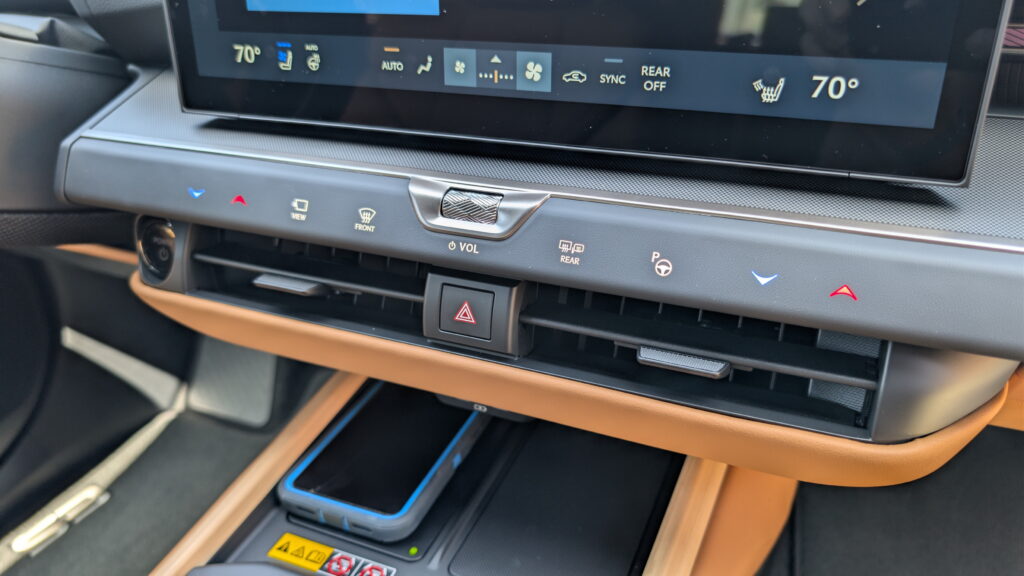
For example, the look of the climate controls is nice. It’s uniform, simple, and, most importantly, we’re talking about physical buttons. But Lexus has hidden them under a long rubber panel. It strongly resembles (and I realize very few ES buyers will get this reference) the texture of game controller thumbsticks. That’s all well and good, but only up to a point.
Because everything is on a single strip and relies almost exclusively on symbols, you still look down to make sure you’re pressing the right button. Worse: if one switch fails, replacing it means replacing, or at least removing, a much larger assembly. Many buyers won’t care because they’ll sell the car before the warranty expires, but it’s something for second or third owners to think about, especially out of warranty.
The buttons on the steering wheel don’t help. Some feel oddly cheap for a Lexus, and the infotainment volume knob looks expensive but feels… not expensive to the touch.
Fortunately, the infotainment system itself gives no cause for criticism. Every ES gets a 14-inch touchscreen and a 12.3-inch digital driver display. The screen is bright, responsive, and fairly intuitive once you get used to it. The 17-speaker Mark Levinson audio system also absolutely “rips.”
Rear seat passengers also get interesting options. The Executive package adds heated, ventilated, and massaging rear seats, as well as a power-reclining ottoman on the passenger side. This is exceedingly weird and surprisingly cool. Lexus says buyers get 13.3 cubic feet of cargo space, which is normal for the class. The extra length of this car is aimed at rear passenger comfort above all else. From that perspective, it’s a clear winner, as at 6’6″ tall, my head barely touched the ceiling, and my legs had room for days.
Driving Impressions
ES 350h
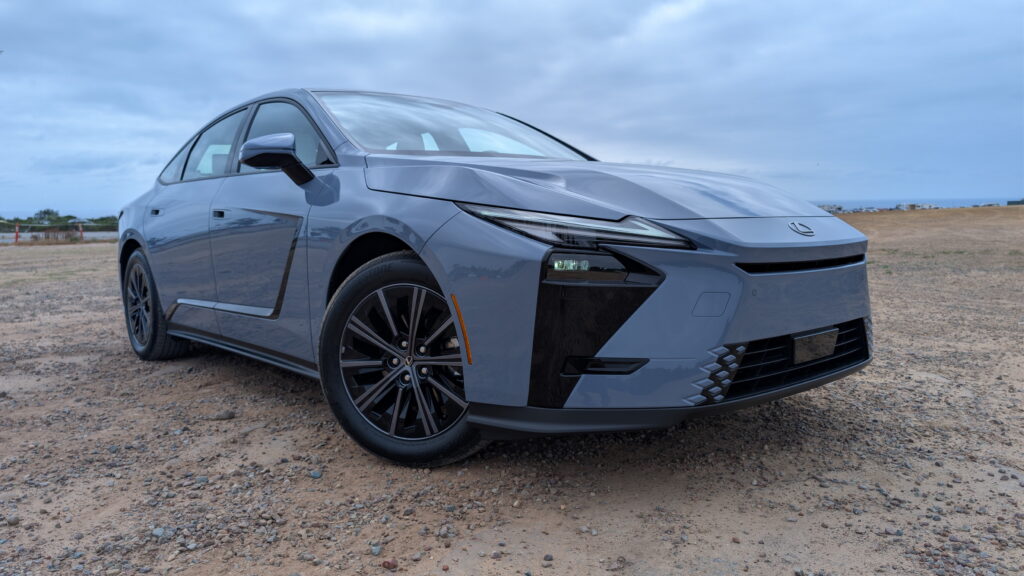
First, let’s focus on the ES 350h. Hybrids will undoubtedly be the biggest sellers here. Lexus expects 80 percent of buyers to choose the hybrid, and it’s easy to see why. It’s technology most are familiar with, and the two versions couldn’t be more different when it comes to range and performance.
The ES 350h uses a 2.5-liter four-cylinder hybrid setup producing 244 hp (182 kW), a CVT, and offers up to 46 mpg combined in front-wheel-drive form. Lexus also says range exceeds 600 miles. Our test car started the day with a projected range of 629 miles. That’s excellent and makes this car a true highway mile-eater for those who regularly take long trips.
Those who opt for the AWD version won’t lose much in fuel economy. It gets up to 44 mpg, but keep in mind that performance doesn’t change significantly. The front-wheel-drive version hits 60 mph in 7.3 seconds, while the AWD gets a rear-axle electric motor and does the same sprint in 7.1 seconds. These figures are acceptable but far from what the average enthusiast would consider quick.
Around town, the ES is tuned perfectly. It’s comfortable, quiet, composed, and just a pleasant place to spend time. I would refrain from saying it feels particularly nimble or playful, but it doesn’t feel clumsy, dopey, or disappointing either. Although the steering is almost too light, the pedal feel deserves genuine praise. It’s easy to mess up hybrid braking systems, but Lexus absolutely nailed it. Modulating the brakes during harder braking is easy enough that you can finish that same event with a light and subtle touch.
There is just one problem that really stands out, but it only arises under one circumstance, and there’s a simple way to solve it. Never drive the EV.
ES 350e / ES 500e
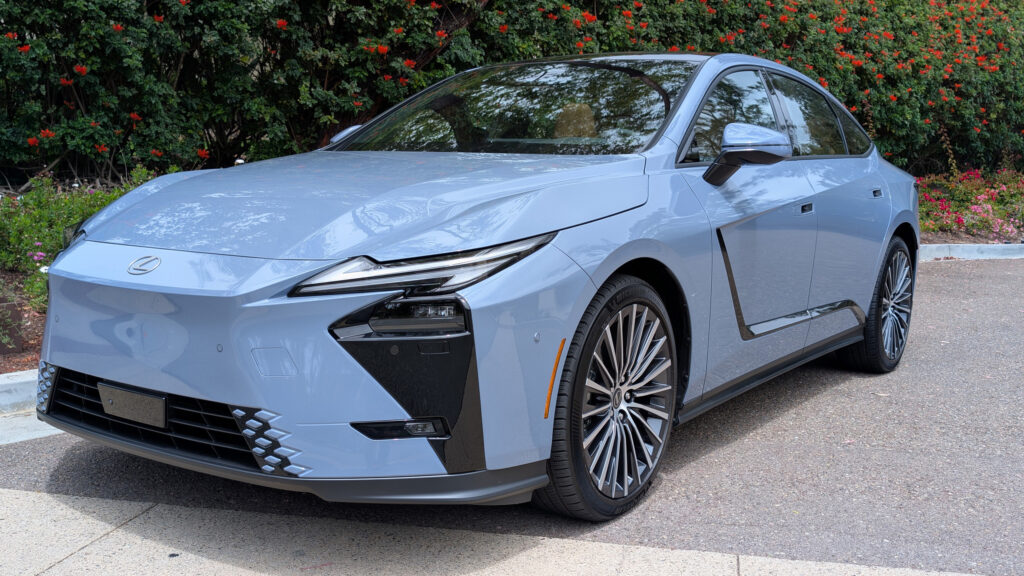
Once, when we tested the BMW i5 and its gasoline counterparts, we noticed something unique. The gasoline cars felt significantly more fun to drive because, although they weren’t as fast, they were much lighter, making them more enjoyable to toss into corners. Somehow, Lexus has done the complete opposite here. If anything, the EVs feel more playful, but that’s not why hybrid buyers need to stay away.
The problem is that the EVs are so quiet that the hybrid feels unbearably loud after comparison. Don’t get us wrong. The hybrids aren’t really loud in the grand scheme of things. But adding a relatively unrefined, efficiency-focused four-cylinder engine to a CVT and long acceleration times for things like highway merging puts these two cars in different leagues regarding interior noise.
Returning to the driving experience, the ES 350e starts with 221 hp (167 kW), front-wheel drive, and a range of up to 307 miles. It hits 60 mph in 7.4 seconds. That’s right, a modern automaker just built an EV that is slower than its hybrid counterpart. Leave it to Lexus, I suppose. From behind the wheel, however, it is surprisingly good. Obviously, throttle response is much more direct.
The steering and brakes are similar to the hybrid, but it’s worth noting there is no simple one-pedal driving mode. Instead, Lexus allows drivers to increase or decrease regenerative braking using paddle shifters. This is nice, but one-pedal driving is even nicer for those who prefer it.
The ES 500e is the true winner. Its dual-motor setup produces 338 hp (252 kW) and hits 60 mph in 5.1 seconds. This is a driver’s car. Acceleration hits hard down low. It feels powerful, nimble in traffic, and more premium because it genuinely seems like Lexus wanted to compete dynamically.
Even then, it still feels somewhat conservative. As if Lexus went halfway to creating a true German sports sedan rival, then backed off. Nevertheless, if I had to choose? Easily. I’d charge at home and buy the ES 500e. The NACS charging capability only sweetens the deal.
Competition
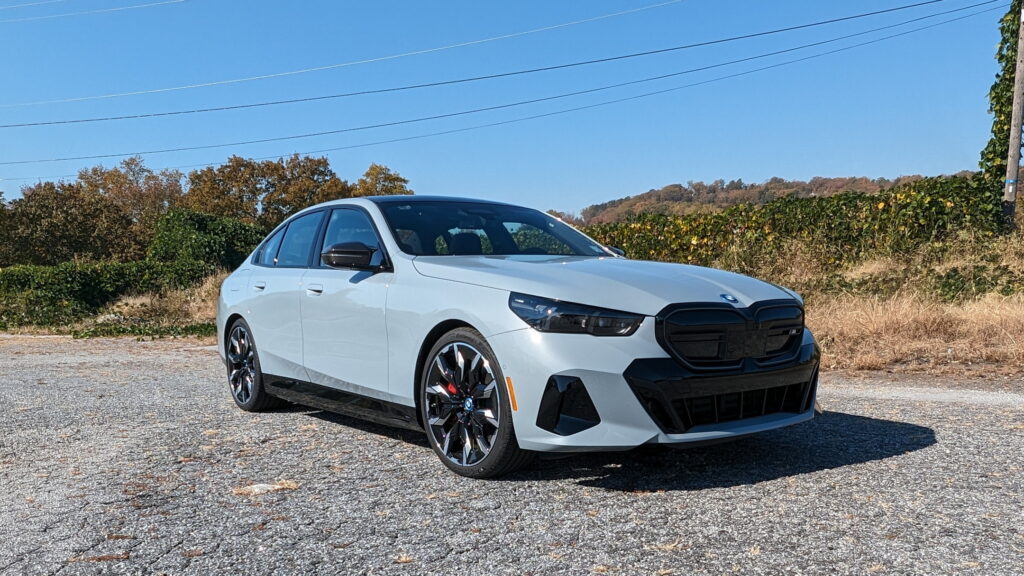
Pricing is where the new ES starts to make a strong argument. The hybrid lineup starts just over $51,000, while the EV range spans from around $49,000 for the ES 350e to just over $60,000 for a fully loaded ES 500e AWD Luxury. This is significant because key competitors often start much higher. The BMW i5 starts around $68,500, while the Mercedes E-Class starts in the mid-$60,000 range before options begin their inevitable assault on your wallet.
Then there are the numbers. The ES 350h offers up to 46 mpg combined and over 600 miles of projected range, while the EVs deliver between 272 and 307 miles depending on trim and wheel choice. The ES 500e also puts out 338 hp (252 kW) and reaches 60 mph in 5.1 seconds, making it quick enough to stay in the conversation, even if it won’t embarrass its German rivals at a traffic light.
The difference is philosophy. BMW and Mercedes still prioritize performance and prestige. Lexus seems content offering a quieter, less complicated luxury experience that also costs a few thousand less. Whether that is enough depends entirely on what you want from a luxury sedan.
Verdict
The old ES formula worked because Lexus understood exactly what its buyers wanted. It wasn’t a big flagship sedan, nor was it a compact sports sedan. This new one adds a bit more “spice” without completely abandoning the script. The hybrid remains the rational choice.
But the EVs, especially the ES 500e, finally inject some personality into a sedan that has avoided it for years. Lexus expanded the ES. I just wish it had gone a little further. Fortunately, this is just the start of the generation. There’s plenty of time for an ES 500e F. Note that we didn’t say “F-Sport.” Hopefully, Lexus is listening.
The new 2026 Lexus ES is an interesting example of an automaker trying to expand its audience without losing its existing one. The hybrid version remains a benchmark of practicality and comfort, while the electric versions, especially the powerful ES 500e, finally offer the dynamics that previous generations sorely lacked. The choice between them comes down to priorities: if you need maximum range and proven technology, choose the hybrid. If you are ready for silence, instant response, and genuine performance, the ES 500e will be a pleasantly surprising discovery, albeit not without compromises in price and range.