 by
by Japanese Brand Presents a Solution for Rainy Side Mirrors
Thanks to a little-known Japanese supplier, one of the eternal problems for drivers in rainy weather may finally get a practical solution. The company Car Mate, whose name may not be widely recognized, is introducing a smart water-repellent film that keeps side mirrors clean during rain.
The product is debuting in the US at the CES consumer electronics show in January, offering drivers a simple yet effective way to maintain visibility when the skies open up.
The next time you say “I’m cold,” your car might fix itself
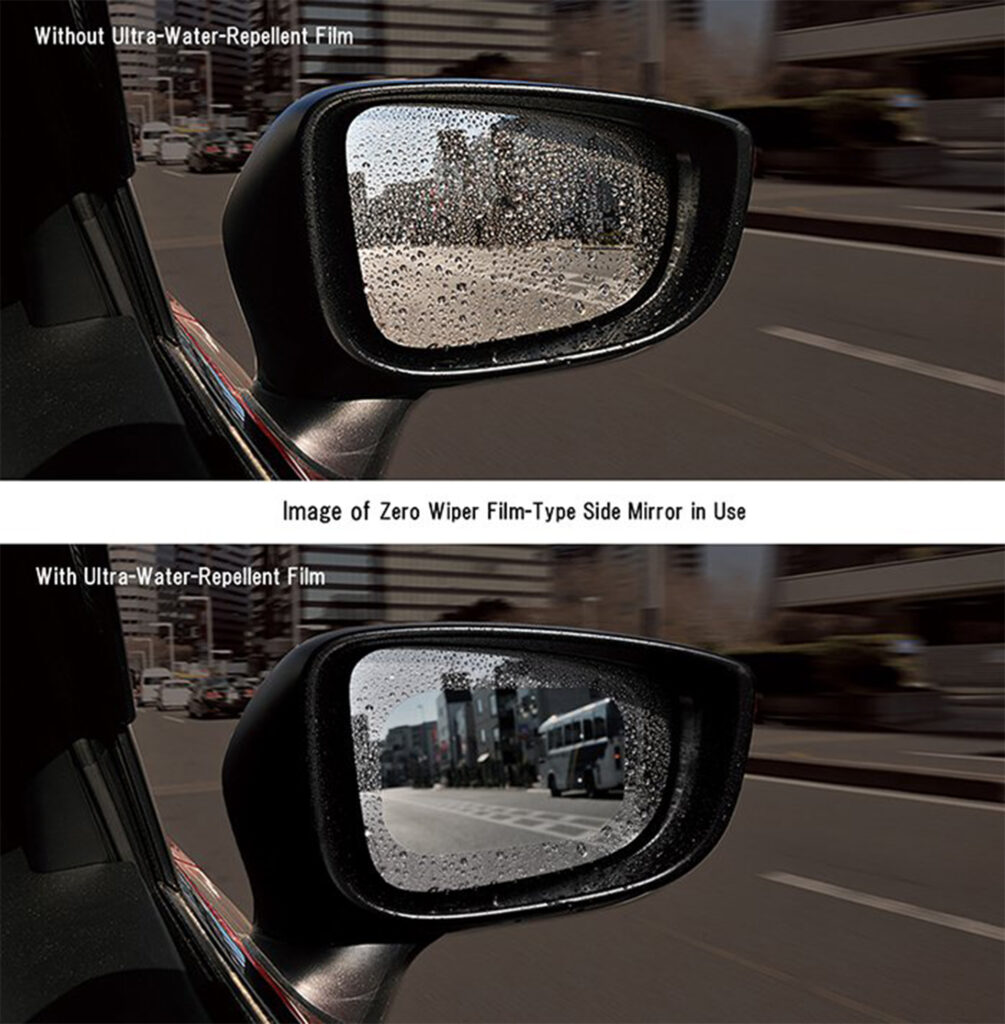
The Zero Wiper Film-Type Side Mirror was first introduced at the Japan Mobility Show in 2023 and launched in Japan the following year. Its concept is simple: the film is applied directly onto the mirror, creating a barrier that seems to easily shed water. Judging by early demonstrations, droplets simply slide off, leaving a clear, uninterrupted view of what’s behind you.
How Does It Actually Work?
According to Car Mate, the film’s surface uses a microscopic texture modeled after the lotus leaf, which is a natural example of extreme hydrophobicity. This structure causes water to bead up and slide off rather than stick to the glass. The result is improved visibility in rainy conditions, especially when the car is moving.
Importantly, since the film is not tailored to a specific car, it is compatible with most modern side mirrors. However, there is a compromise. Because the shape is not individual, the outer edge of the mirror remains exposed. This leaves a visible border that the film won’t cover, which might be a minor aesthetic drawback for some.
Competition and Advantages
Hydrophobic mirror films are not new in the US. In fact, there are many different films available via Amazon and even Walmart. Aerosol solutions like RainX can also be used on a car’s side mirror to make it shed water droplets easily.
Car Mate’s advantage lies in durability and ease of use. The company claims its film can last up to six months before needing replacement, offering a long-term solution with minimal maintenance.
Details regarding price and availability in the US are not yet confirmed, but for drivers who frequently face wet roads, such a product could make a small but significant difference in everyday driving.
Similar technologies borrowing principles from nature, such as the lotus effect, are becoming increasingly common in the automotive industry, from improving visibility to reducing the need for washing. The success of such a product on the market will depend not only on its effectiveness but also on how convenient the application process is for the average consumer and whether the benefits outweigh the costs. It might also encourage automakers to consider integrating similar hydrophobic coatings directly at the car manufacturing stage, making such solutions a standard feature rather than an accessory.