 by
by Volvo XC40 Update and Its Role in the US Market
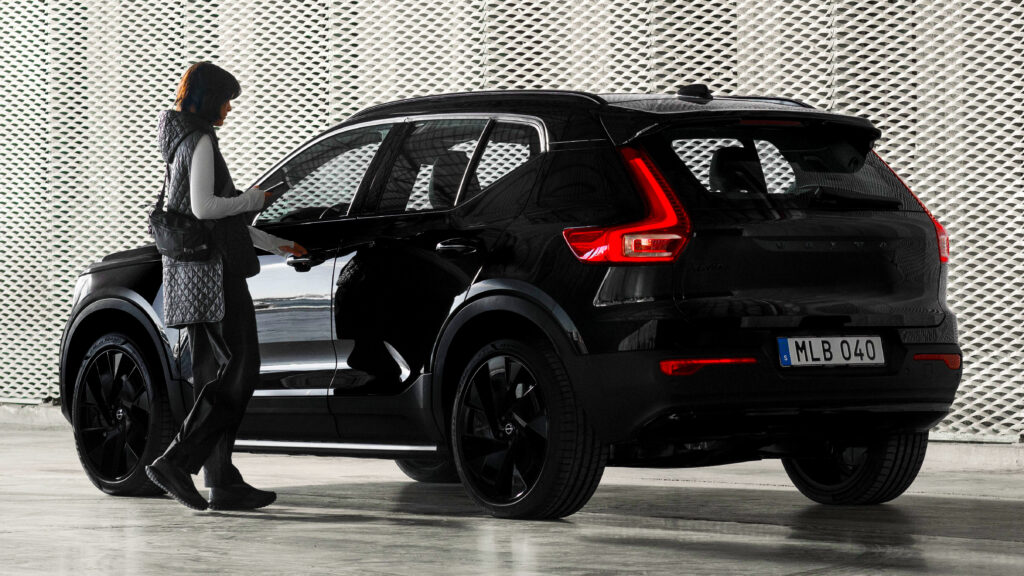
Volvo is actively working on a fully updated version of the compact XC40 SUV, with its US market launch planned for next year. Although details are still limited, this news confirms that the current XC40 models and its electric variant, the EX40, will remain in production for some time yet, at least until the end of this year.
Introduced in late 2017 as Volvo’s smallest SUV, the XC40 is aging quite gracefully, though its age is beginning to show. Updates have been minimal, limited to only a minor facelift. The next generation is expected to significantly broaden its appeal with the introduction of a plug-in hybrid option, complementing the existing mild-hybrid lineup.
The new electric EX40 will likely be built on the company’s latest SPA3 platform.
Sales Crisis and Dealer Hopes
More is riding on this update than just the desire to stay relevant. Dealers are hoping the new XC40 will help stabilize the brand’s position in the US. Volvo’s total sales fell by 32% in the first quarter, to 22,651 vehicles, while the brand’s share of the luxury segment dropped to 5.8%, the lowest since 2019. The XC40 was hit particularly hard: its sales plummeted by 47%, to just 3,403 units.
Need for Profound Changes
To sustain interest in the XC40 until 2026, Volvo has already updated it with a new multimedia system. However, to win back buyers, the next generation will require significantly more substantial updates. Reportedly, the new EX40 will take a major step forward by sharing the SPA3 platform with the electric EX60.

Despite the new XC40 being on the horizon, some dealers believe Volvo would be better off prioritizing other models, such as the XC60 and XC90, as they generate higher profits. One dealer noted:
The XC40 is a great car, and we appreciate the update, but the US market is a market for large cars.
Parallel Work on Other Models
Volvo is already investing in developing its larger lineup. The XC60 received an update last year, and from late 2026, its production is set to begin at the brand’s plant in Ridgeville, South Carolina. The XC90, in turn, received a second facelift in 2024, and a full redesign is also in development. However, a completely new model may not appear until 2029, so the current SUV will remain a mainstay for a long time yet.
The success of the updated XC40 could be indicative of Volvo’s strategy for balancing popular but less profitable compact models with the larger SUVs that are key to the brand’s financial health. Competition in the compact electric and hybrid SUV segment is intensifying, so Volvo will have to offer not just a refreshed design but a compelling package of features, technology, and value to win back customers. Whether the new platform and hybrid options can reverse the trend will become clear soon.