 by
by The anticipated next-generation Hyundai Elantra will bring a number of important updates. Among the key changes:
Global Popularity and Update Expectations
The Elantra remains one of Hyundai’s most recognizable models worldwide, successfully competing with long-established rivals. In the American market, this model became the brand’s third best-selling vehicle, trailing only the Tucson and Santa Fe crossovers, with annual growth of almost 9 percent.
The seventh generation of the compact sedan has been with us for several years, and a full model update is not far off. The codename CN8 – the eighth-generation Elantra will be a significant departure from its predecessors thanks to larger dimensions, a new design, and interior. The manufacturer seems to be trying to elevate the model slightly in class, giving it a more striking visual identity and a more spacious cabin that meets modern buyer expectations.
Dynamic New Look
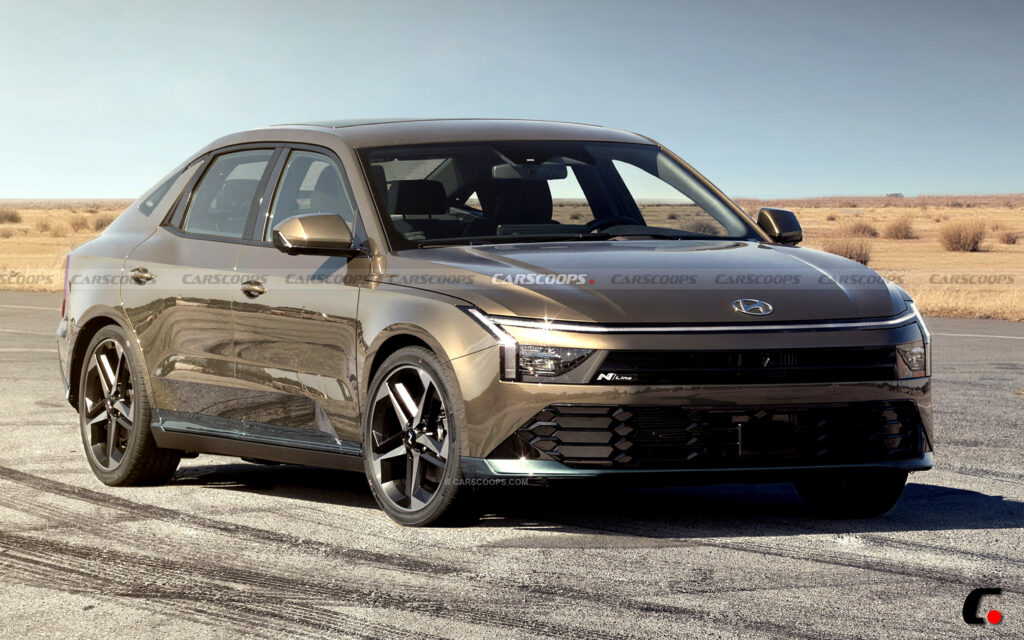
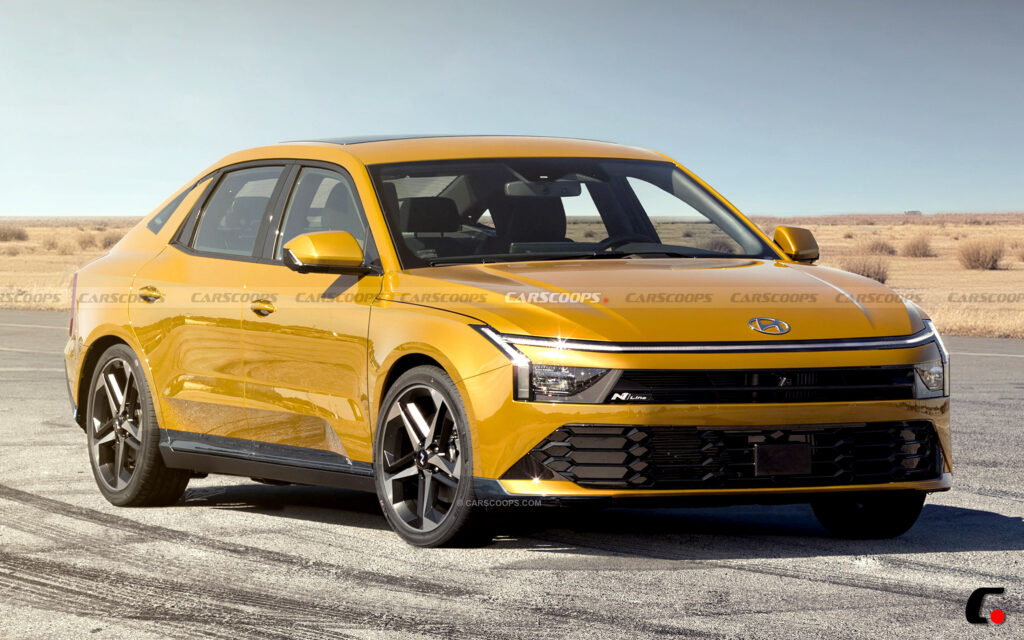
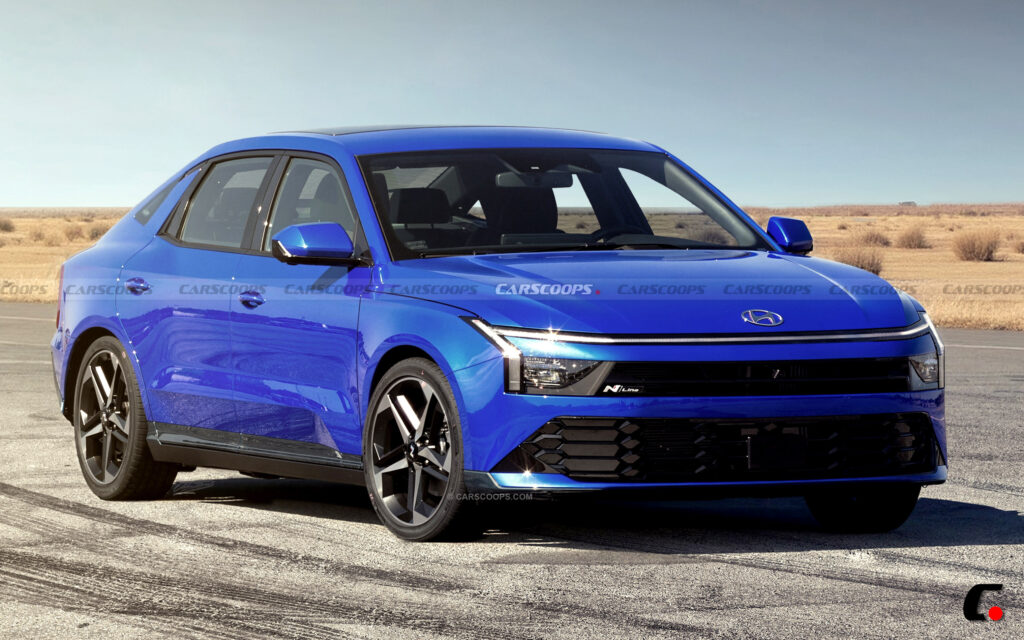
If the current model was characterized by diagonal lines and sharp edges, the next-generation Elantra offers a much more refined aesthetic with futuristic details.
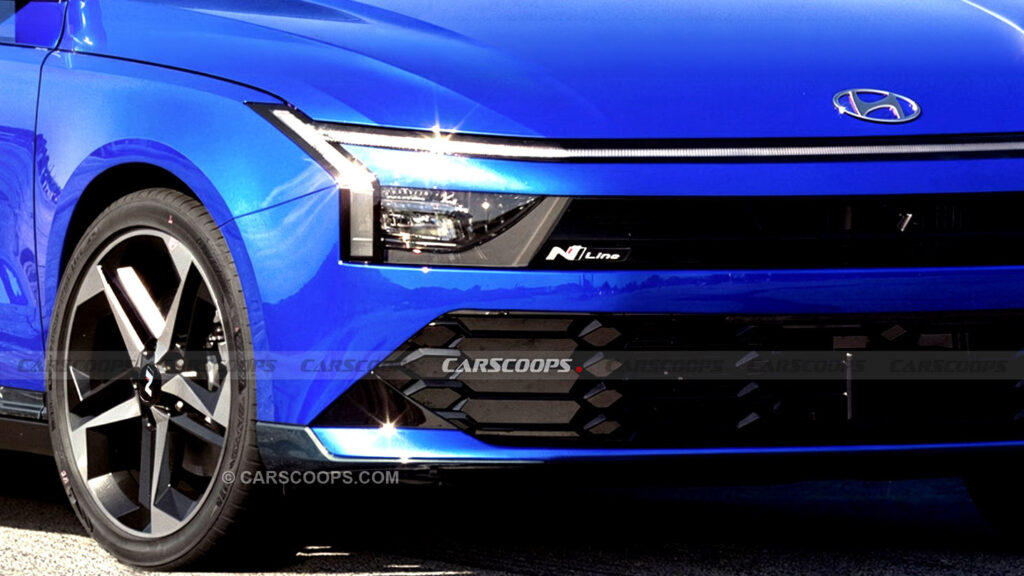
At the front, the car will greet onlookers with a horizontal LED light strip that curves smoothly down the sides. Below are the main LED headlight units, integrated with a narrow radiator grille, beneath which is a larger trapezoidal air intake.
The side profile takes on an alternative character thanks to a straight window line defined by an unusual placement of the rear side window; it almost appears to be floating within the painted body-colored pillars. At the rear, the model received a thin horizontal LED light strip across the trunk lid, with additional vertical elements at its edges.
Interior Updates: Screens and Space

Major changes will occur inside, where Hyundai Group’s own developed infotainment system called “PLEOS Connect” will debut. It will replace the previous dual-screen layout with one large central display, complemented by a narrow digital instrument panel.
This new system runs on Android Automotive OS, allowing for app downloads, over-the-air updates, and use of the built-in Gleo AI voice assistant.
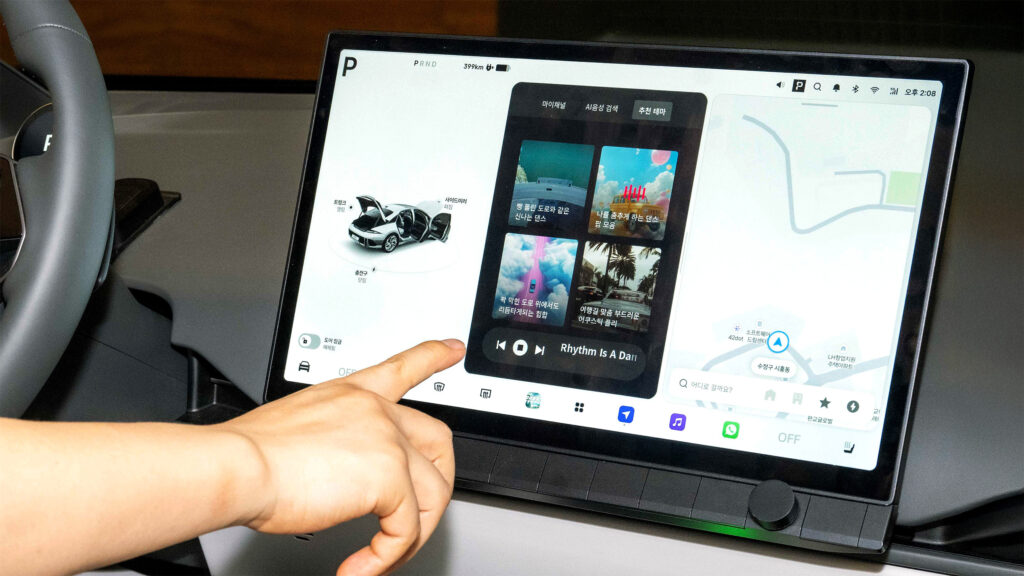
Otherwise, the interior resembles the styling of the larger Palisade: a dashboard with a high upper section, minimalist door cards, and many oval details. Fortunately, a row of physical buttons for key functions will remain below the main touchscreen, and separate climate control knobs below that. This solution should appeal to drivers who still prefer tactile buttons for daily adjustments.
The main cabin dimensions will increase, with more legroom in the front and rear seats, as well as improved shoulder room. Overall length is expected to grow to 187.6 inches (4765 mm), which is 2.2 inches (55 mm) more, and width will increase to 73.0 inches (1855 mm), which is 1.4 inches (35 mm) more. The wheelbase will now be 108.3 inches (2750 mm), extended by another 1.2 inches (30 mm).
Powertrains and Transmission
Under the hood, a familiar powertrain lineup is expected. The Elantra’s engine range will likely be very close to the Kia K4, starting with a 140 hp hybrid built around a 1.6-liter gasoline engine. Next will likely be a 2.0-liter four-cylinder engine with 147 hp, as well as a turbocharged 1.6-liter unit with 200 hp for those who prefer a compact car with more dynamics. In some markets, a version with a liquefied petroleum gas (LPG) engine may also appear.
All versions are expected to remain front-wheel drive and will be paired exclusively with an 8-speed dual-clutch robotic transmission.
As for the high-performance Elantra N version, it is under development and will likely receive over 300 hp from a 2.5-liter turbocharged four-cylinder engine. A downside may be the lack of a manual transmission in this modification, which could disappoint fans of classic control.
Competitors and Release Timeline
The main competitors remain the familiar models: Toyota Corolla, Mazda 3, Honda Civic, Nissan Sentra, and the closely related Kia K4. The official presentation is expected in the coming months, with sales planned for early 2027. This schedule means that in North America, the model could appear either as a 2027 or 2028 model year vehicle, depending on how the calendar shapes up.
Thanks to larger dimensions, updated technology, and a more expressive design, the new Elantra seems to have decided to fight these competitors not only on price but also with space and a more mature feel.
The Elantra update reflects a general trend in the automotive industry, where even compact sedans are receiving bolder design, expanded connectivity features, and increased space to remain relevant. The switch to a unified Android-based system could be a decisive step for Hyundai in the fight for younger and tech-oriented buyers, while the retention of physical buttons indicates a balance between innovation and convenience. The success of this model in markets such as the US and Europe will show whether the brand has managed to find the right formula for the future of the traditional sedan in the era of crossover dominance.