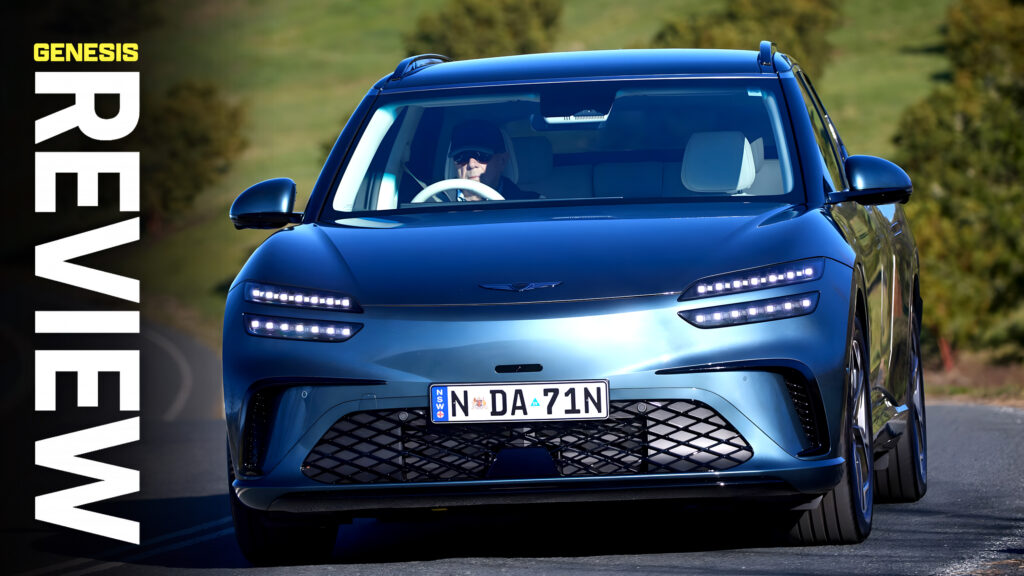
 by
by Pros: Elegant design, nice interior, efficient powertrain, excellent ride smoothness. Cons: High price, cramped rear row, somewhat outdated technology.
The Mysterious Status of the GV60
The GV60 has always been a somewhat mysterious car. It shares mechanical components with the Hyundai Ioniq 5 and Kia EV6, but the Genesis badge adds a more serious approach to luxury and a higher price. Buyers responded accordingly, meaning the GV60 has never come close to the sales figures of its corporate siblings.
Updates for the 2027 Model Year
For the 2027 model year, the manufacturer aims to better differentiate the GV60 from the cars with which it shares its platform. In Australia, the lineup has undergone changes, including the introduction of a new rear-wheel-drive model and the removal of the former all-wheel-drive performance version. The vacated spot has been filled by an all-new GV60 Magma, which serves as a sibling to the Ioniq 5 N.
Read: 2027 Genesis GV60 Magma Wants to Make BMW and AMG Sweat
As the GV60 struggled to find its niche in an increasingly competitive market, so did the Genesis brand. Not content with focusing solely on luxury models, it is now fully investing in performance, creating the Magma brand, participating in endurance races, and even considering establishing its own GT3 racing team.
To find out if the GV60 has finally found its market niche, we spent some time with the new rear-wheel-drive model in Canberra.
Quick Facts
Exterior Changes and Price
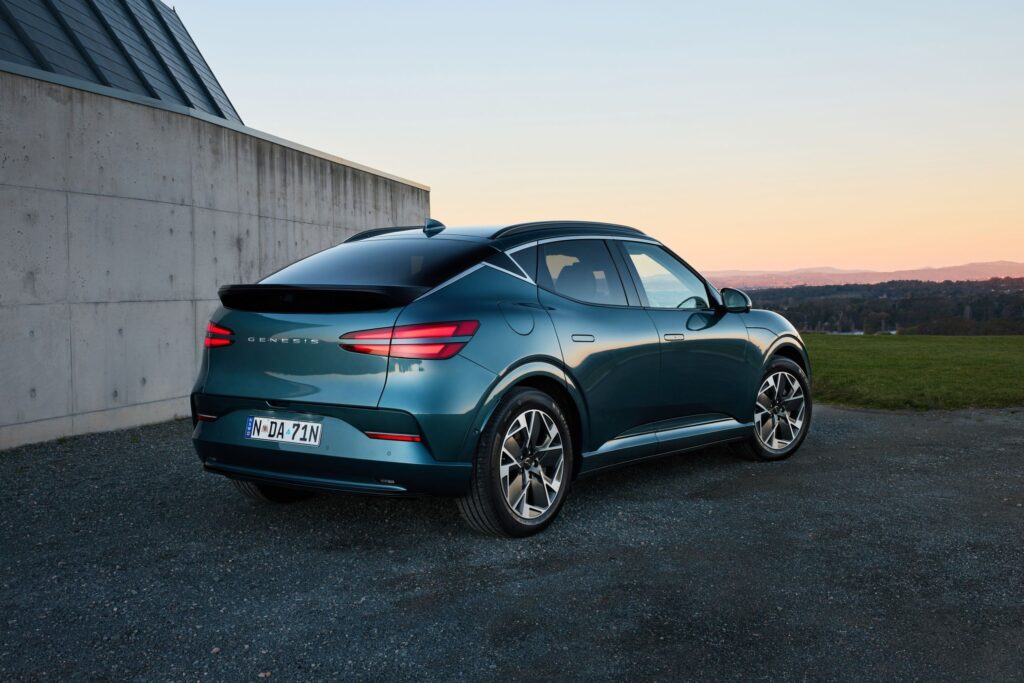
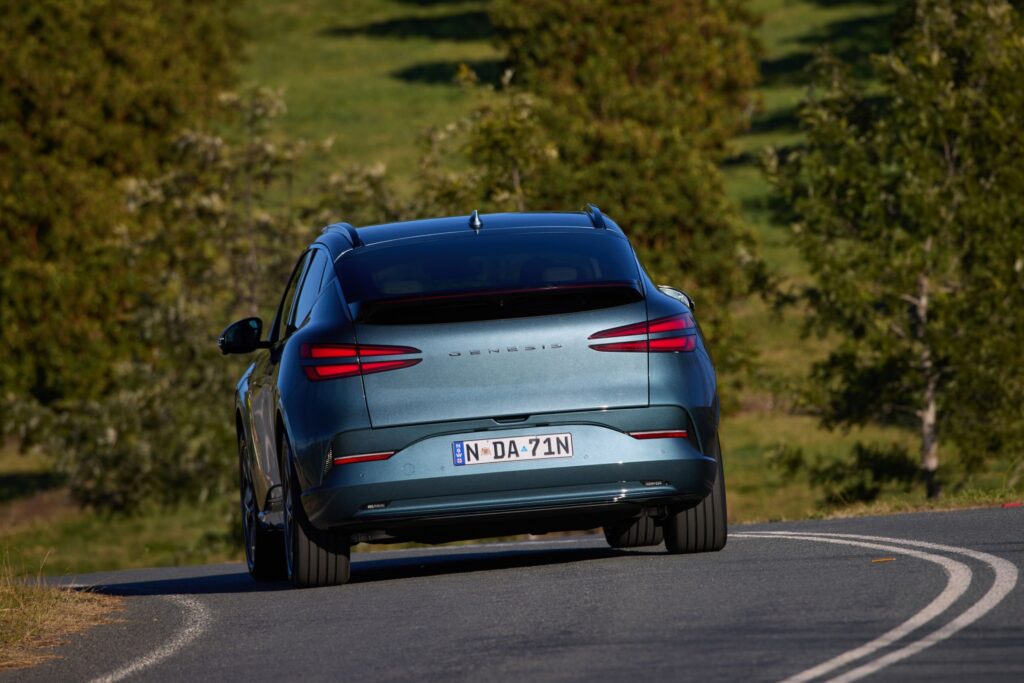
Looking at the photos of the updated GV60, you could be forgiven for thinking it is exactly the same as the one sold over the last few years. Apparently, Genesis was not interested in a radical design overhaul, adhering to its recent formula of minor visual and technological updates.
Key changes include revised front and rear bumpers, updated headlights, and new 19-inch wheels. The price has also changed.
When the GV60 first launched in Australia exclusively in all-wheel-drive configurations, it started at AU$103,700 (US$72,500). In 2022, that was fine, as the market was not as hot as it is now. With the arrival of more affordable Chinese EVs on the market, Genesis was forced to lower prices, drop the standard all-wheel-drive model, and launch the Advanced version.
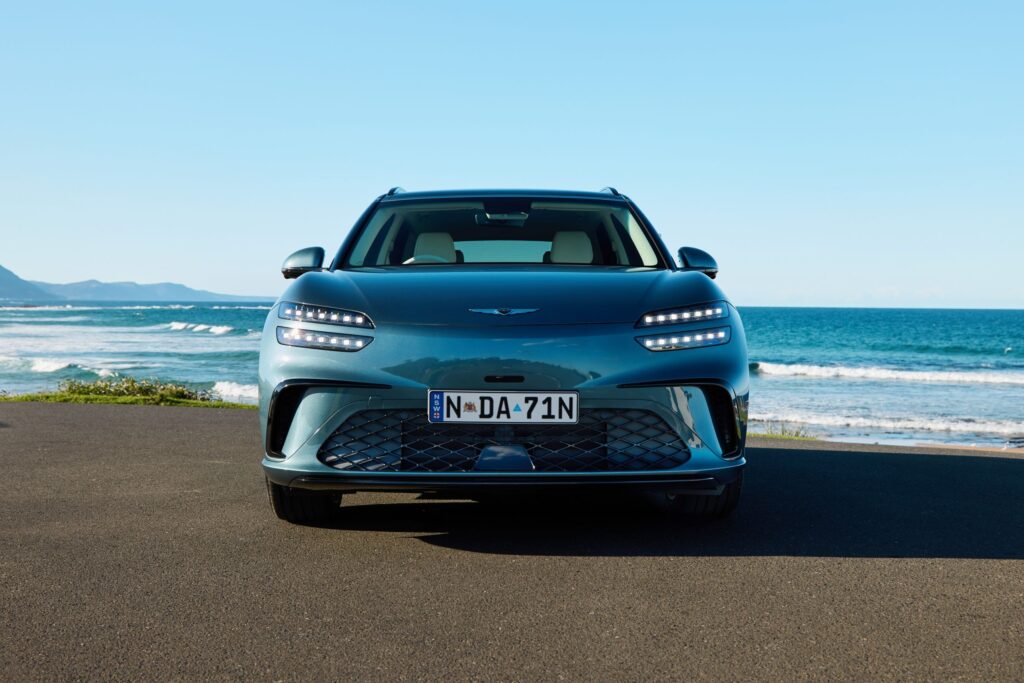
Like the recent updates to the Ioniq 5 and EV6, it features a new 84 kWh battery pack and a new electric motor producing 168 kW (225 hp) and 350 Nm (258 lb-ft) of torque. The price has also dropped to AU$88,300 ($61,800). Additionally, a new flagship GV60 Magma has arrived, priced from AU$130,000 (US$91,200), which we will test soon.
This version has been long-awaited. It follows the familiar recipe of the Ioniq 5 N and Ioniq 6 N, featuring two electric motors that together produce 448 kW (601 hp) and 700 Nm (516 lb-ft) of torque. It is the first model launched by Magma and is a sign of future performance cars. Importantly, the Magma should not be viewed in the same light as Hyundai N, as it has a different philosophy: it aims to retain luxury and refinement while adding extra emotion. You will be able to hear our thoughts on the GV60 Magma next week.
Interior Unlike Hyundai
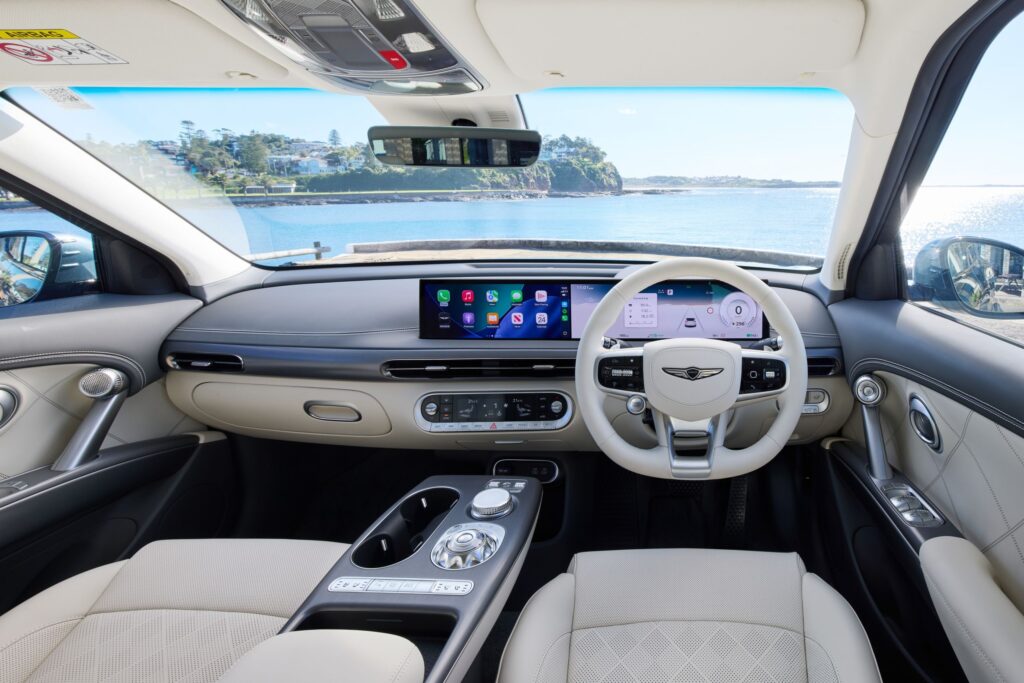
Changes inside the GV60 Advanced, like the exterior, are relatively minimal. The key addition is the excellent 27-inch infotainment and instrument cluster from Hyundai, along with an updated steering wheel.
As always, the GV60 continues to give passengers a sense of class, making time behind the wheel a genuine pleasure.
Wireless Apple CarPlay and Android Auto are standard on all GV60 models and work well. Compared to some brand-new EVs from Asia, the GV60’s displays are relatively simple and lack some quirky features, games, and flashy graphics. On the other hand, this means the software is extremely easy to navigate, without overly complicated menus.
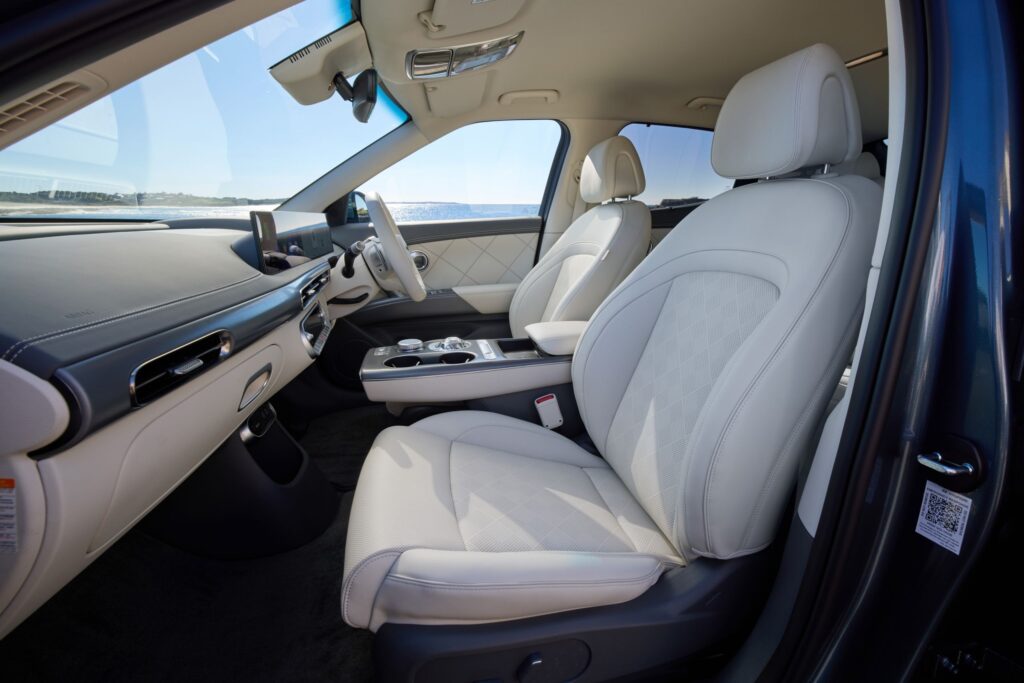
As in all current Genesis models, the GV60’s cabin feels premium and well-thought-out. Unlike many other EVs, it does not overly rely on screens, retaining a separate climate control screen and buttons. Among all EVs on the market, few combine tactile controls with screens as well as the GV60. This includes the famous Crystal Sphere rotary gear selector, which has been retained.
Review: 2023 Genesis GV60 Performance AWD Will Silence Skeptics
A welcome update is the inclusion of standard side mirrors. Before the facelift, the GV60 was available with cameras instead of mirrors, and while they worked reasonably well, they left something to be desired. Undoubtedly, the cost of replacing them if damaged would also have been astronomical.
Other pleasant Genesis features include leather seats with 12-way power adjustment for the driver and front passenger, heated and ventilated front seats, and dual-zone climate control. It also comes with all the standard safety equipment you would expect, including forward collision avoidance, lane keeping assist, and lane following assist, as well as parking aids and a 3D surround-view monitor.
Everything an EV Should Be
For everyday driving, the GV60 Advanced is a smooth and quiet performer, exactly what existing Genesis owners expect and what buyers transitioning from other luxury brands demand.
Like the pre-facelift model, the updated GV60 feels like an Ioniq 5, though it feels slightly smaller and more agile behind the wheel thanks to a wheelbase that is 100 mm (3.9 inches) shorter. Of course, it is also noticeably more luxurious than the Hyundai or Kia EV6, and I think this justifies the higher price.
Besides the larger battery pack, the new model also includes improved pre-heating and pre-cooling functions to enhance charging speed. Genesis does not specify the peak DC charging speed for the standard GV60, instead noting that it supports fast DC charging stations of up to 350 kW.
Other Hyundai Motor Group E-GMP-based EVs are typically limited to around 220 kW or 230 kW. Range has increased to 561 km (348 miles) on the WLTP cycle, and charging from 10 to 80 percent can take as little as 18 minutes on a suitably fast charger. The GV60 also supports Vehicle-to-Load (V2L) functionality, capable of delivering up to 3.6 kW of power, enough to run power tools and household appliances.
Chassis changes have also been made. This includes the installation of a new low-friction U-joint to reduce friction in the steering system and updated rear hydraulic bushings that minimize vibration and noise transmitted through the chassis. The GV60 Advanced absorbs road imperfections brilliantly, although admittedly, most of the roads we drove during the launch were perfectly smooth.
Thick acoustic glass adds to the feeling of isolation behind the wheel of the GV60. It is a truly serene experience, although the same can be said for many other EVs on the market. Ultimately, this is one of the main advantages of electric powertrains, which is almost impossible to replicate in a car with an internal combustion engine.
Dynamics and Efficiency
Acceleration is confident, though certainly not neck-snapping like the old all-wheel-drive Performance model. Genesis does not provide an exact 0-100 km/h (0-62 mph) time, but it feels somewhere in the mid-7-second range.
Updates have also been made to regenerative braking. Like the older model, this new one includes four different levels of regeneration, including an one-pedal driving mode, all adjustable via steering wheel-mounted paddles. A new feature is a fully automatic mode that intelligently adjusts the regeneration level based on what the car deems appropriate, using traffic and navigation information, as well as considering upcoming intersections and roundabouts. For the most part, it works well.
Genesis claims a combined efficiency of 16.7 kWh/100 km on the combined cycle. We averaged 18.5 kWh/100 km, though this was on a relatively short route with mountain roads, so better figures can be expected in regular and urban conditions.
Verdict
There is a lot to like about the 2027 GV60. It is an exceptionally polished and well-rounded EV that feels special enough to justify the price premium over its related Hyundai Ioniq 5 and Kia EV6. For those looking for a practical, comfortable, and stylish EV, it is an excellent option.
Ultimately, it will not become a bestseller like some of the larger, cheaper EVs that have begun to flood the Australian market. Compared to other premium alternatives from established brands, such as the Lexus RZ, priced from AU$84,500 (US$59,300), and the BMW iX1, available from AU$79,900 (US$56,100), the GV60 looks quite appealing. It is an excellent choice for a discerning buyer, but perhaps not for the masses.
The updated GV60 Advanced demonstrates that Genesis has found a successful balance between luxury, comfort, and modern technology, while maintaining handling and efficiency. The price reduction and introduction of the rear-wheel-drive version make it more accessible, although it still remains a niche product. The main challenge for the model remains stiff competition from both cheaper corporate siblings and new players from China. However, for those who value unique design, a quality cabin, and impeccable ride smoothness, the GV60 offers an experience that is hard to find in other EVs for similar money.