 by
by 2026 Range Rover Sport PHEV Review: Master of Nothing, But That’s Its Focus
There are luxurious SUVs that excel at one thing. Some conquer canyons, despite weighing as much as a small house. Others function as mobile living rooms. Some can venture deep into the wilderness without losing composure. The 2026 Range Rover Sport PHEV tries to do all of this simultaneously, which sounds like a recipe for failure in every direction.
At first, it looks like a compromise. But spend a week behind the wheel, and the impression changes: being close to perfection in almost everything begins to feel like a greater achievement.
Quick Facts
Our test car arrived in Varesine Blue with a Caraway and Ebony interior, and its price tag was $96,725. On paper, this is a plug-in hybrid aimed at buyers who want to reduce fuel consumption without sacrificing luxury. In reality, it is one of the most complete two-row luxury SUVs on the market, even if some competitors still surpass it in specific categories.
Design: Understated Luxury
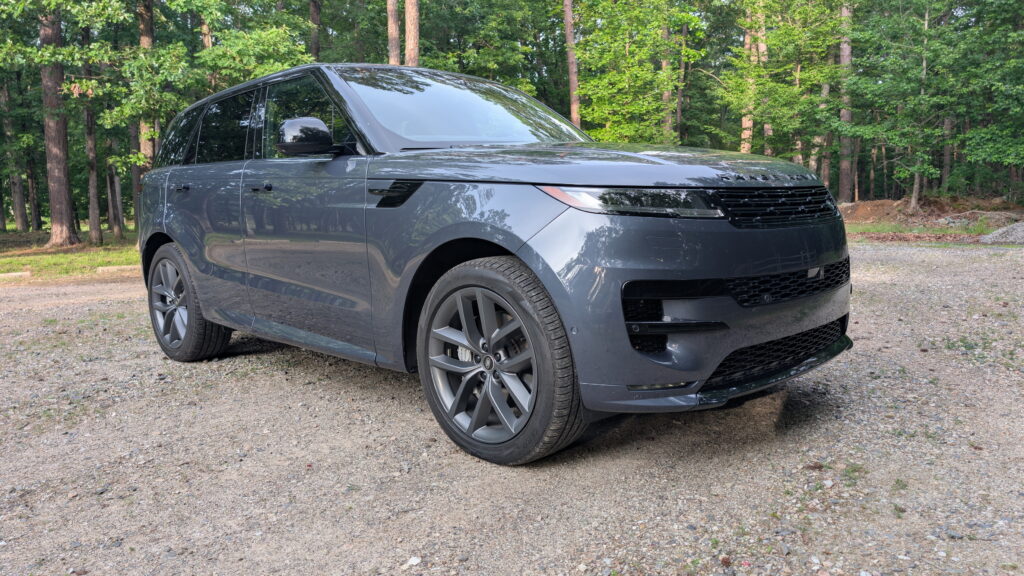
The Range Rover Sport has always balanced elegance and aggression, but the PHEV version clearly leans toward the former. In Varesine Blue, this example perfectly embodied the “quiet wealth” aesthetic that has become synonymous with modern Range Rovers.
It moves inconspicuously in traffic and parking lots, barely drawing attention, but car enthusiasts immediately recognize something special. The proportions remain excellent, the surfaces are clean, and the overall design looks cohesive from every angle.
Compared to the V8 version we tested earlier, this hybrid lacks some visual menace. This is not a criticism. Rather, it seems intentional. The PHEV doesn’t try to make a statement with giant exhaust tips or an aggressive appearance. It is content to look expensive, not flashy.
Almost every design element looks restrained and confident, which is becoming increasingly rare in a segment overflowing with enormous grilles and exaggerated styling.
Interior: Mostly Excellent, Sometimes Irritating
The cabin immediately reminds you where a significant portion of the six-figure price tag went. The Caraway leather gives the interior warmth, and the soft-touch materials and overall build quality create a truly premium atmosphere. The dashboard design deserves special praise. It is simple, elegant, and refreshingly free of unnecessary visual clutter. More importantly, it should age well.
The seats are comfortable on long journeys, but Range Rover’s unconventional adjustment philosophy remains a source of frustration. The way the seat tilts to increase hip support feels like solving one problem by creating another. I would prefer separate, traditional controls.
The infotainment system is another area where patience pays off. It can seem somewhat complex compared to simpler competitors at first. However, once you learn its logic, it becomes surprisingly intuitive and habitual to use. The surround-view cameras are excellent, the controls on the sides of the screen are very straightforward, and the graphics are crisp and clear.
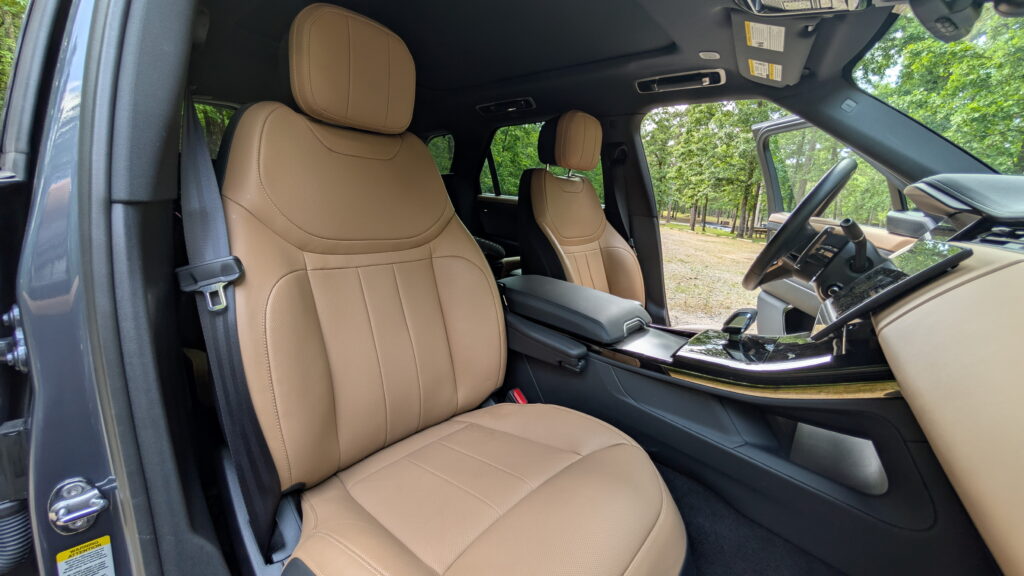
One feature that initially seemed quirky eventually won me over: the separate armrests attached to the front seats. At first glance, they seem redundant given the large center armrest. But then you realize you can access the central storage compartment without asking your passenger to move their elbow. It is one of those small real-world details that proves someone actually thought about daily convenience.
The biggest complaint about the interior concerns the glossy black plastic. Why manufacturers continue to use it remains a mystery. It looks cheap, feels cheap, instantly attracts fingerprints, and in this car, it is located on surfaces you constantly touch, including the steering wheel controls and parts of the center console.
Interior storage space is ample, making long trips and family errands easy. Rear passengers get well-cushioned seats, separate climate controls, heated outboard seats, USB ports, and power seat adjustments. The middle seat is less comfortable, but that is not unusual.
Cargo space is also impressive. Range Rover’s divider system, which uses straps and a sliding partition to secure and organize items, is particularly clever. It is a simple solution that reflects thoughtful engineering rather than marketing gimmicks.
Driving Impressions: Still Fast, But Not Like the V8
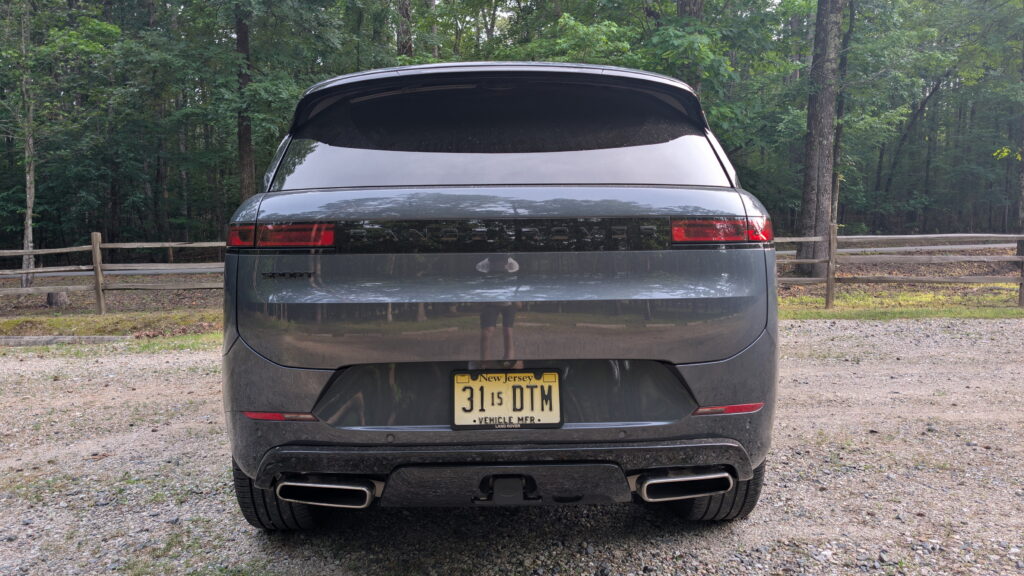
Having spent time behind the wheel of the V8 version of the Range Rover Sport, the plug-in hybrid inevitably feels like a step back in terms of pure excitement. It has less power, weighs more, and is not as sharp during aggressive driving. Nevertheless, most buyers will never notice this.
This SUV remains faster than the vast majority of cars on the road. It holds speed confidently, rides beautifully, and delivers its performance without transmitting every throttle input through the exhaust system. Initial throttle response can feel slightly muted depending on the selected drive mode, but the electric motor excels at filling torque gaps when the battery is charged.
The extra weight is noticeable in the steering and brakes compared to the V8 model, but the Sport still remains surprisingly agile for its size. No, it won’t challenge the Porsche Cayenne for driving sharpness, but it rewards the driver significantly more than most large American luxury SUVs. What impressed me most was not the acceleration, but the suspension. It smooths out sharp edges and road imperfections better than almost anything except the full-size Range Rover.
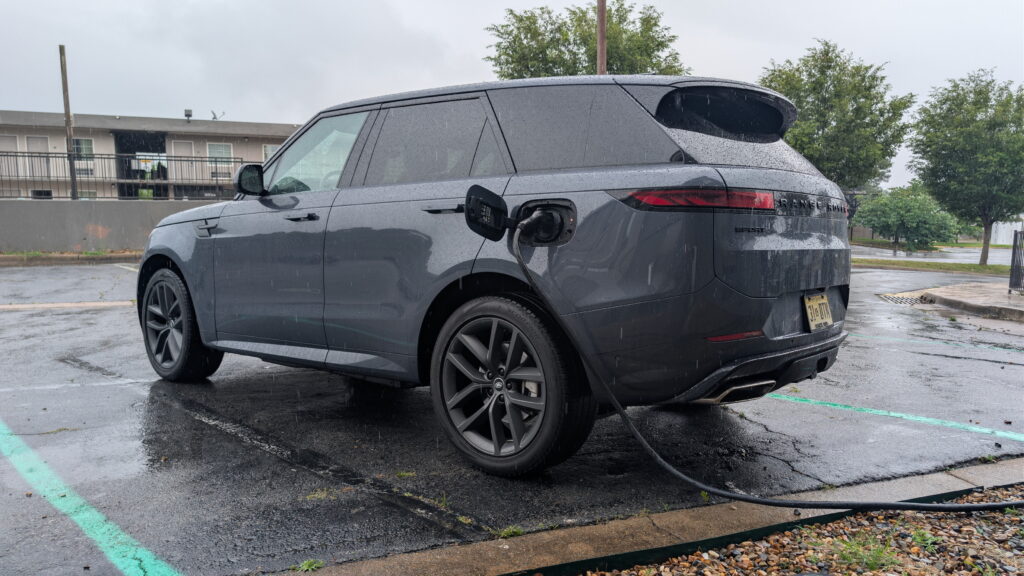
Switch to EV mode, and the character changes completely. The Range Rover becomes nearly silent, gliding through traffic with a sophistication buyers expect at this price. The EPA-estimated all-electric range is up to 53 miles, and while real-world results will vary, this is enough for many owners to complete their daily commutes without using a drop of gasoline.
Over a week with the car, we achieved an average fuel economy of 26.4 mpg. Keep in mind that this figure can drop quickly if you frequently drive with a depleted battery. Nevertheless, plugging in to charge every evening became routine. The charging port is easily accessible, and a full overnight charge means many owners can go days without using gasoline. We likely would have had significantly higher MPG figures if I hadn’t used sport mode so often.
Competitors
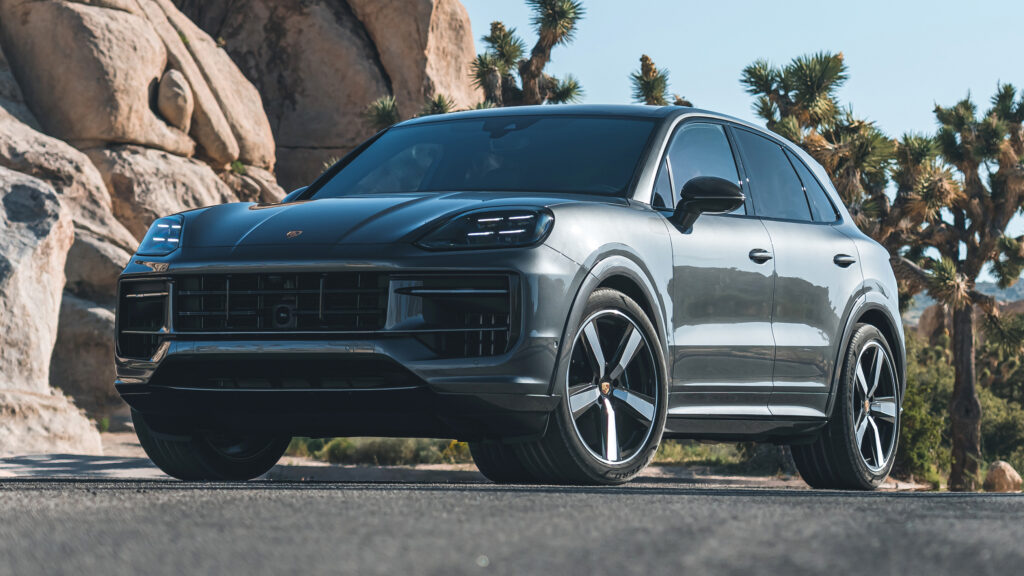
Performance-oriented buyers should consider the Porsche Cayenne. The V8 version of the Range Rover Sport is also worth considering if budget is not a concern. Those who prioritize off-road capability may find better value in a higher-trimmed Jeep Grand Cherokee, and buyers worried about long-term ownership costs should take a close look at the Lexus TX.
Meanwhile, the current BMW X5 xDrive50e, Volvo XC90 Recharge, and Mercedes-Benz GLE 450e offer compelling combinations of luxury, electrification, and a stronger reputation for long-term reliability. BMW’s position will soon strengthen as the updated X5 arrives in early 2027 with a 483-hp 50e PHEV version offering an electric range of 44 miles on a larger 26.5 kWh battery. Nevertheless, the Range Rover Sport has something many competitors lack: its own unique character. And frankly, it may not be a rock crawler, but it will outperform most of these rivals when the pavement ends.
Verdict
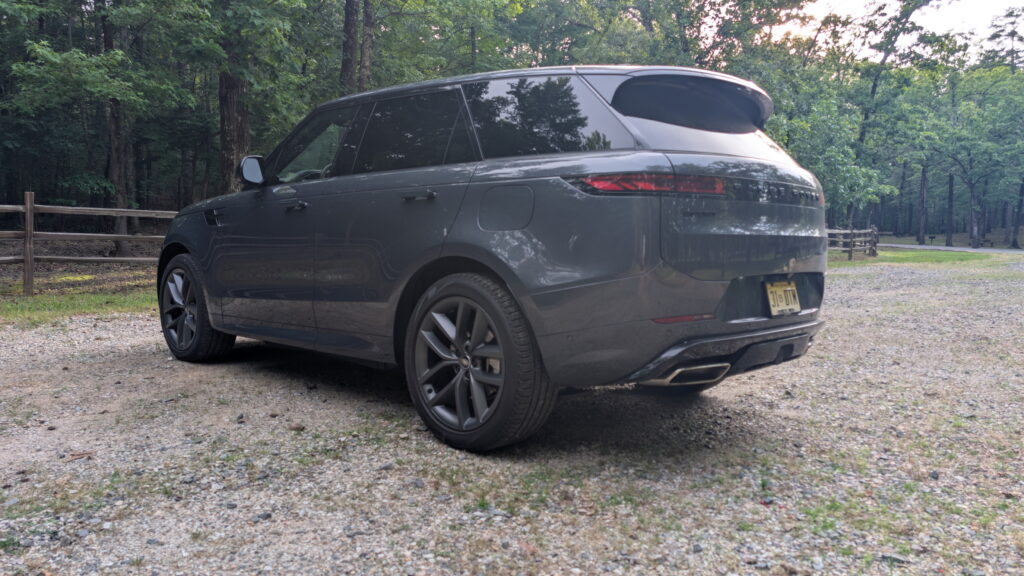
It is surprisingly difficult not to love the 2026 Range Rover Sport PHEV. Yes, it is expensive. Yes, some competitors are better off-road, more reliable, or more engaging to drive. Yet very few rivals combine luxury, comfort, technology, efficiency, style, and daily convenience as effectively. The biggest obstacle for many buyers will not be the price. It is Range Rover’s reputation for long-term reliability. Fair or not, it is a factor that buyers in this segment inevitably consider.
No car approaching a six-figure price can be called practical. That, essentially, is not the point. Buyers in this segment do not choose a car based solely on spreadsheets. They buy what makes them feel certain emotions every time they approach it.
The Range Rover Sport PHEV delivers exactly that. It offers a touch of environmental consciousness, plenty of luxury, enough performance to satisfy most drivers, and a character that is becoming increasingly rare in a world of ever more homogenized luxury SUVs. It may not be the best at any one thing. But as an overall package, it is arguably one of the finest two-row luxury SUVs money can buy.
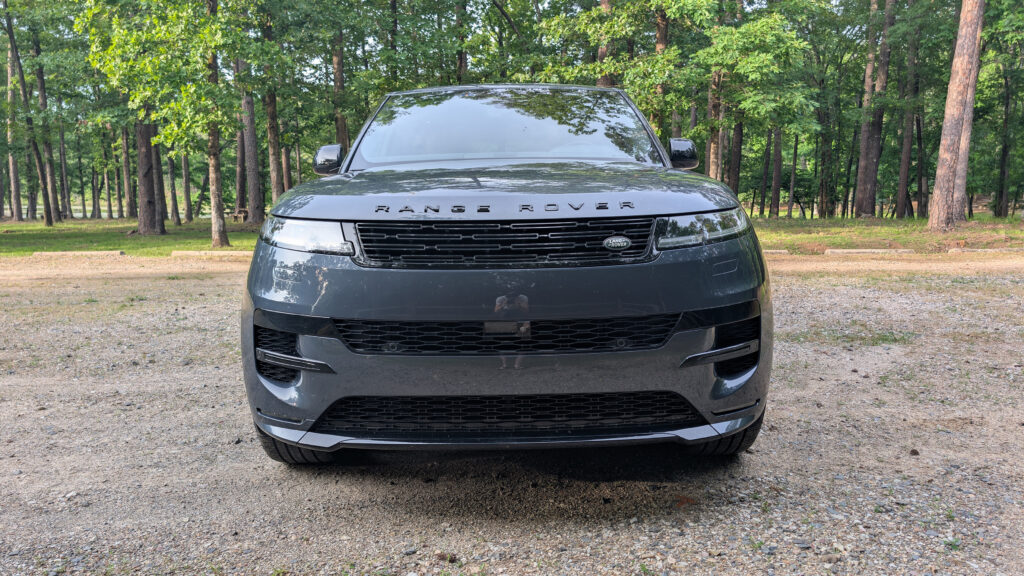
This car is a prime example of how versatility can be a major advantage. Instead of trying to be the best in a narrow niche, it offers a balanced set of qualities that satisfy a wide range of needs. For a buyer who values style, comfort, efficiency, and a certain level of prestige without sacrificing daily practicality, this SUV becomes an almost ideal choice. It is not for those seeking maximum dynamics or the best off-road capability, but for those who want a little bit of everything in one elegant package.