 by
by New Volkswagen Hybrid System: No Charging Required
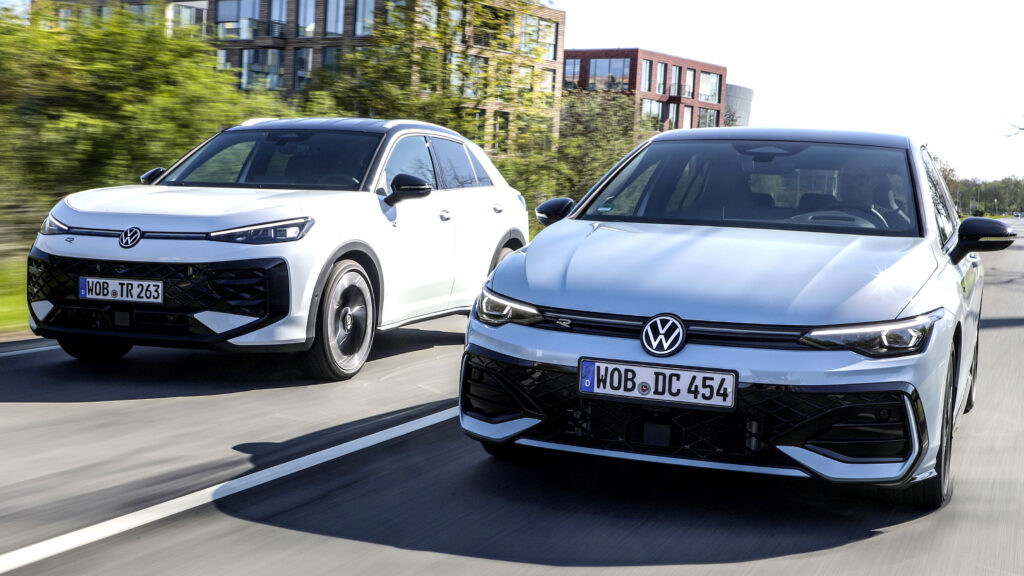
Volkswagen is filling the gap between its mild and plug-in hybrids by introducing a new full hybrid option for the Golf and T-Roc models. The system will be available in two power levels and is aimed at buyers seeking increased efficiency without the need to plug the car into the mains. Thus, the new model becomes a direct competitor to hybrids from Toyota, Honda, and Nissan.
Technical Features of the Powertrain
The foundation of the electrified system is the familiar turbocharged 1.5-liter four-cylinder TSI engine, which now works in tandem with a more powerful hybrid module. This module combines an electric motor that drives the front wheels, a second motor-generator, a differential, a single-speed gearbox, and an electronically controlled multi-plate clutch that engages or disengages the internal combustion engine as needed.
Battery and Operating Modes
Energy is stored in a 1.6 kWh lithium-ion battery with NMC cells, located at the rear of the vehicle. Since the system does not allow for mains charging, the battery is replenished through regenerative braking and the operation of the engine itself.
The hybrid offers three driving profiles: Eco, Comfort, and Sport, as well as three operating modes. At low speeds, the car moves exclusively on electric power. In series mode, the internal combustion engine turns on but remains disconnected from the wheels, acting as a generator for the electric motor. In parallel mode, at speeds above 60 km/h (37 mph), the engine becomes the primary source of drive, while the electric motor provides additional support during acceleration.
Launch and Prospects
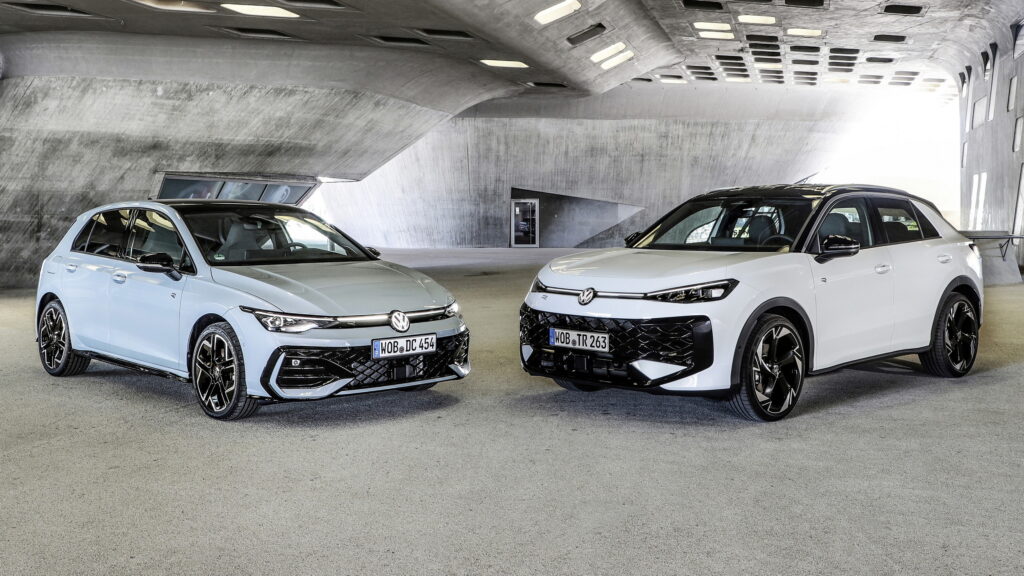
The automaker has also released images of the Golf Hybrid and T-Roc Hybrid, both presented in the sporty R-Line trim. These two models are planned for launch in Europe in the fourth quarter of 2026. There is a high probability that this same system will be extended to the Tiguan model, although it is not yet known if it will be available in the United States.
Apart from Volkswagen, the new powertrain will most likely appear in the model lineups of other VW Group brands, including Skoda, Seat, and Cupra.
This move by Volkswagen is a logical response to the growing demand for efficient yet easy-to-use hybrid technologies. Eliminating the need for recharging makes such a car more attractive to those who lack access to charging infrastructure but want to reduce fuel costs. Deploying the system across several models and brands underscores the company’s strategic vision aimed at the mass adoption of the technology. At the same time, the question remains whether this system can compete in efficiency with Toyota’s proven hybrids, especially given the relatively small battery capacity.