 by
by Stellantis Announces New Level 2++ Autonomous Driving System
Last summer, rumors emerged that Stellantis had decided to postpone its Level 3 STLA AutoDrive autonomous driving system. The reasons cited were “high costs, technological challenges, and doubts about consumer demand.”
Today, the company appears to be making a “soft relaunch” with a technology it calls “Level 2++.” It promises to deliver “door-to-door hands-free driving under supervision on highways and in urban conditions.” In effect, this sounds like a more advanced version of the Hands-Free Active Driving Assist that can operate on city streets.
Collaboration with Wayve and Qualcomm
The new Level 2++ system will use Wayve’s AI Driver to “deliver intuitive, safe, and very natural driver assistance systems, creating a flexible foundation for further development towards more advanced levels of automation.” The technology is expected to be integrated into a model for the North American market in 2028.
That is still some time away, but Stellantis Chief Technical Officer Ned Curic noted:
The combination of our STLA AutoDrive platform with Wayve’s pioneering AI-based approach creates a truly intuitive and enjoyable hands-free driving experience. This collaboration is a testament to how the right partnerships enable scaling advanced technologies globally, keeping customer safety and experience at the center.
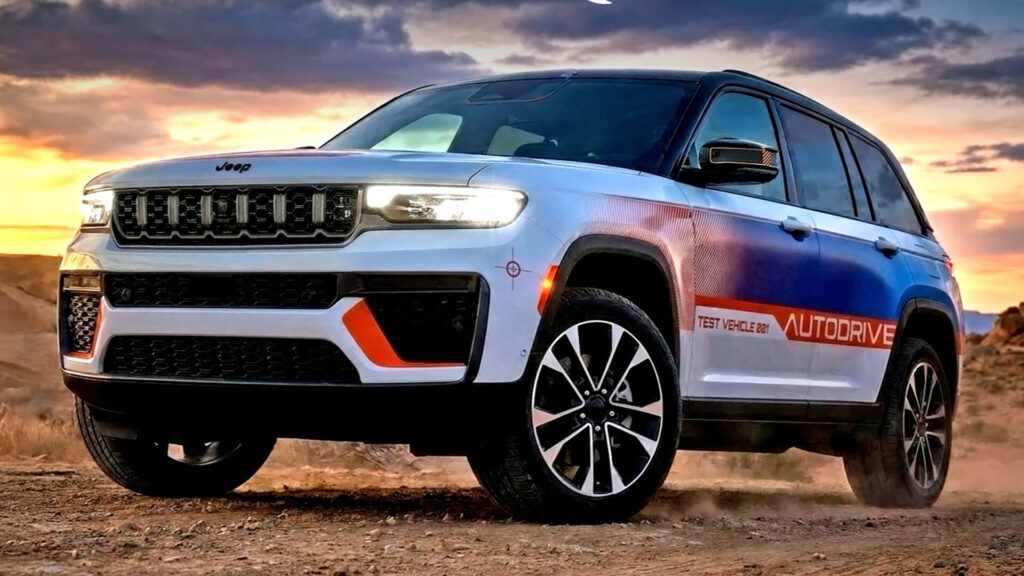
These words were echoed by Wayve CEO Alex Kendall, who stated that the Stellantis prototype was built in less than two months. It is based on the Jeep Grand Cherokee and looks surprisingly ordinary. However, the prototype features new cameras mounted in the side mirrors, as well as a new sensor at the top of the windshield.
A Less Advanced System Based on Qualcomm
Stellantis also detailed a less advanced system based on Qualcomm technologies. Through an expanded partnership, the automaker will use the Snapdragon Ride Pilot driver assistance system, which enables everything from basic safety features to Level 2+ hands-free driving.
This system is likely to arrive in 2027 and will be available across a wide range of vehicles. This is good news, as Hands-Free Active Driving Assist was previously only available on a limited number of models.
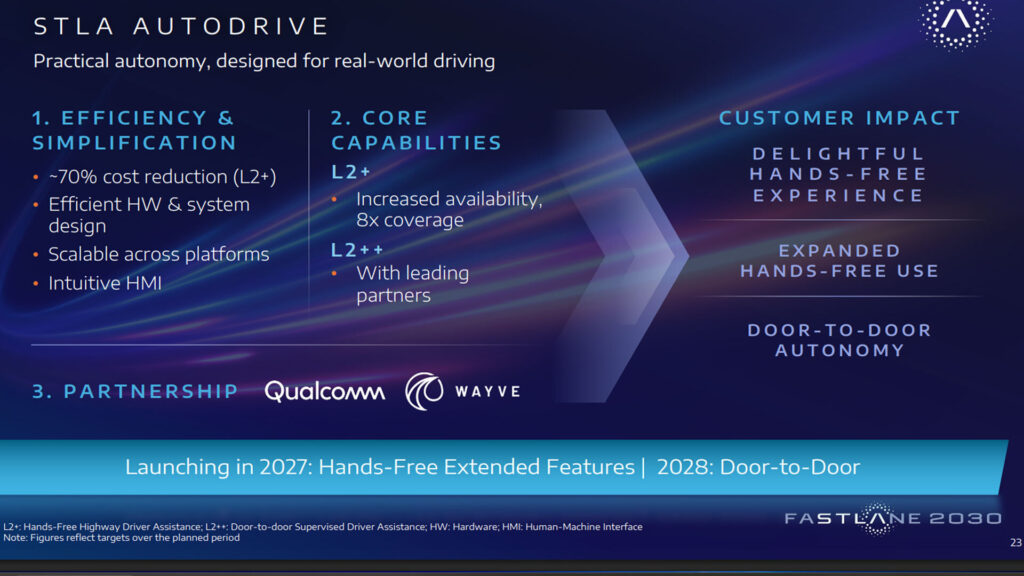
Thus, Stellantis is betting on a phased introduction of autonomous technologies, starting with safer and more controlled Level 2++ systems, which still require driver attention but significantly enhance comfort. The collaboration with Wayve, known for its innovations in artificial intelligence for autonomous driving, could give the company a competitive advantage, allowing it to adapt more quickly to future market demands. At the same time, the use of Qualcomm solutions for mass-market models signals an aim to make advanced safety and automation features more accessible to a wider range of buyers, not just premium lineups.