 by
by Key Facts About the US Electric Vehicle Market
Overall Market Situation
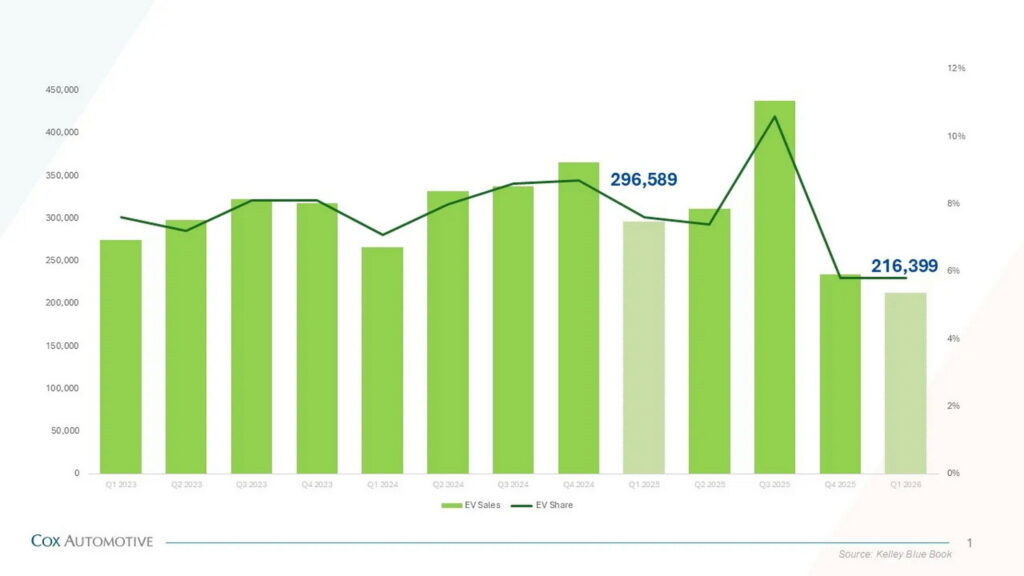
It is no secret that the electric vehicle market in the United States is developing more slowly than in other regions of the world. Americans are still buying electric cars, but not at the rates automakers were counting on just a year ago. New data from Cox Automotive shows that US electric vehicle sales fell by 27 percent in the first quarter of 2026 compared to the first quarter of 2025, dropping to 216,399 vehicles. This figure looks grim, and it is, but there is an important nuance: the decline is slowing down.
Compared to the fourth quarter of 2025, electric vehicle sales decreased by 7.8 percent. This is still a decline, but it is significantly smaller than the 46 percent quarter-to-quarter collapse the market experienced at the end of last year after the cancellation of federal incentives for electric vehicles.
EVs accounted for 5.8 percent of all new vehicles sold in Q1, exactly where they stood in Q4 2025. That’s well below the market’s 10.6 percent peak in Q3 2025, but at least the bleeding appears to have stopped.
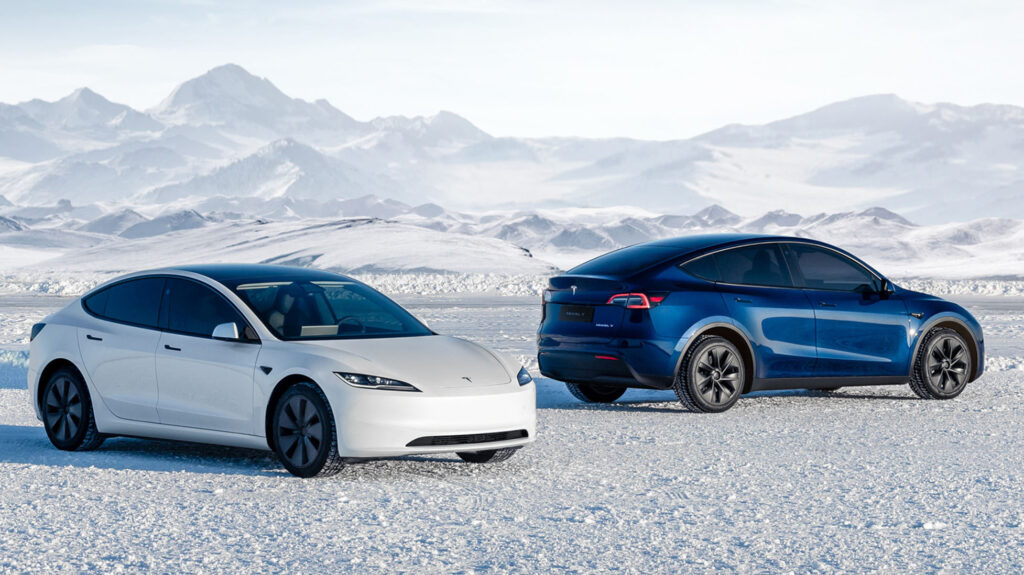
Tesla remained the undisputed leader. The brand sold 117,300 electric vehicles in the first quarter, giving it an impressive 54.2 percent share of the entire US electric vehicle market. This is more than all other automakers combined.
Sales Leaders Among Brands and Models
As has been the case for a long time, the Model Y remained the dominant force. This crossover was sold in a quantity of 78,591 units in the first quarter, which is 22.7 percent more than a year earlier and accounts for more than every third electric car sold in America. Here is an even more astonishing fact. The Model 3 took second place, despite a sales drop of almost 40 percent year-over-year. Tesla sold 31,672 such cars. This shows how incredibly popular these two models remain, despite various aspects of ownership.
Electric Vehicle Sales by Brand (Q1 2026)
- Tesla: 117,300 (54.20%)
- Chevrolet: 13,359 (6.20%)
- Hyundai: 12,662 (5.90%)
- Rivian: 10,365 (4.80%)
- Toyota: 10,042 (4.60%)
- Cadillac: 9,551 (4.40%)
- Ford: 6,860 (3.20%)
- Kia: 5,279 (2.40%)
- BMW: 4,963 (2.30%)
- Lexus: 4,456 (2.10%)
Behind Tesla, the performance of other manufacturers looked much more modest. Chevrolet became the second-largest electric vehicle brand by sales volume with 13,359 sales, slightly ahead of Hyundai (12,662) and Rivian (10,365). Toyota was one of the biggest surprises of the quarter. Sales of its bZ crossover almost doubled, reaching 10,029 units, helping the brand show 79 percent growth.
Among the few automakers that demonstrated year-over-year growth are Cadillac, Lexus, Rivian, Lucid, and Toyota. Lexus showed particularly impressive results: the RZ model grew by 206.7 percent. Meanwhile, Ford, Volkswagen, Nissan, Audi, Acura, and Jeep recorded sales declines of more than 85 percent. Among the hardest-hit models were the VW ID.4 (-95.6%), Jeep Wagoneer S (-93.3%), and Volvo XC40 (-93.1%).
Sales of Individual Electric Vehicle Models (Q1 2026)
- Tesla Model Y: 78,591
- Tesla Model 3: 31,672
- Toyota bZ: 10,029
- Hyundai Ioniq 5: 9,790
- Chevrolet Equinox: 9,589
- Rivian R1S: 5,494
- Ford Mustang Mach-E: 4,600
- Lexus RZ: 4,456
- Tesla Cybertruck: 3,519
- Cadillac Lyriq: 3,370
Market Outlook
For now, it seems the US electric vehicle market has entered a new phase. Government incentives have ended, automakers are cutting production, and success increasingly depends on something far less exciting than hype: affordable products and realistic pricing.
This data clearly points to market consolidation around key players who have been able to offer a compelling price-to-quality ratio. While overall demand has cooled, the growth of brands like Toyota and Lexus indicates that consumers are still open to electrification when it is combined with reliability and a familiar name. The future development of the segment will likely depend on manufacturers’ ability to make electric vehicles not just technologically advanced, but also economically accessible to the general public, especially in the absence of government support.