 by
by North Carolina sues VinFast over derailed plant construction plans
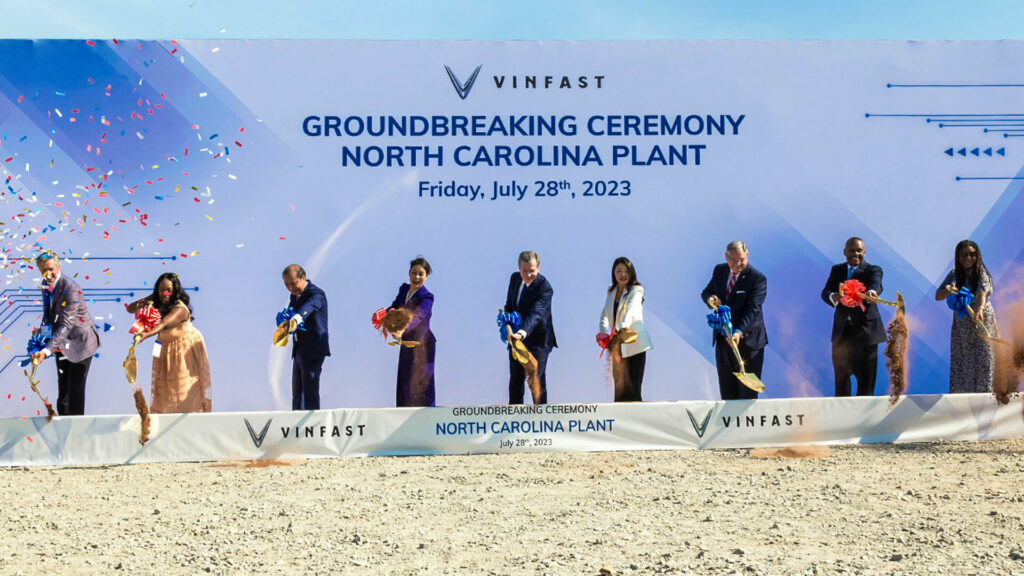
Four years ago, VinFast announced plans to build a new manufacturing plant in North Carolina, which was supposed to start producing cars in 2024. A symbolic groundbreaking ceremony took place in 2023, and the plant was hailed as the state’s first electric vehicle manufacturing facility and the “largest economic initiative” in the region.
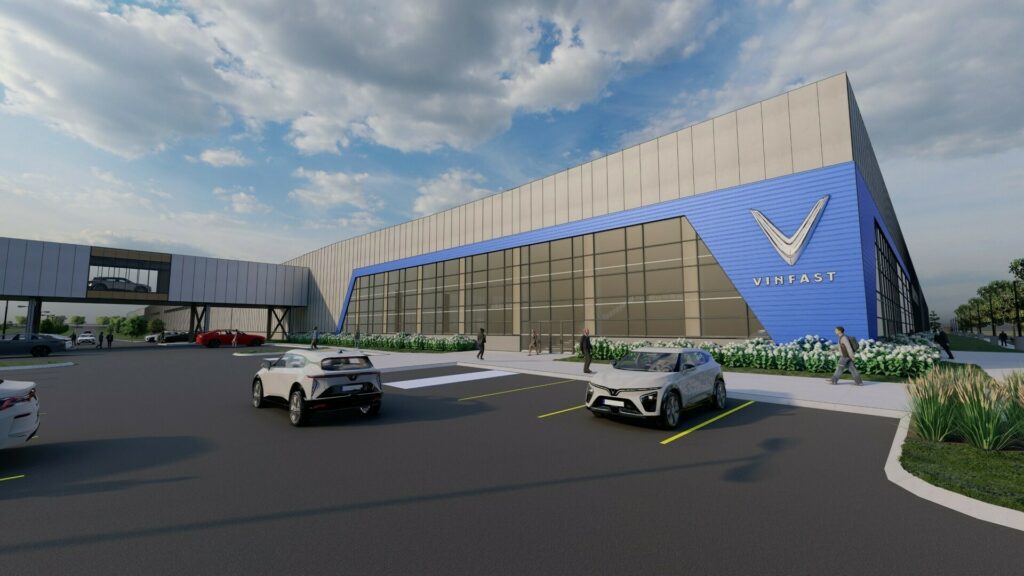
Local leaders were optimistic, as the first phase of development was expected to involve investments of up to $2 billion. This would allow for the construction of a massive 1,800-acre complex, divided into five main production zones: body shop, general assembly, press shop, paint shop, and energy center.
More details: The second generation VinFast VF 8 became smaller, slower, and cheaper
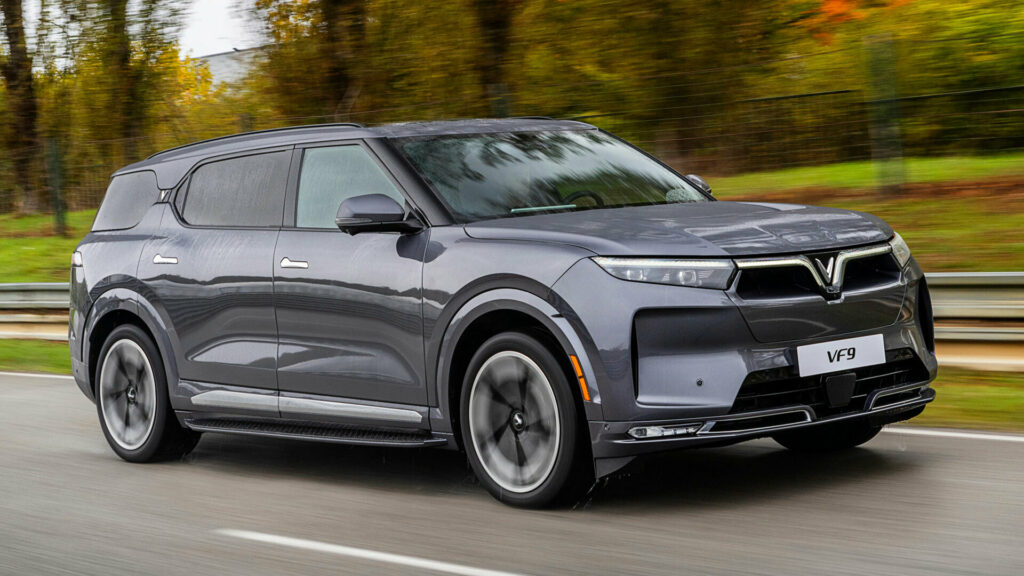
The plant was supposed to produce the VF 7, VF 8, and VF 9 models, with an annual production capacity of 150,000 units. At that time, the start of production was postponed to 2025, but in July 2024, VinFast suspended the project after an unsuccessful launch in the US market. The company then stated that production would begin in 2028, although the plant itself would be smaller than originally planned.
Lawsuit from the state and allegations of breach of agreements
Although this is just a brief overview of events, North Carolina decided to act. Attorney General Jeff Jackson filed a lawsuit against the Vietnamese automaker, accusing the company of “breaching its agreements with the state regarding the development of an electric vehicle and battery manufacturing plant in Chatham County.”
It is not hard to understand why the “Tar Heel” state is upset: VinFast received a job development grant for the plant’s construction, and the North Carolina General Assembly allocated $450 million for “site preparation, transportation improvements, and water and sewer infrastructure related to the project.”
The Attorney General’s office noted that VinFast cleared and leveled the site in 2023 but subsequently “failed to meet key obligations and performance requirements” as promised in the agreements with the state. These conditions were designed to protect taxpayer money and required the automaker to repay “certain site preparation funds if established benchmarks were not met.” More importantly, the agreement “gave the state the right to purchase the site if the company failed to meet key requirements.”
VinFast has not even come close to fulfilling its promises: according to the agreement, the plant was supposed to begin operations by July 2026 and create 1,750 jobs by the end of the year. The North Carolina Department of Justice notified VinFast of its default on the agreement back in January and stated its intention to purchase the site.
VinFast denied the allegations and claimed it was adhering to the construction timeline and would open the plant in 2028. However, the lawsuit is ultimately aimed at acquiring the site so that it can be used by someone who will actually build a facility there and create jobs.
In a statement, Attorney General Jackson said: “VinFast agreed to build a plant and create jobs for the people of North Carolina — it did neither.” He added: “When North Carolina makes a deal, we build in protections for taxpayers. VinFast broke the deal, and we are using those protections to find a project for this site that will create jobs.”
Attempts to justify the delays
Although the plant has been delayed for years, VinFast apparently tried to blame the recent cancellation of the clean vehicle tax credit for the delays. According to a statement obtained by Bloomberg, the company said: “Recent policy changes in the US regarding the electric vehicle industry have impacted the project timeline, requiring additional time to assess the relevant implementation conditions.”
This situation is a telling example of how the ambitious plans of international companies can collide with the reality of market conditions and regulatory changes. For North Carolina, this is not just a matter of lost investments, but also a signal to other potential investors that the state takes the fulfillment of agreements seriously. For VinFast, which is trying to establish itself in the US market, this lawsuit could be a serious blow to its reputation and complicate further expansion. At the same time, vacating the site could pave the way for other manufacturers looking for a ready-made location to develop production in a region that actively supports green energy.