by
by The Factory of the Future Is Already on the Threshold
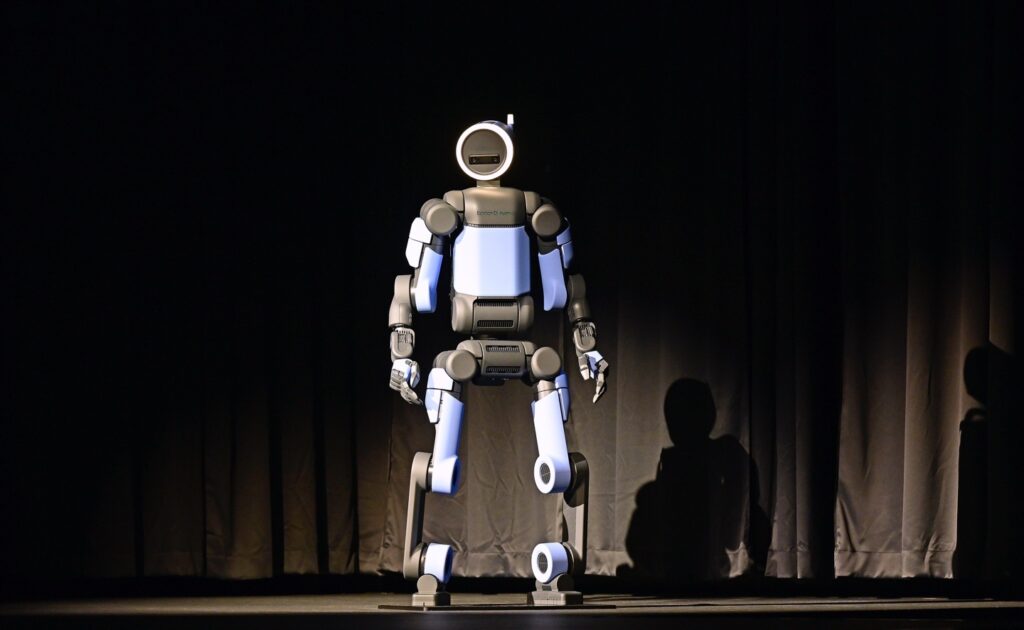
If you imagine an automobile plant as a large hangar with sparks, conveyor belts, and people in hard hats, you should update that image. Hyundai has announced that starting in 2028, part of the work at its plant in Georgia will be performed by a humanoid robot named Atlas. And yes, it moves on two legs, as if from a science fiction movie.
This is an interesting development, especially for a country seeking to revive manufacturing jobs. Instead, at least partially, a mechanical, programmable, and tireless workforce is coming to the enterprises. Hyundai’s move is a response to pressure to develop domestic manufacturing, but it also highlights how the very definition of “jobs” is changing.
Technology from Boston Dynamics
Atlas comes from Boston Dynamics, a somewhat eerie robotics company that Hyundai acquired in 2021. This is not a stunt robot created for dancing or falling for YouTube views. This version is built for work. It has human-sized hands with tactile sensation, fully rotating joints, and the ability to lift up to 50 kilograms without complaining about its back.
Initially, Atlas will not be screwing wheels onto cars or installing dashboards. It will start with parts sequencing, which essentially means moving and organizing components before their installation. By 2030, Hyundai expects robots to take on more complex assembly tasks, once they prove they can do it safely and reliably.
Robots Will Do the Hard Work
Hyundai presents this as collaboration, not replacement. Robots take on the boring, dirty, and dangerous work, while humans focus on supervision, training, and higher-level work.
The company also notes that someone must build, program, maintain, and train the robots themselves, creating new kinds of jobs even as old ones change.
Worker Reaction and the Future of Labor
This does not mean everyone is thrilled. Unions are watching closely, and some workers are understandably anxious about what a factory full of tireless machines means for long-term employment. Hyundai states that it understands this concern and insists that people will remain central to the process, even with increasing automation.
What is Physical Artificial Intelligence?
All of this fits into Hyundai’s larger push into what they call Physical Artificial Intelligence. This is essentially software inside hardware bodies that can sense, make decisions, and act in the real world. The same technology that helps a robot lift an auto part also underpins autonomous driving and smart factories.
Yes, your next Hyundai may have received help on the line from a robot that is somewhat human-like. It’s strange and a bit unsettling, but – given the potential efficiency for automakers – probably inevitable, much like the entire industry’s shift to Henry Ford’s assembly line system a century ago.
Unsurprisingly, Hyundai is not the only brand that has picked up on this idea. Tesla is developing its own robots, and this year Mercedes began testing its own humanoids at its plant in Berlin.
The implementation of such technologies will inevitably change the landscape of industrial manufacturing, raising questions about workforce retraining and the ethics of automation. The success of this initiative will depend not only on the technical perfection of the robots but also on the ability of companies to create new, meaningful roles for humans in this automated environment, ensuring a balance between efficiency and social responsibility.