 by
by Tesla Sales Declined in the First Quarter of 2026
Tesla recorded a significant drop in vehicle sales in the first quarter of 2026 compared to the previous quarter, joining a number of other automakers that also reported declines. These disappointing results negatively impacted the company’s stock price.
Key Quarterly Figures
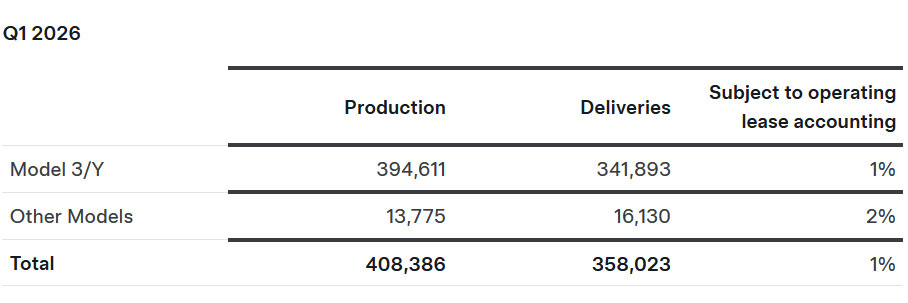
Overall, in the first quarter, Tesla sold 358,023 vehicles worldwide. This is 6% more than the same period last year, but significantly less than the previous quarter. The sales decline led to the largest gap in four years between the number of vehicles produced and delivered.
For the quarter, Tesla produced 408,386 vehicles, leaving a surplus of 50,363 units in inventory. According to Business Insider, this is the largest gap between production and deliveries in the company’s history, which is unusual for a brand that typically maintained a balance of supply and demand. The closest similar case occurred in the first quarter of 2024, when production exceeded deliveries by approximately 46,500 vehicles.
Reasons for the Sales Decline
Morningstar analyst Seth Goldstein named two key reasons explaining the sales decline.
Tesla’s first-quarter deliveries reflect the expiration of U.S. tax credits, as well as the fact that FSD is not yet approved in the EU. These factors are likely to continue to pressure deliveries until Tesla gains approval in the EU and until we enter the fourth quarter in the U.S.
Results Below Analyst Expectations

The automaker began lowering expectations for the first quarter last week, publishing a consensus forecast based on estimates from more than a dozen analysts. It predicted that Tesla would end the quarter with 365,645 deliveries, but the company fell short of that mark. Analysts also forecast that Tesla would deploy 14.4 GWh of energy storage systems, but the company actually delivered only 8.8 GWh of such products.
As usual, the majority of the company’s sales consisted of the Model 3 and Model Y, with 341,893 units sold. The remaining 16,130 delivered vehicles included the Cybertruck, Semi, as well as the discontinued Model S and Model X.
This data indicates a challenging period for the company, which is facing both external regulatory challenges and possibly changes in internal strategy or market conditions. The production surplus may indicate optimistic forecasts that did not materialize or an intentional buildup of inventory for future launches. Further dynamics will depend on how quickly the company manages to adapt to new regulations, especially in the key European market, and on the restoration of incentives for buyers.