 by
by Is it enough to just choose a car with good resale value?
Remember when choosing a car that holds its value well was considered a smart financial decision? It seems that is no longer enough. A new report shows that millions of Americans are trading in vehicles worth less than the outstanding loan balance, and this problem continues to grow.
According to Edmunds data for the second quarter, 29.6% of all vehicles traded in for new car purchases had negative equity. In other words, nearly three out of ten buyers arrived at the dealership already owing more than their current car was worth.
The Debt Snowball: How Payments Grow

The amount of debt rolled into new loans is also rising. The report shows that the average car with negative equity had $6,884 in negative capital in the second quarter, a new record for that period of the year.
Unfortunately, this debt does not disappear. It gets added to the next loan, creating a financial “snowball” that can follow owners from one car to another. The result is staggering monthly payment figures. Edmunds found that buyers who roll negative equity into a new car loan now pay an average of $944 per month, which is $167 more than the industry average.
Long-term costs are even more painful. Such borrowers are projected to pay an average of $16,270 in interest over the life of their loans. That is nearly $6,500 more than a typical new car buyer.
Negative Equity Growth, 2019-2026
| Share of New Cars Purchased with a Trade-In | Share of Trade-Ins with Negative Equity | Average Negative Equity Amount | Average Age of Trade-In (Years) | |
| 2026 | 46.2% | 29.6% | -$6,884 | 4.0 |
| 2025 | 45.7% | 26.6% | -$6,754 | 3.8 |
| 2024 | 44.8% | 23.9% | -$6,255 | 3.7 |
| 2023 | 46.2% | 17.3% | -$5,543 | 3.4 |
| 2022 | 46.8% | 14.7% | -$4,487 | 3.2 |
| 2021 | 50.8% | 23.1% | -$4,246 | 3.6 |
| 2020 | 45.6% | 37.2% | -$5,845 | 3.9 |
| 2019 | 44.6% | 34.6% | -$5,317 | 3.8 |
Source: Edmunds
Why Even “Reliable” Models Fall into the Trap?
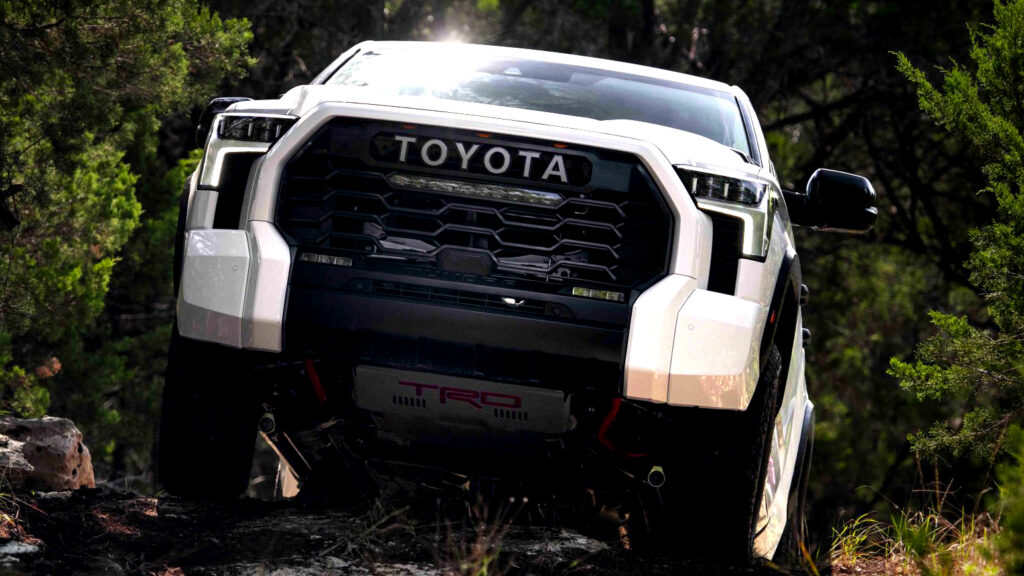
What is particularly strange is that this is not happening only with owners of cars with weak residual value. The publication notes that many of the biggest “underwater” trade-ins are popular pickup trucks and SUVs that traditionally hold their value well, such as the Toyota Tacoma, Jeep Wrangler, and Honda CR-V.
«It’s easy to assume negative equity is a story only about cars that depreciate quickly. When models historically considered safe investments find themselves ‘underwater,’ it becomes clear this is a financing problem, not always a car choice problem,» said Ivan Drury, Director of Analytics at Edmunds.
A significant part of today’s problem dates back to 2022, when inventory shortages pushed prices up, and many buyers paid at or above the recommended price for vehicles. These cars are now reaching the point where owners want to trade them in but find they still owe a significant amount.
Models with the Highest Negative Equity, Q2 2026
| Model | Average Negative Equity |
| Chevrolet Silverado 1500 | -$8,516 |
| Ford F-150 | -$8,417 |
| Toyota Camry | -$7,030 |
| Ram 1500 | -$8,347 |
| Nissan Rogue | -$7,260 |
| Honda CR-V | -$4,722 |
| Toyota Tacoma | -$7,793 |
| Chevrolet Equinox | -$5,668 |
| Honda Accord | -$5,127 |
| Toyota Corolla | -$6,191 |
| GMC Sierra 1500 | -$8,568 |
| Honda Civic | -$4,778 |
| Ford Explorer | -$7,689 |
| Toyota RAV4 | -$6,815 |
| Hyundai Tucson | -$5,532 |
| Jeep Wrangler | -$7,867 |
| Toyota Tundra | -$8,929 |
| Kia Sportage | -$5,568 |
| Chevrolet Traverse | -$6,962 |
| Jeep Grand Cherokee | -$7,357 |
Source: Edmunds
This situation demonstrates how macroeconomic factors, including shortages and inflation, are changing the rules of the automotive market. Even a careful model choice no longer guarantees financial safety if the purchase was made at the peak of prices. Consumers need to more thoroughly analyze not only the cost of the vehicle but also the loan terms, as long-term interest can turn a seemingly favorable purchase into a financial burden for years to come.