 by
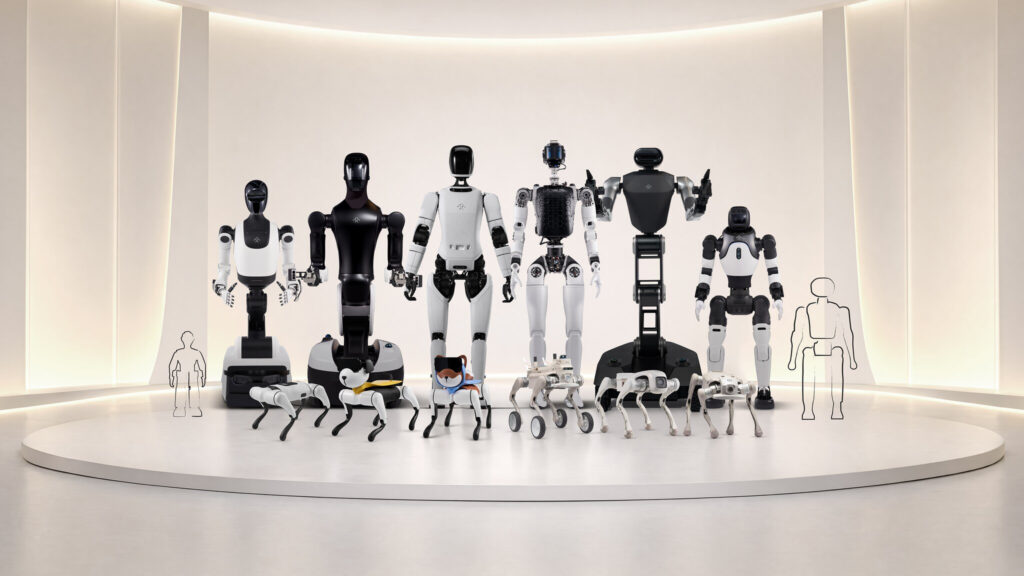
by Faraday Future continues to fight for survival as its shares have plummeted. To remain listed, they are conducting a reverse stock split at a ratio of 1 to 150. The company has now focused on robots, but has not abandoned cars.
Failures and change of course
Faraday Future seems to no longer know what it is, having transitioned from an ultra-luxury electric vehicle to a minivan that seemingly nobody wanted. Subsequently, the company suspended production of the latest model and decided to focus on robots.
Financial difficulties and risk of delisting
Their aimless and seemingly chaotic nature did not please investors, and the company’s shares have fallen a staggering 92% since the beginning of the year. At the time of writing, they are trading at only eight cents, slightly above the 52-week low of $0.066, but this puts them at risk of delisting.
After failures with cars, Faraday has now focused on robots
In an attempt to remain on the Nasdaq exchange, the “global embodied AI company” announced a reverse stock split at a ratio of 1 to 150. It will take place on July 24, and this move means that for every 150 shares they own, investors will receive one “new” share. The split will reduce the number of shares from 384,527,828 to approximately 2,563,519.
More importantly, this will raise the share price to approximately $12. This will allow compliance with Nasdaq’s minimum requirement of $1. Of course, the company’s numerous problems remain, and few doubt that the share price will continue to fall after the split.
Positive interpretation and new directions
Despite the grim news, Faraday Future presented this as a positive development that would create a “sustainable compliance buffer” and “enhance the attractiveness of the company’s common shares to investors.” As the firm noted, institutional investors, professional funds, and some trading platforms avoid low-priced securities such as “penny stocks.”
The company had nothing more to say, but noted that cumulative robot sales, shipments, and deliveries exceeded 250 units. This seems to be Faraday’s main focus today, but the company also announced a patent for a hybrid transmission in June. At the time, they stated that it “is expected to be incorporated into the broader AIHER [AI Hybrid Extended-Range] system being developed for future generations of FX models.”
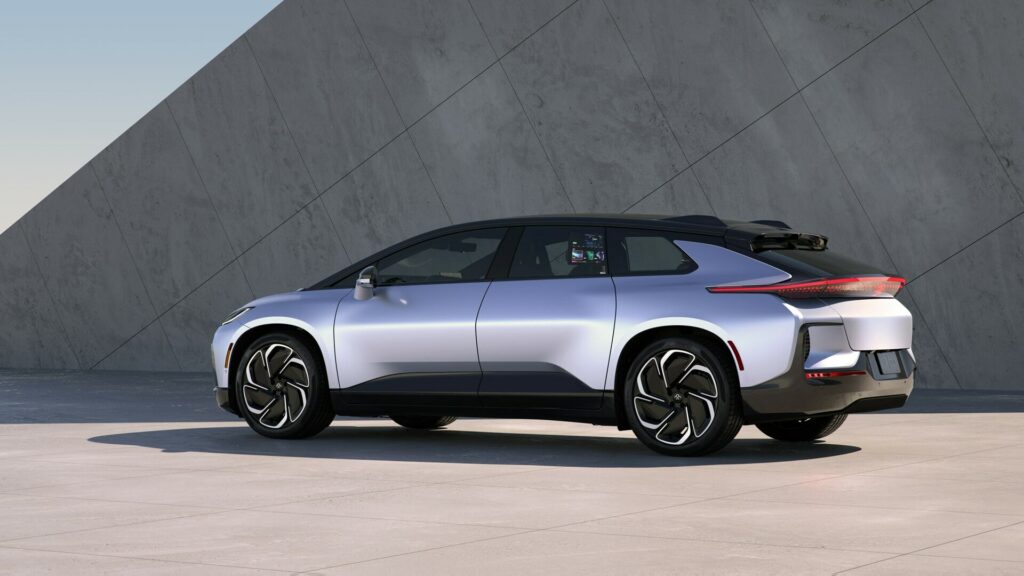
Despite attempts to revive the business through a reverse stock split and a pivot to robotics, Faraday Future’s fundamental problems remain unresolved. Low sales, loss of investor confidence, and uncertainty regarding the future automotive direction call into question the company’s long-term viability. Although the hybrid system patent suggests the company has not completely abandoned vehicles, its survival now depends on success in the new, highly competitive field of robotics, where it has so far achieved only modest results.