 by
by Key Features of the New BMW X5
The first X5, which combined the agility of a sports sedan with the space and height of an SUV, was a true market breakthrough when it debuted in 1999. Since then, BMW has constantly refined the concept, but the fifth generation makes the biggest leap since the first, thanks to a clean Neue Klasse design and a greater variety of powertrains than ever before. We’re talking internal combustion engines, plug-in hybrids, fully electric versions, powerful V8s, and, eventually, hydrogen. That’s a lot of ways to move one SUV.
Design: A New Take on a Classic
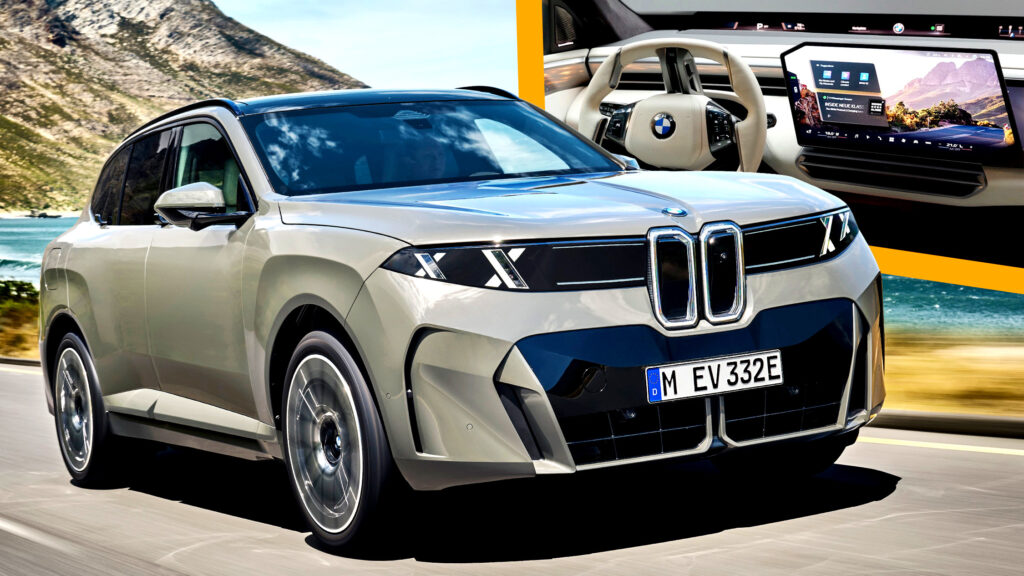
Let’s start with the exterior, because this is a very different X5 from its predecessors. Of course, the smaller 2027 iX3, which launched last fall, borrowed many Neue Klasse design cues, including clean surfaces and the front “visor.” But BMW’s designers did much more than just scale up the iX3 by 120%. The American-market X5 has its own ideas, like new dual X-shaped light icons that combine the headlights, turn signals, and daytime running lights into a single element.
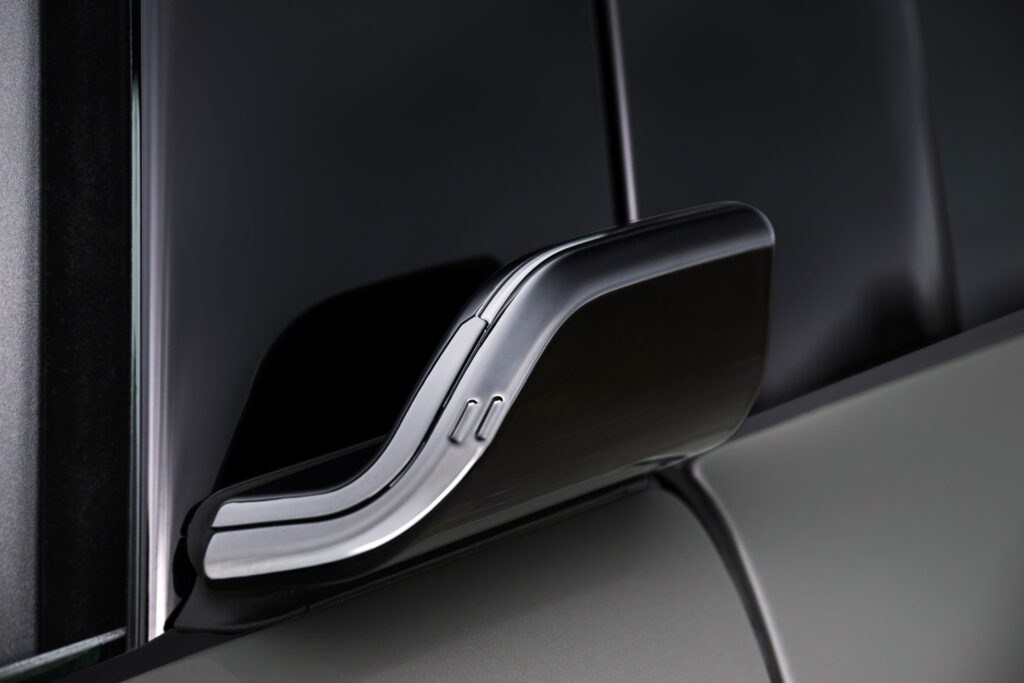
Look at the side — and you’ll notice new door handle tabs integrated into the pillars, hidden window seals, and massive wheel arches that look like they were cut out with slices of salami from a Munich deli. This time, these arches get 21-inch wheels as standard equipment, and can be filled with discs up to 23 inches in diameter without needing to visit a tuning shop. Adaptive dampers come standard, but you’ll have to pay extra for air suspension.
Move to the rear, and you’ll notice thin but wide taillights that echo the dual X theme from the front. Overall, it’s a clean, confident silhouette that still looks unmistakably like an X5, just sharper, sportier, more car-like, and much more modern. This will undoubtedly pose a serious challenge for the recently updated, but far less interesting, 2027 Mercedes GLE.
Interior and Technology
Inside, BMW has placed a heavy emphasis on both materials and technology. As part of the optional Clear and Bold package, natural slate trim appears on the center console, combined with glass elements on the gear selector and volume controls. An LED ambient light strip stretches from door to door, and a massive panoramic glass roof, standard on every model, occupies about 28 square feet (2.6 sq m) overhead.
The controversial steering wheel with vertical spokes from the iX3 is the standard choice, even with the M Sport package, but upgrading to M Sport Professional gives you a more conventional rim. And while all X5s come equipped with soft-close doors, if you want to pretend to be a taxi driver in Tokyo, you’ll also need to look through the options list for the fully automatic door closing function.
Screens Everywhere
You’re probably already familiar with the X5’s basic digital setup, as BMW debuted the BMW Panoramic iDrive in the iX3, then implemented it in the i3 sedan and the updated 7 Series. The 5 Series will inherit it soon. The main elements are a central tablet, in this case 17.9 inches diagonally, and a digital display from pillar to pillar at the bottom of the windshield. A 3D display is projected above it, and a 14.6-inch screen for the front passenger can also be ordered for watching movies while on the move.
So, that’s the design and technology sorted, but what about the actual “hardware”? Contrary to what the Neue Klasse design suggests, neither the X5 nor the iX5 are built on the BMW Neue Klasse platform, which underpins the iX3 and i3. Both X5s use an updated version of the previous model’s CLAR architecture.
Gasoline X5
Let’s start with the ICE side, as before, with the rear-wheel-drive X5 40 and its all-wheel-drive sibling the xDrive. Under the hood of each SUV is a turbocharged 3.0-liter inline-six engine producing 394 hp (400 PS) and 428 lb-ft (580 Nm) of torque, assisted by a 48-volt mild hybrid system. These figures are 19 hp (19 PS) and 45 lb-ft (61 Nm) more than the 2026 X5 40, shaving the 0-60 mph (97 km/h) time by one-tenth (or two in the case of the rear-drive 40) to 5.1 seconds.
Want a plug-in hybrid? The X5 50e AWD combines the same inline-six engine with a 194 hp (197 PS) electric motor for a total — and unchanged compared to 2026 — output of 483 hp (490 PS) and 516 lb-ft (700 Nm). It hits 60 mph in the same 4.6 seconds as before, but can travel up to 44 miles (71 km) instead of 39 miles (63 km) solely on electric power, thanks to the battery being enlarged from 19.2 kWh to 26.5 kWh.
Electric iX5
But the main event is the first-ever BMW iX5, the brand’s first fully electric X5. It’s nearly identical to the gasoline X5, but lacks the air intakes between the double kidney grilles and the license plate.
The iX5 60 AWD uses two motors with a combined output of 570 hp (578 PS) and 593 lb-ft (804 Nm), accelerating to 60 mph in 4.4 seconds. Not bad, but the real highlight isn’t speed, but how far the X5 can go. BMW estimates a range according to EPA standards of an impressive 435 miles (700 km), thanks to a massive 144 kWh battery built from higher-spec versions of the same smart cylindrical cells used in the iX3. Curb weight will likely be less impressive — we suspect it will exceed 6,000 lbs (2,720 kg).
The 800V system supports DC fast charging at up to 460 kW, allowing the battery to charge from 10 to 80 percent in just 22 minutes. BMW claims you can add about 170 miles (274 km) of range in just 10 minutes. There’s also bidirectional charging, so the iX5 can power your home or even another EV if needed.
Prices Increased by $1,500
Prices start at $71,250 for the base X5 40, rising to $73,550 for the all-wheel-drive version. The 50e xDrive plug-in hybrid starts at $78,950, while the electric iX5 60 AWD will set you back $81,250. All these prices are up by $1,500 compared to 2026, but at least the $1,450 destination charge (included in these prices) hasn’t increased.
The gasoline X5 40 xDrive arrives first in October, followed by the rear-drive X5 40, the 50e PHEV hybrid, and the iX5 in early 2027. The M Performance V8 version and the iX5 Hydrogen fuel cell model, which is expected to offer a range of 385 miles (750 km), will join the lineup later. At that point, BMW will have covered almost all bases. Judging by how well the iX3 is selling, this fifth-generation X5 looks poised for massive success. Leave a comment below and let us know what you think of the new X5.
Interestingly, despite using Neue Klasse design, BMW decided not to move the X5 to the platform of the same name, sticking with the updated CLAR. This allows for production unification with previous models and enables offering such a wide powertrain lineup, including powerful V8s, which would have been more complex to implement on the new architecture. Thus, the new X5 becomes a kind of bridge between BMW’s past and future, offering buyers maximum choice: from classic ICEs to nascent hydrogen technology.