 by
by World Rally Championship Prepares for a Revolution in 2027
The World Rally Championship (WRC) is set for a major rule reform in 2027, which will radically change the appearance and characteristics of Rally1 class cars. They will become cheaper, less powerful, and will use less aerodynamics.
The International Automobile Federation (FIA) has already presented three concepts illustrating the future changes. Among the main innovations:
Concepts Inspired by Production Models
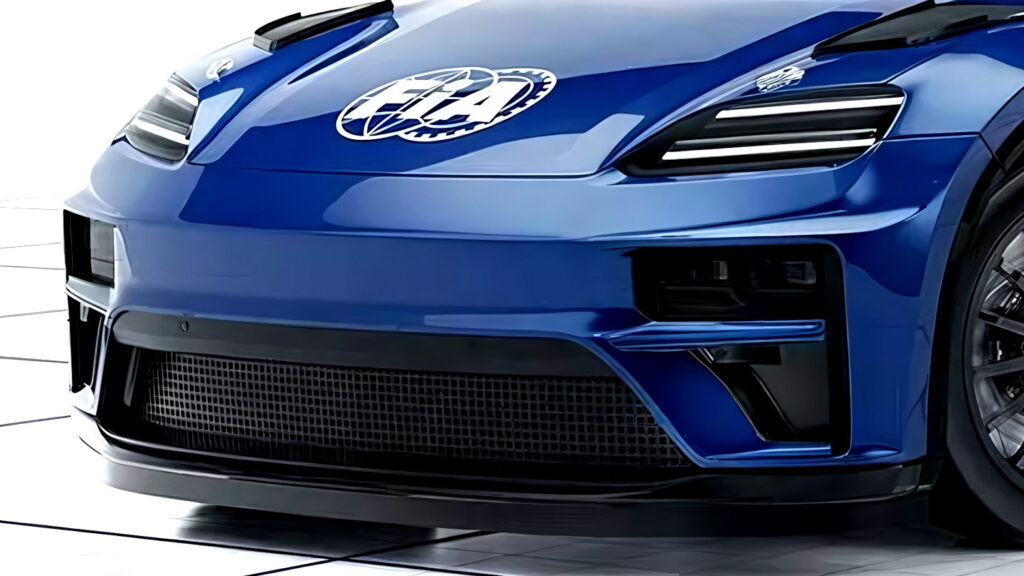
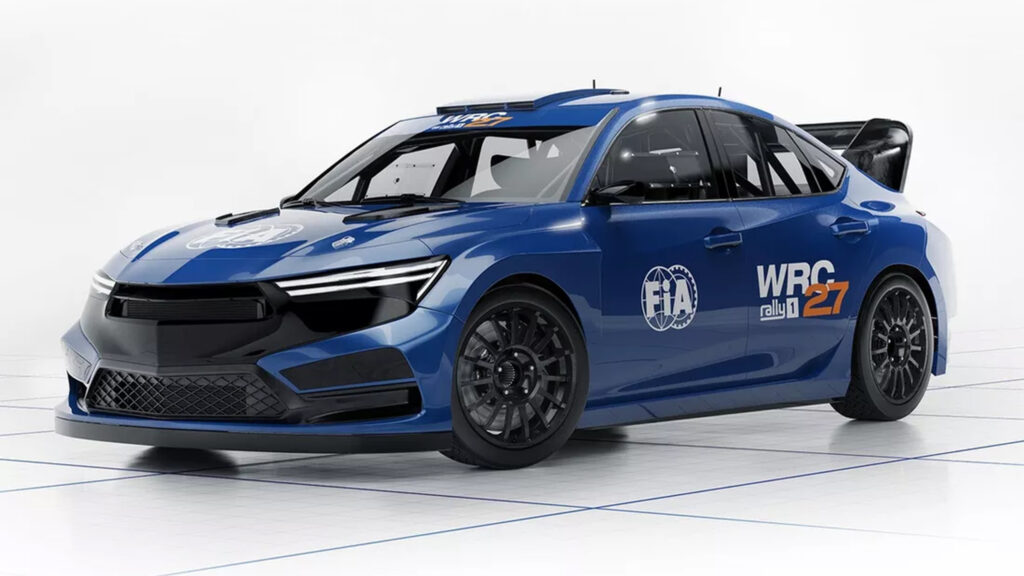
The three preliminary design projects published by the FIA demonstrate clear inspiration from road models such as the Audi RS3, Subaru WRX, and the electric Porsche Macan. The resulting hybrid shapes look as if they came straight from a Grand Theft Auto game garage.
Back in the real world, every 2027 Rally1 car will be built around a tubular frame safety cell, engineered to be even stronger than those used in previous generations.
In the real world, every 2027 Rally1 car will be built around a tubular frame safety cell, which will be even stronger than those in previous generations.
Breaking with Tradition and New Freedoms
The new rules take a radical step by abandoning the requirement for Rally1 cars to be based on production models. Instead, they define a reference volume that sets the boundaries for external body panels. This opens up much greater creative freedom for manufacturers to experiment with proportions and style.

Aerodynamic elements are noticeably reduced. Compared to current cars, the rear wings on these concepts are significantly smaller, and the body lacks extreme downforce elements.
Diversity of Forms and Unification of Technology
One of the concepts, with headlights inspired by the Audi RS3, has the shape of a stylish sedan, while the model inspired by the Macan more closely resembles a low crossover with hints of the fully electric Taycan.

All cars will be equipped with the same engine: a 1.6-liter turbocharged four-cylinder unit, limited to approximately 290 horsepower. This means a reduction of more than 100 hp compared to current Rally1 machines.
They will also receive a standard five-speed gearbox and all-wheel drive paired with a double-wishbone suspension. Steering and braking systems will be borrowed from the current Rally2 class, creating a more unified technical base between the classes.
Top Rally Cars for Half the Price
Price is one of the key changes. The cost of each car in asphalt specification is capped at 345,000 euros, which is a reduction of more than 50 percent compared to the cost of current Rally1 cars. In 2027, these updated cars will compete at the top level of the WRC alongside existing Rally2 class models.
“Flexibility is a defining feature of the WRC27 regulations. The new Rally1 concepts that we have released have been designed to these specifications, demonstrating how that flexibility can be applied in practice. They highlight, for the first time, the range of technical solutions and vehicle concepts that can be developed within the framework, while still meeting the demands of top-level FIA World Rally Championship competition.”
These changes aim to make the pinnacle of rallying more accessible to teams and manufacturers. Reducing development and operational costs could attract new participants to the championship, positively impacting competition and diversity. At the same time, the focus on safety and the unification of some components could improve car reliability and make the on-track battle even more fair and exciting, focusing attention on the skill of drivers and co-drivers. The shift to less powerful but potentially more technical cars could return the WRC to its roots, where skill, not pure power, plays the key role.