 by
by Google Maps Introduces New Features for Planning Electric Vehicle Trips
Electric vehicle owners will receive useful updates as Google Maps launches new trip planning features for over 350 cars with Android Auto. This is intended to make long journeys less stressful, as drivers will no longer have to worry about battery depletion or switching between apps to find charging stations.
How to Connect Your Car to the System
To use the new features, owners need to add their car to Google Maps. This can be done by opening the app, selecting your profile, scrolling down to Settings, and tapping on “Your vehicles.” Then you can select “Electric vehicle” and add the make and model of your EV.
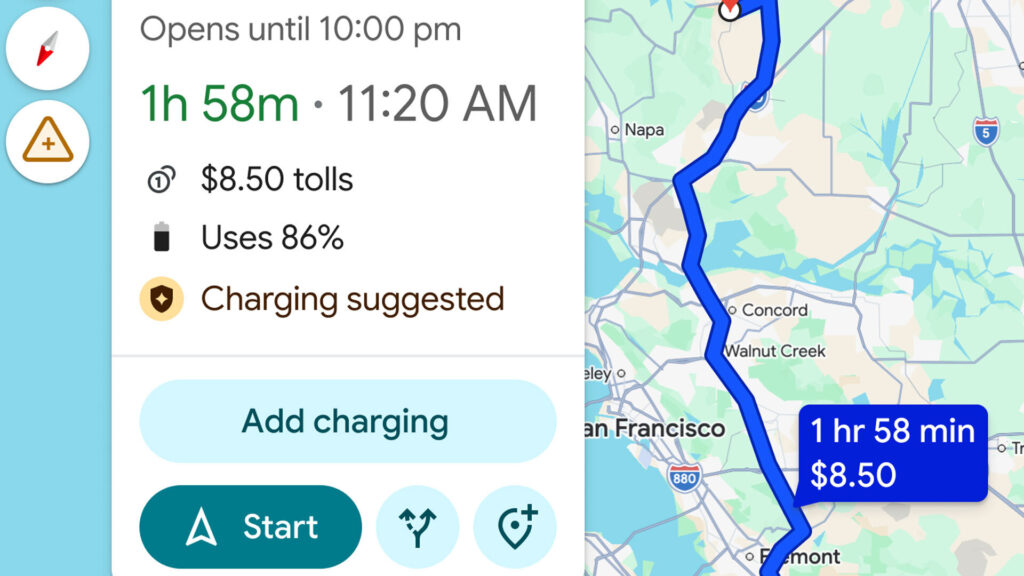
With this information, Google Maps will be able to use the vehicle’s data to calculate several important details. For example, when you set a destination, the app will estimate the battery charge consumption for the trip.
Enhanced Capabilities When Specifying Charge Level
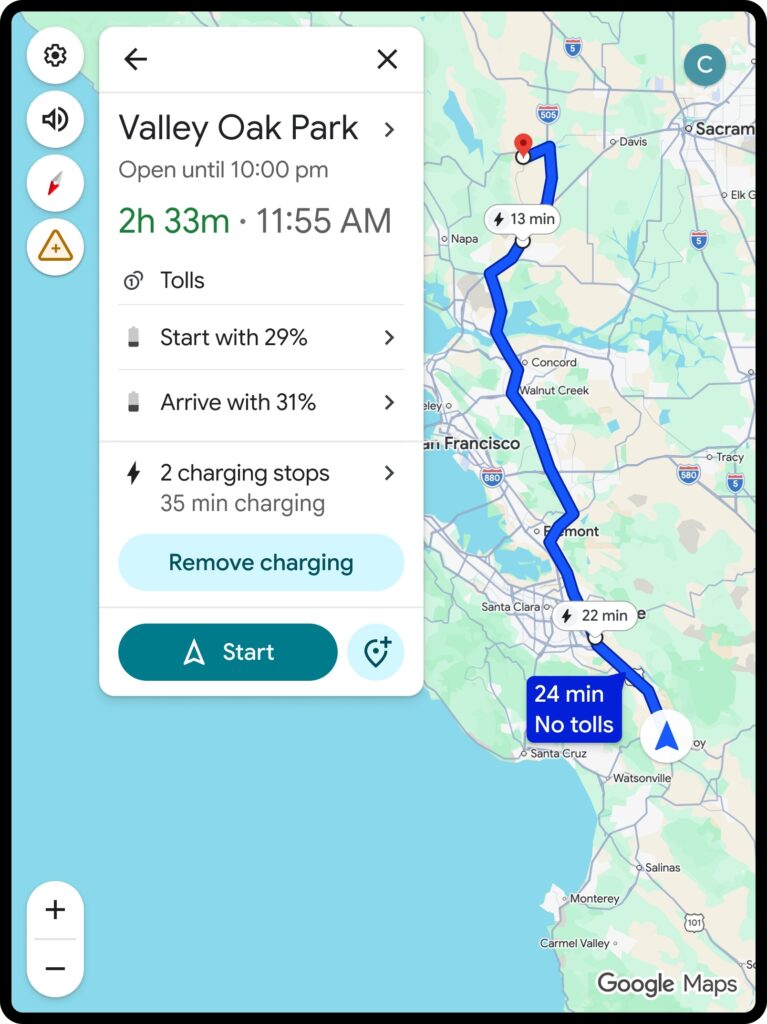
Users can add their current battery charge level to unlock more features, including recommended charging stops, estimated charge level upon arrival, and an updated estimated time of arrival that accounts for charging time. There is even an option that allows you to choose how much battery charge you want to have left when you arrive at your destination, so you are not forced to immediately look for a charger.
The Technology Behind the Predictions
This update looks very useful. The tech giant states that the predictions are made possible by a combination of artificial intelligence and “advanced energy models that analyze vehicle details such as weight and battery size, along with real Maps information on traffic, road elevation changes, and weather.” All this means that drivers will be well-informed and won’t have to worry in advance about planning routes or charging stops.
Availability and Supported Brands
The new features are rolling out today in the United States and will support 16 brands, with additional companies joining in the future. Currently, this list includes Audi, BMW, Chevrolet, Fiat, Genesis, Hyundai, Jaguar, Kia, Lexus, Lucid, Mercedes, Nissan, Porsche, Subaru, Toyota, and Volkswagen.
The integration of such features into familiar navigation apps like Google Maps is a logical step in a world transitioning to electric vehicles. This not only increases convenience for current EV owners but may also boost the confidence of those still hesitant about switching from ICE vehicles. The accuracy of charge consumption predictions, which even considers terrain and weather, can significantly impact long trip planning, making them more predictable. The success of this initiative will largely depend on how quickly Google can expand the list of supported vehicles and the geographic availability of the feature beyond the USA.