 by
by A Sports Pickup for the Track
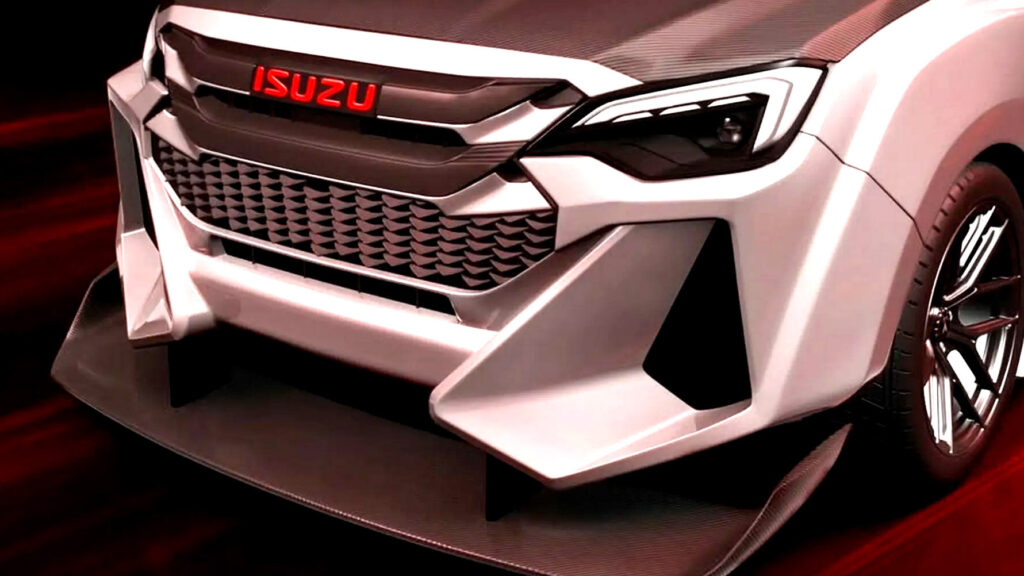
This pickup looks as if it has just come off a GT3 competition track, and that is precisely the effect created by the latest special edition Isuzu D-Max for the Isuzu Challenge Thailand series. It is based on the standard D-Max, but it is impossible to recognize at first glance due to the completely redesigned body, as well as chassis updates and increased performance. Importantly, this car will be available for purchase, albeit in very limited numbers.
The main focus of the racing pickup was extensive aerodynamic work carried out by Tera Engineering. To eliminate the turbulent zone behind the cab, the vehicle was fitted with an adjustable rear wing, a central fin, a rear diffuser, and dual fairings on the cargo bed body.
Exterior and Interior Changes
The front end has also undergone changes: an adjustable splitter appeared, larger air intakes on the bumper, and a carbon fiber hood. Extended fenders with functional ventilation openings are installed on the sides. The look is completed by a set of Lenso alloy wheels shod in high-performance tires.
Inside the cabin, practicality gave way to racing purpose. The interior has been stripped to reduce weight, an FIA-standard safety cage has been installed, along with a single racing bucket seat and a special steering wheel with integrated controls. Even the multimedia system screen now displays real-time telemetry. Notably, the pickup retains the extended cab layout with rear suicide doors.
The Heart and Soul of a Racing Car
Under the hood works a heavily modified version of the new 2.2-liter Ddi MaxForce turbo diesel. It features a larger turbocharger, a reworked intercooler, and updated engine software. Thanks to this, power has increased to 281 hp, and torque to 507 Nm. This is a significant gain of 120 hp and 107 Nm compared to the standard road-going D-Max.
Power is transmitted exclusively to the rear wheels via the standard manual transmission, complemented by a high-performance clutch from BK Clutch, better suited to repeated track loads.
The pickup received a new suspension from Penske with adjustable dampers, designed for optimal track handling. It is complemented by a reinforced frame chassis and a corresponding wheel and tire combination. The braking system has also been improved: six-piston brakes at the front and four-piston brakes at the rear from Ferodo with thermal indicators for easy temperature monitoring in the pit lane.
Limited Edition and Participation Terms
Unlike most concept trucks that remain one-off specimens, this D-Max will be produced in series, albeit in a limited batch of 15 units. The price of each is 1,490,000 Thai baht (approximately $46,200 USD), which seems almost modest, considering that the development and construction cost per vehicle approaches 1,700,000 baht (about $52,700).
Isuzu is effectively subsidizing entry into its new single-make racing series to attract drivers. The 2026 competition calendar will include three rounds in June, August, and October. However, there is one important caveat: this track pickup is not road-legal, so a trailer, not license plates, will be required to deliver it to the circuit.
Is There an Alternative for Public Roads?
For those who prefer a D-Max with greater daily practicality, the sportiest option in Thailand remains the X-Series, offered in Speed and Hi-Lander trims. Both versions are equipped with the familiar 2.2-liter turbo diesel producing 161 hp and 400 Nm of torque, with the key difference being ground clearance and suspension tuning.
Visually, the X-Series emphasizes its sporty character with a distinctive grille with red accents that flow into the headlights, aerodynamic bumper trims, racing stripes, glossy black 16-inch wheels, and red interior elements. Prices start from 768,000 baht (about $23,700) and go up to 1,041,000 baht (approximately $32,200).
The emergence of such a specialized track version from a manufacturer known for reliable but conservative commercial vehicles indicates an interesting trend. It demonstrates the desire of brands to expand their images and attract new audiences through motorsport, even in such niche segments as pickups. The limited edition and subsidized price indicate that the main goal is not mass sales, but creating a bright image and a vibrant sporting community. This could be an important step for Isuzu in the context of the overall transformation of the automotive industry, where traditional body-on-frame SUVs and trucks are seeking new ways to remain relevant.