 by
by The Concept as a Hint of the Future
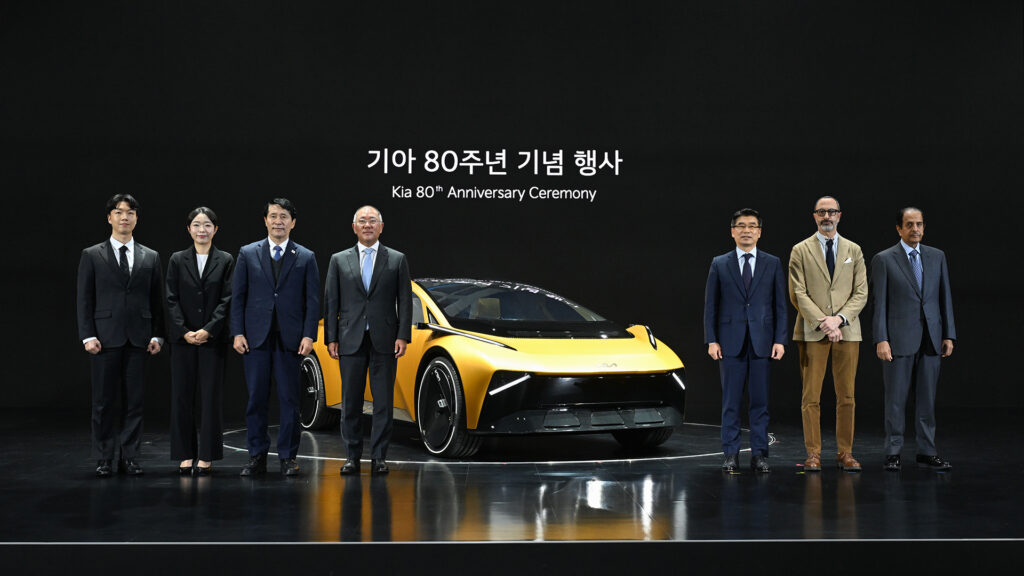
The Meta Turismo GT concept car, presented for Kia’s 80th anniversary, became a real sensation. It is not just a nostalgic design project, but a bold look into the future, combining futuristic lines inspired by 1960s concepts with modern electric technology. It makes clear where Kia’s ambitions in the high-performance car sector could be directed.
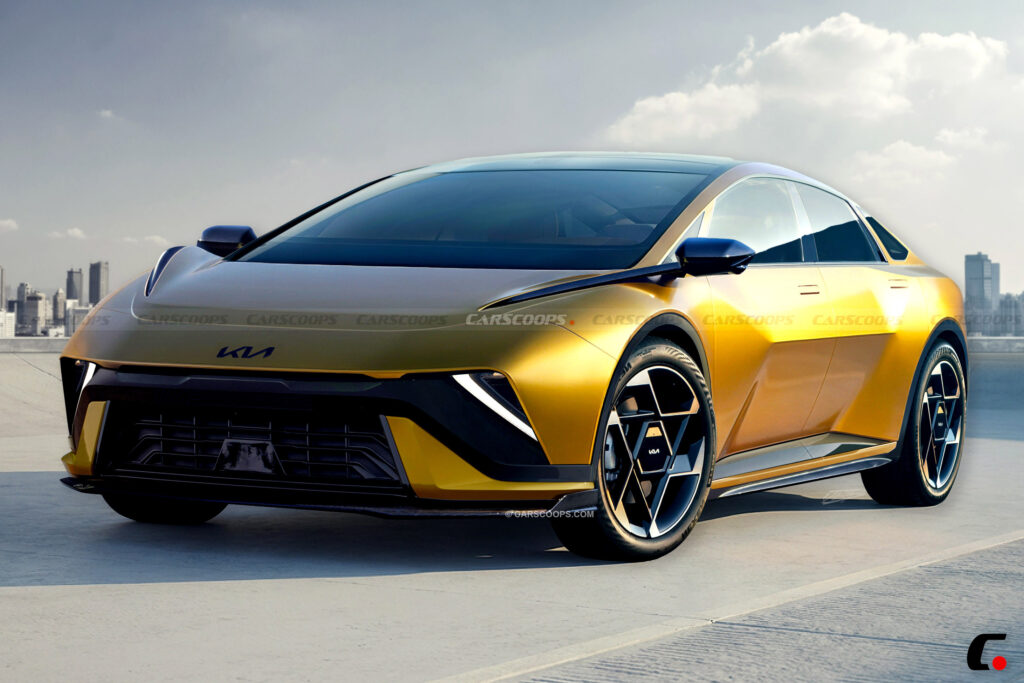
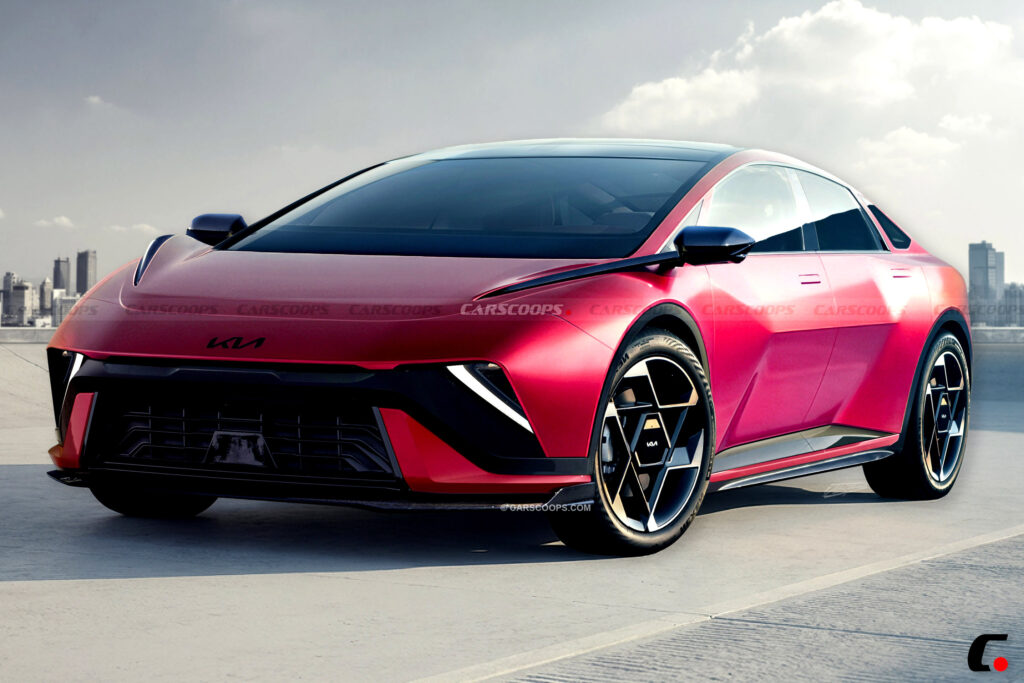
This made one think: since the Stinger model has officially ended production, and Kia needs a new halo model, what would a production car based on the Meta Turismo look like? Here is our version, which could be called the EV8 GT.
Merging Opposites in Design
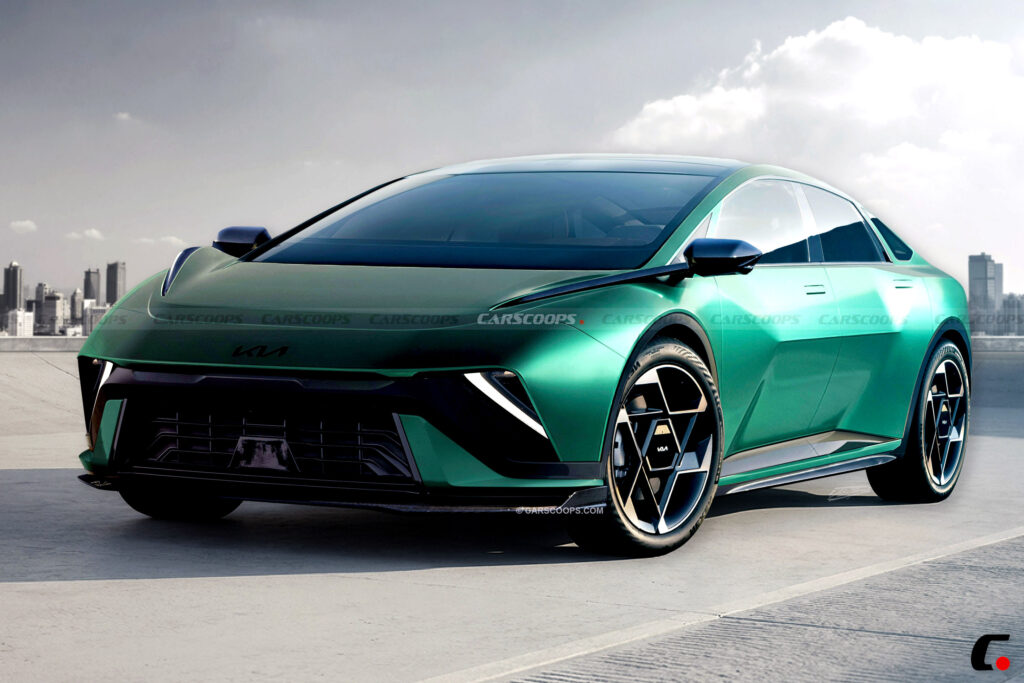
Soft forms clashing with angular geometry – this is how Kia describes its “Opposites Unite” design language. In this imagined production model, the concept evolves into something more down-to-earth yet still sharp, combining the proportions of wedge-shaped 1960s concept cars with elements of aggression reminiscent of Lamborghini.
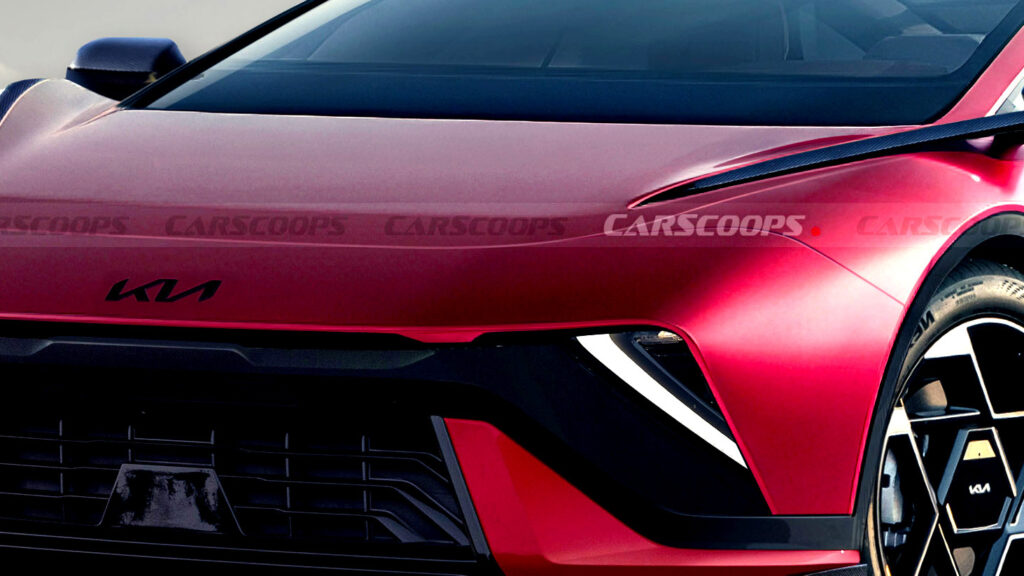
The front end of the Meta concept was redesigned to better fit Kia’s modern design language, with a low-mounted “tiger nose” grille and an active grille shutter. Carbon fiber composite is widely used on the front splitter, side skirts, and decorative hood elements that smoothly transition into the side mirrors.
Viewed from the side, our EV8 GT project is defined by a fastback-style roofline and a forward-shifted cabin. While the angular shape of the side panels remains unchanged, we added hidden door handles and traditional pillars. The rear looks more restrained, with a halo-effect LED light bar and a functional diffuser.
Interior Expectations
The interior of the Meta Turismo concept is undoubtedly dramatic, but for series production it would be made more down-to-earth without losing its driver focus. Key elements like the augmented reality head-up display and smart glass would remain, while the overall layout would become more conventional.
Deeper integration of artificial intelligence is also expected, including conversational voice interfaces and tools like ChatGPT.
High-Performance Electric Powertrain
The proven E-GMP architecture from Hyundai Motor Group would be the obvious choice as a platform, as it offers 800-volt system capabilities, vehicle-to-load (V2L), and vehicle-to-grid (V2G) features. Regarding handling, the GT would be equipped with adaptive suspension, torque vectoring, and rear-biased all-wheel drive to balance ride comfort with capabilities for spirited driving on winding roads.
Kia’s dual-motor setups are capable of producing 650 horsepower (478 kW) and 770 Nm of torque. We expect the EV8 GT to exceed these figures, with acceleration from 0 to 100 km/h approaching the 3-second mark. As with other high-performance EVs from the Hyundai Group, simulated gear shifts and artificial engine sound generation would accompany its high-speed driving.
Ideally, solid-state batteries would appear, but the commercial availability of this technology still seems distant. A safer bet would be a 100 kWh lithium-iron-phosphate (LFP) battery capable of providing a range of over 700 km on the WLTP cycle.
Potential Market Competitors
If Kia gives the green light for the EV8 GT, it would enter a market where competitors already exist. Potential rivals could include the Polestar 5, Tesla Model S, Xiaomi SU7, Huawei’s Luxeed S7, Lucid Air, and Audi A6 e-Tron.
Now it’s your turn. Should the Meta Turismo concept evolve into Kia’s Stinger successor? Share your thoughts.
The presentation of a concept like the Meta Turismo is always a balancing act between bold vision and technological feasibility. The idea of an electric grand tourer from Kia, especially after the end of the Stinger era, seems a logical step to strengthen the brand in the premium segment. The success of such a project would depend not only on dynamic performance but also on how successfully advanced technologies like augmented reality and advanced AI systems can be integrated into the everyday driving experience, while preserving the emotional component that made gasoline-powered sports cars loved. The high-performance EV market is becoming increasingly crowded, so design uniqueness and proposition innovativeness will be decisive factors.