 by
by Former Honda executives tried to force the CEO to resign over the EV failure
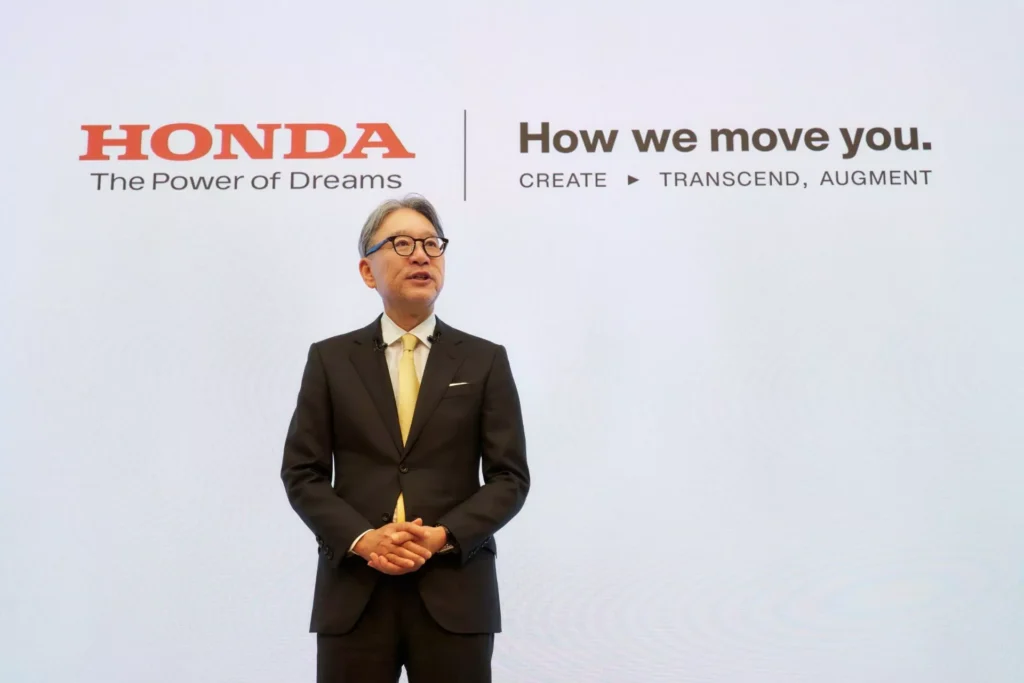
Just a few weeks after Honda announced the cancellation of three electric vehicles planned for North America and a write-down of approximately $15.7 billion due to excessive EV commitments, CEO Toshihiro Mibe received a demand to resign. He refused.
A new report reveals that in late 2025, several former Honda executives began meeting to discuss the Japanese manufacturer’s ongoing problems. Over several months, they blamed Mibe, particularly criticizing his neglect of the Chinese market and his responsibility for costly mistakes in the EV strategy.
Accusations of being out of touch
According to Reuters, which spoke with two participants in these meetings, the former executives even claimed that Mibe focused more on sponsoring golf tournaments than on the company’s business. In April, 90-year-old former Honda CEO Nobuhiko Kawamoto visited headquarters and asked Mibe to step down. He replied that this would not happen.
“The CEO does not see the situation on the ground, does not listen to customers, and does not visit ‘genba’ (workplaces). Top management, including the CEO, does not go to ‘genba’. Example: China,” they told Reuters.
Financial consequences and board support
Mibe has been Honda’s CEO since 2021. He agreed to a 30 percent salary cut for three months after the brand posted its first annual loss in 70 years. According to those who tried to oust him, Mibe does not adhere to the ‘genba’ principle that his predecessors followed — meaning he does not go ‘to the place’ where important work is done, such as factories or dealerships.
Although the former executives wanted Mibe fired, he had the support of the board’s nomination committee. This committee was created by bringing in more independent directors as part of a broader trend in Japan to improve corporate governance and reduce the influence of retired executives.
New strategy after the EV failure
After canceling the EVs, Honda quickly changed its plans. In May, it was revealed that the automaker is developing a next-generation EV platform that will also support hybrid powertrains. The company acknowledges that the US EV market could change dramatically after Trump’s second term ends in January 2029. The results of the November midterm elections could also significantly impact the market.
As part of the new strategy, Honda plans to launch 15 new hybrid models by 2029. Two of them were recently unveiled: one known as the Honda Hybrid Sedan Prototype, and the other — a stylish Acura Hybrid SUV Prototype.
Honda Hybrid Sedan Prototype and Acura Hybrid SUV Prototype
This situation demonstrates a deep management crisis at Honda, where a conflict between the old generation of executives and the new team led by Mibe has resulted in public disputes. The CEO’s refusal to heed criticism and his neglect of key markets like China cost the company billions of dollars. At the same time, the shift to hybrids could be a saving move, as demand for ‘pure’ electric vehicles in the US has proven unstable, and hybrid technologies allow maintaining competitiveness without risky investments in new infrastructure. Whether Mibe can hold onto his position and lead the company out of the crisis remains to be seen, but it is already clear that internal strife only complicates the brand’s already difficult situation.