 by
by Chinese Automaker Patents In-Car Toilet
Some drivers dream of Nürburgring records or quarter-mile sprints, others want their car to be able to drive over rocks the size of a small town. But there are also those who simply feel a sudden need to use the restroom right during a trip. Now, one Chinese automaker is answering these natural calls.
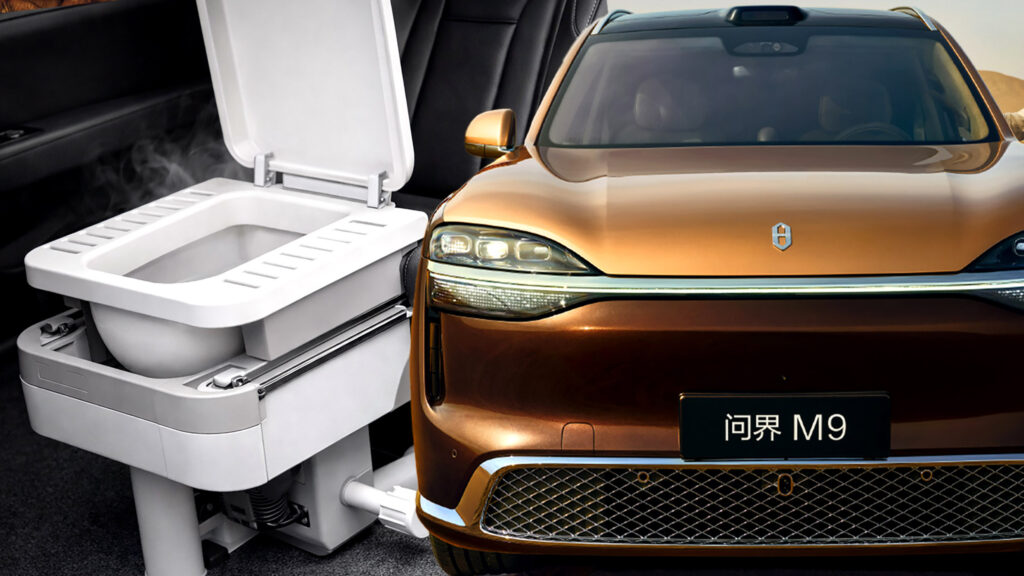
The Seres brand, owned by Aito, has filed a patent for a built-in toilet that hides under the passenger seat. It can be pulled out manually or activated by voice command, meaning your car can respond to phrases the cabin microphone was emotionally unprepared for.
Before anyone gets the reckless idea of setting a speed record, as the technology allows using the toilet at speeds of 240 km/h, it’s worth noting that this device is not intended for use while driving. It is designed for stationary moments: traffic jams that last an eternity, camping, overnight stops, or long queues at gas stations where everyone suddenly regrets that second cup of coffee.
Technical Features and Mechanism
According to local reports, the device uses a rail mechanism that allows it to slide out and in like a drawer. After use, it disappears back under the seat, utilizing space usually occupied by old receipts, lost children’s toys, and food crumbs.
Seres didn’t stop at the basic design. The patent reportedly includes a fan and exhaust system to vent unpleasant odors outside, where they become someone else’s problem. Waste goes into a removable tank that needs to be emptied manually.
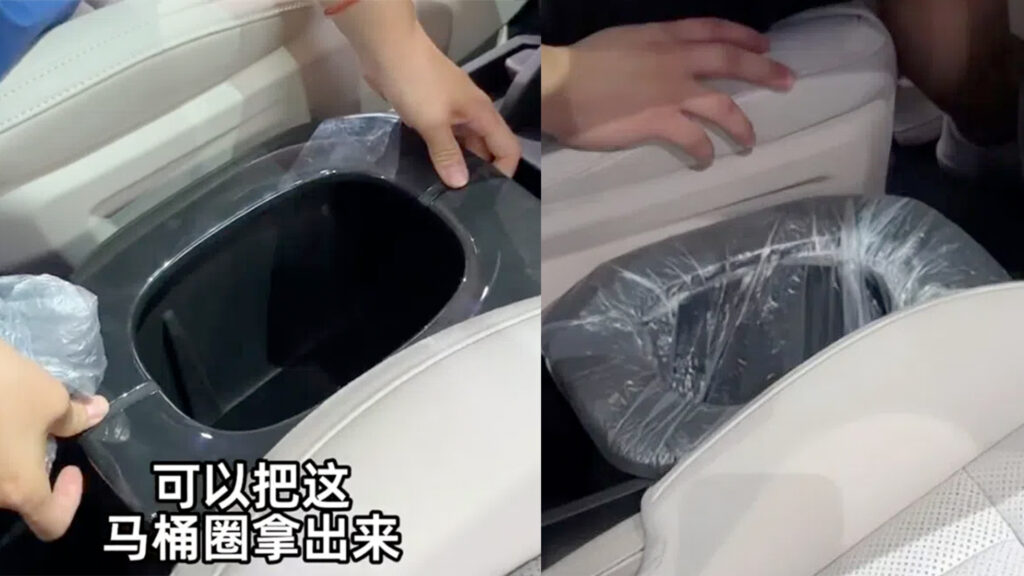
The system also has a heating element designed to dry solid waste and evaporate liquids. This sounds much more complex than the solution from another car brand, Polestones, which offered a plastic toilet seat attached to a compartment in the armrest and a trash bag as a container.
Why Has This Appeared?
The reason is that the Chinese domestic market is extremely competitive, and brands are trying to attract buyers with everything they can: massage seats, karaoke functions, built-in refrigerators, giant screens, recliner seats. If everyone is competing in entertainment, then perhaps sanitation is the next frontier for innovation.
Will the Invention Go into Mass Production?
The question of whether this system will appear in future versions of models, for example, the Seres 7 SUV, remains open. Many patents exist only to test ideas or protect them. Obvious obstacles are the need for plumbing, sealing, ensuring durability, as well as convincing passengers that using a restroom a few feet away from family or friends is completely normal.
While this idea sounds strange, there have been precedents in history. We have previously written about a Toyota 4Runner with a modified toilet, and last year the auction house RM Sotheby’s sold a 1954 Rolls-Royce with a body by Vignale and what was described in the catalog as a “gilded champagne-cooler toilet” under the rear seat. It seems these two functions should definitely not be confused.
Innovations in the automotive industry often focus on comfort and entertainment, but addressing basic physiological needs can open new niches, especially for markets with long journeys or limited access to infrastructure. Similar patents, even if they don’t become mass-produced, indicate a search for unique advantages in fierce competition. The implementation of such systems could significantly change perceptions of long car journeys, especially for families or people who frequently travel long distances. However, along with technical perfection, manufacturers will have to overcome significant psychological barriers of consumers regarding privacy and hygiene in the confined space of the cabin.