 by
by Mitsubishi confirms the return of the legendary SUV and plans for 13 new models
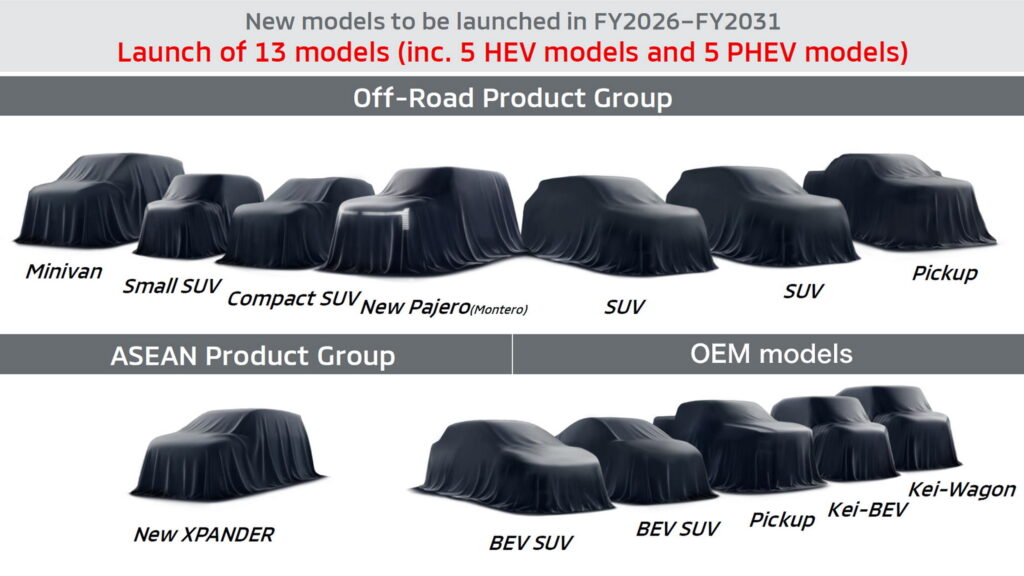
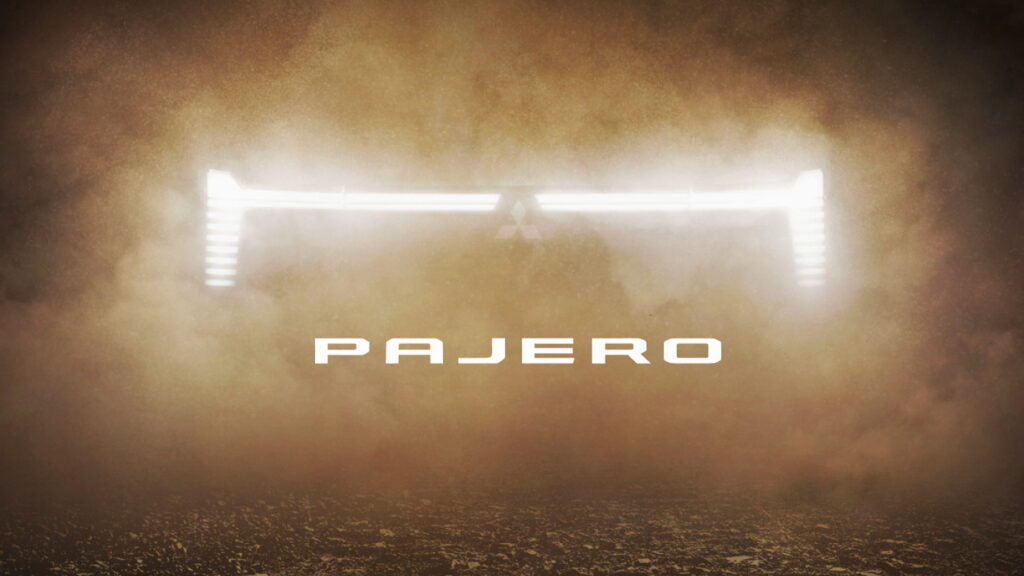
Mitsubishi has officially announced the revival of the Pajero model, previously known as the Montero in North American markets. The new SUV will become the flagship of the lineup, built on a ladder frame. This is just one of thirteen new vehicles the Japanese manufacturer plans to introduce over the next six years.
One key detail is that the Pajero name will be used for an entire family of vehicles. It will be led by a flagship SUV based on the Triton pickup. It will be joined by a compact SUV and a small model that could enter the kei car segment. The “Little Pajero” will look completely different from the existing Delica Mini, which is already considered one of the most “off-road” kei cars in Japan.
More about other models: This strange off-road minivan has been receiving updates for almost 19 years and is still selling out.
Also, as part of the so-called “off-road product group,” a new minivan will appear. It is likely to become the successor to the Delica D:5, which, although outdated, remains popular in Japan. This van has been in production since 2007 and has undergone two updates. Additionally, the company announced two more SUVs, details of which are still kept secret, as well as a pickup that will most likely be an updated version of the Triton.
New models for ASEAN markets and collaboration with other brands
For ASEAN markets, the company is preparing a new generation of the Xpander crossover-minivan. This hybrid model first appeared in 2017 and received an update in 2022.
More about collaboration: The new 400-horsepower compact Mitsubishi car will be produced at the same plant as the iPhone.
The other five new models will result from collaboration with other manufacturers. These include:
Two pickup projects with Nissan, possibly three
As for pickups, the presentation mentions a new “collaboration project with Nissan” for North America. A separate global pickup project is also being considered, again with Nissan, along with the updated Triton, which is likely already under development.
More about pickups: The new Mitsubishi Triton Raider got everything except the essentials.
It is worth clarifying this situation. The Australian version of the Nissan Navara is based on the current Mitsubishi Triton, while the electrified Nissan Frontier Pro uses the Chinese Dongfeng Z9. The latter could become the basis for a global project, as it is rumored to appear in Europe under the Navara brand and could just as easily get a Mitsubishi badge for markets with strict emission regulations.
Hybrids, plug-in hybrids, and electric vehicles
As for powertrains, Mitsubishi’s future largely depends on electrification. The company announced that five of the 13 future models will be conventional hybrids, and another five will be plug-in hybrids.
Since three models in the official teaser are designated as BEVs (electric vehicles), there is no room for non-electrified offerings. This is somewhat surprising, as it was believed the new Pajero would get a 2.4-liter turbo diesel from the Triton, although this engine could likely be equipped with a hybrid system.
More about affordable models: Mitsubishi is still selling a new all-wheel drive pickup for the price of an old Corolla.
Furthermore, Mitsubishi directly states that it is developing its own engines for PHEV/HEV, which have a world-class thermal efficiency of 48%. The company confirms that these engines will be used in all models, including those built on a ladder frame.
To counter the rapid releases of new competitors, the brand is using artificial intelligence and digital transformation to reduce development time by 20%. They plan to shorten this period from the current 45 months to 36 to bring these 13 models to market faster.
Such an aggressive model lineup renewal plan indicates Mitsubishi’s serious intentions to strengthen its position in the global market. The special emphasis on electrification and collaboration with Nissan points to a desire to optimize costs and accelerate the launch of new products. The revival of the Pajero name, which will now become an entire family, is a powerful marketing move designed to attract both long-time brand fans and new buyers looking for genuine off-road capabilities in a modern electrified package.