 by
by The Return of a Legend: The New Defender Trophy
Once upon a time, there was a motto: “Win on Sunday, sell on Monday.” It became the foundation of the entire motorsport world. However romantically manufacturers’ desire to spend enormous sums for the love of racing is described, the truth is that no financially responsible company would approve a project without substantial marketing support.
However, traditional circuit racing is not the only way to prove a car’s quality. The shine and glamour of the track are hard to ignore, and in the digital age, there are countless ways to create hype around any project. But before the advent of the Internet, everything was different. For Land Rover, a brand built on the idea of off-road capability, there were physical limitations to participating in motorsport.
Of course, there were rallies and the modern interpretation of the “Dakar.” But in the 90s, the British SUV manufacturer decided to go further. Since speed wasn’t a key metric for selling their SUVs, they created the ultimate endurance test — the Camel Trophy.
The Original Camel Trophy
Launched in 1980, the Camel Trophy was not a race in the traditional sense. It was an exhausting expedition where teams from different countries conquered extreme landscapes: jungles, swamps, deserts, and mountains, often in places with no infrastructure whatsoever.
The focus was not on speed, but on teamwork, navigation, vehicle recovery skills, and endurance. Participants would battle mud for weeks, cross rivers, and fix breakdowns. The locations were stunning: the Amazon rainforest, Borneo, Siberia, and Papua New Guinea.
The series left an indelible mark on automotive culture. The famous Sandglow Yellow color, applied to Series IIIs, Defenders, and Discoveries, is still used by enthusiasts paying homage to its legacy.
A New Era, A New Trophy
One could argue that after the Land Rover brand gave way to JLR’s “House of Brands” strategy (where former model names became separate brands, like Defender, Discovery, Range Rover), the company fell somewhat behind in competitive communication. Jaguar, even in its semi-active state, maintained intrigue through the Formula E program. But everything changed in 2026, when Land Rover returned to the “Dakar” and won its class on the first attempt.
More importantly, they revived the Defender Trophy, reimagining it for modern standards. The new version promises to restore the spirit of teamwork and endurance for a new era. Journalists were invited not just to watch, but to participate in a rehearsal of the real challenges awaiting competitors vying for a spot in the World Final.
The Anniversary Edition
As always, there needs to be a marketing justification, and that’s fine. To celebrate the series’ return, Defender released a special Trophy Edition. It’s more of a visual package, with the main feature being the return of the Deep Dayglow Yellow color. A Keswick green is also available.
Besides additional interior trim, a contrasting black hood, and wheels styled to look like steelies (though they are actually alloy), there are useful additions for off-roading: all-terrain tires with a full-size spare, massive mud flaps, additional trim pieces, and a very useful snorkel.
For most, this special edition has everything needed, but some would probably like to see more powerful equipment or an upgraded powertrain.
Impressions from the Trophy
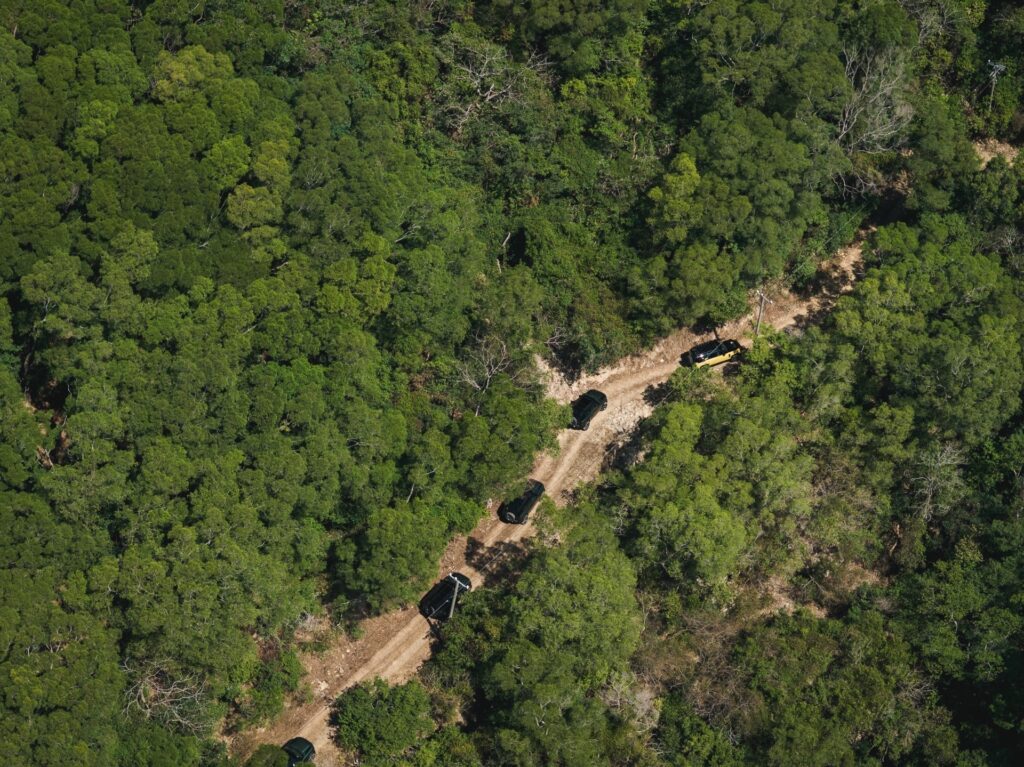
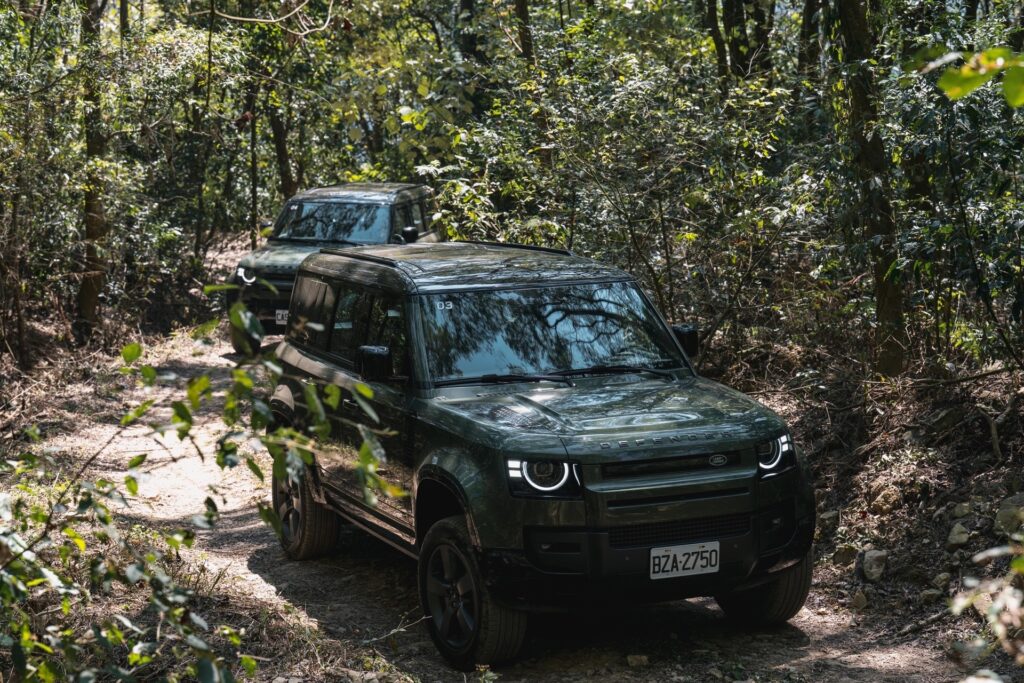
Journalists, of course, were offered a “safe” version of the challenges, with instructors ensuring no one got hurt. But the expedition through little-explored areas of Taiwan, which itself provides an incredibly beautiful backdrop, offered a great opportunity to test the Defender at its limits.
Besides the Trophy version, we also got to test the D250 and D350 models in X-Dynamic HSE specification. They use JLR’s 48-volt mild hybrid system paired with the inline-six cylinder turbocharged Ingenium engine.
Most time was spent behind the wheel of the D350 with its 350 hp and 700 Nm of torque. This made completing the tasks incredibly easy. At times it seemed the challenges were too simple: the low-end torque and Terrain Response system handled everything brilliantly — from the deepest mud to crossing sharp rocks at awkward angles. The air suspension absorbed every impact. It’s a good thing that for actual competitors, most electronic aids, including maps, are turned off.
The real challenge came from tasks requiring constant and clear communication with the team. One involved driving through a maze with a six-foot pole attached to the rear without hitting a single cone. Another was building a wooden bridge capable of holding the 2.6-ton Defender. It was risky but kept us sharp both physically and mentally.
Defender Trophy Overall
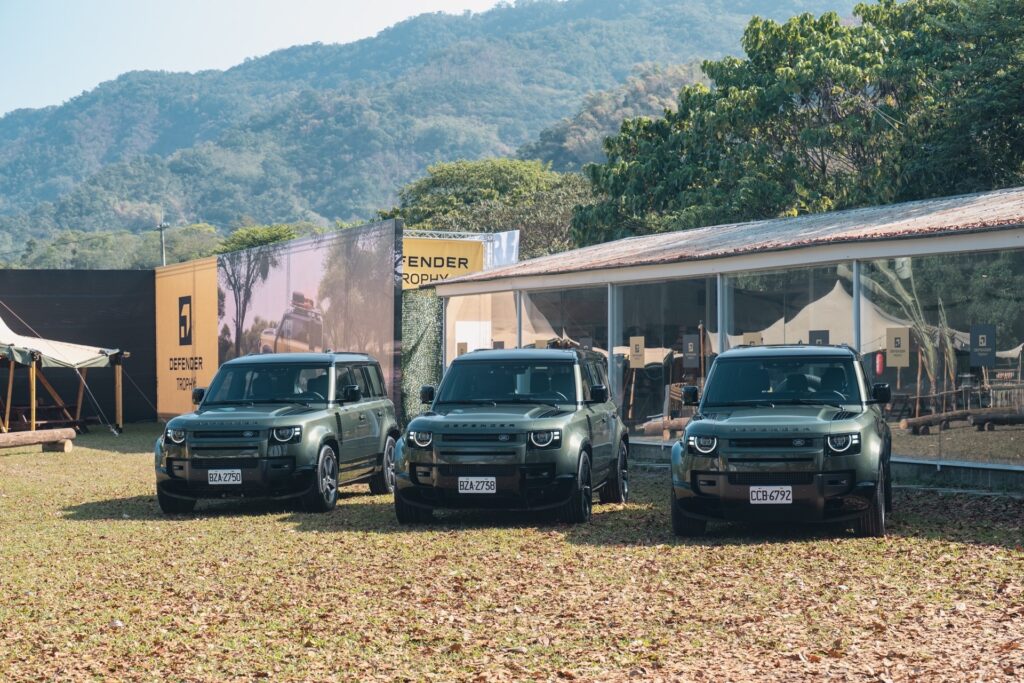
Was this experience similar to a journey through the Borneo jungle like in the 90s? Probably not. But the revived Defender Trophy offers a more realistic way to see how this vehicle can be used in the wild.
The Defender Trophy competition final will take place in South Africa later this year. National and regional qualifiers will determine who gets to participate in the ultimate test of man and machine. Despite the “win on Sunday, sell on Monday” philosophy being part of Defender’s Dakar strategy, their approach to the Defender Trophy is more niche.
It’s not a series that attracts large crowds of spectators and dominates headlines. The Defender Trophy is a branding tool of its own, but it goes beyond standard single-make series. Its goal is to create its own class of participants who are positioned not as superstars, but as genuine adventurers. However cynically one might want to view this, it is precisely the type of activity one would like to see from most automakers. It embodies the unconventional thinking JLR is known for. Does it make the product better or worse? Probably not. But it allows the Defender’s legacy to continue being shaped.
It’s worth noting that initiatives like the Defender Trophy are becoming increasingly rare in the automotive industry, which is increasingly focused on electrification and software. A return to the roots, to physical challenges and teamwork, could be a powerful way to strengthen brand loyalty among enthusiasts who value real adventures, not just technical specifications. It also serves as a reminder that the true value of an off-road vehicle is revealed not on asphalt, but where the road ends.