 by
by The Dacia brand is preparing to enter the electric vehicle market with a new compact model already undergoing road tests. The car is expected to go on sale this year, with a price tag of less than 18,000 euros.
Development Plan and First Model
At the end of last month, the company presented its development strategy until 2030, which envisions a decisive entry into the electric vehicle market. As part of this plan, four new electric models are to appear by the end of the decade. The first of these will be a compact A-segment hatchback developed on the Renault RGEV Small platform (also known as AmpR Small).
Interestingly, the development of this model took less than 16 months. Its price, which will be less than 18,000 euros, makes it a very attractive offer on the market.
Dacia Confirms Four New EVs, Including Model That Costs Around $21k
Design and Differences from Renault Twingo
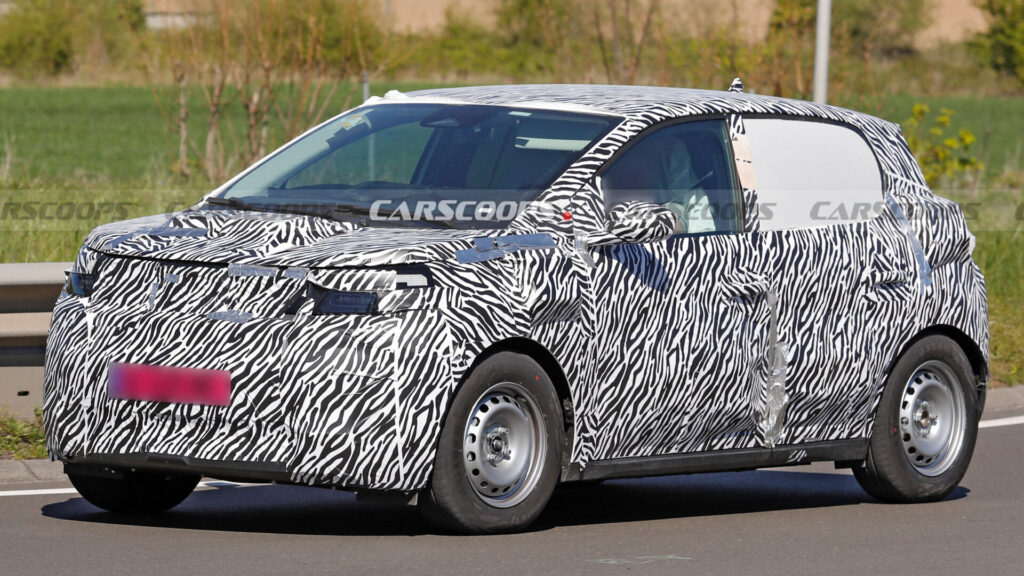
Despite the fact that the electric Dacia is based on the Renault Twingo E-Tech, it has received its own, unique design. In spy photos, the prototype is hidden under camouflage, but key differences are noticeable.
The front of the car has more traditional headlights than the Twingo, as well as a different bumper with a wide lower grille and sturdy body cladding. The side profiles are likely to remain similar, while the rear has changed more noticeably: new rear lights have appeared here, positioned higher than on the original model, as well as a unique bumper and, it seems, a more conventional trunk lid.

Interior and Practicality
The only available interior photo reveals few details, but it shows a floating multimedia system and a steering wheel with the Dacia logo. The car is expected, like the Twingo, to receive a 7-inch digital instrument cluster and a 10-inch central display.
The model will also inherit practical solutions, such as sliding rear seats with up to 170 mm of adjustment. This allows for flexible changes in the balance between passenger space and luggage compartment. Trunk volume can reach 360 liters, and with the rear seats folded, over 1000 liters.
Technical Specifications
The powertrain will most likely be borrowed from the Renault Twingo E-Tech. We are talking about an electric motor with 80 horsepower (60 kW) and 175 Nm of torque. Such a powertrain allows the Twingo to accelerate from 0 to 100 km/h in 12.1 seconds, with a top speed limited to 130 km/h.
To keep costs low, the car will receive a small 27.5 kWh lithium-iron-phosphate battery. According to the official WLTP cycle, a range of 263 kilometers should be sufficient for a city car.
The arrival of an affordable electric hatchback from Dacia could significantly enliven the market for inexpensive electric vehicles in Europe. The focus on practicality, familiar to the brand’s customers, combined with electric propulsion and an aggressive price, creates a very interesting product. The success of this model could be a signal to other manufacturers that affordable electrification is not the future, but already a reality. The key question remains whether a car with such a limited range can fully meet the needs of city dwellers, especially in conditions where public charging infrastructure is still not perfect.