 by
by New Hyundai Avante: Update for the Korean Market
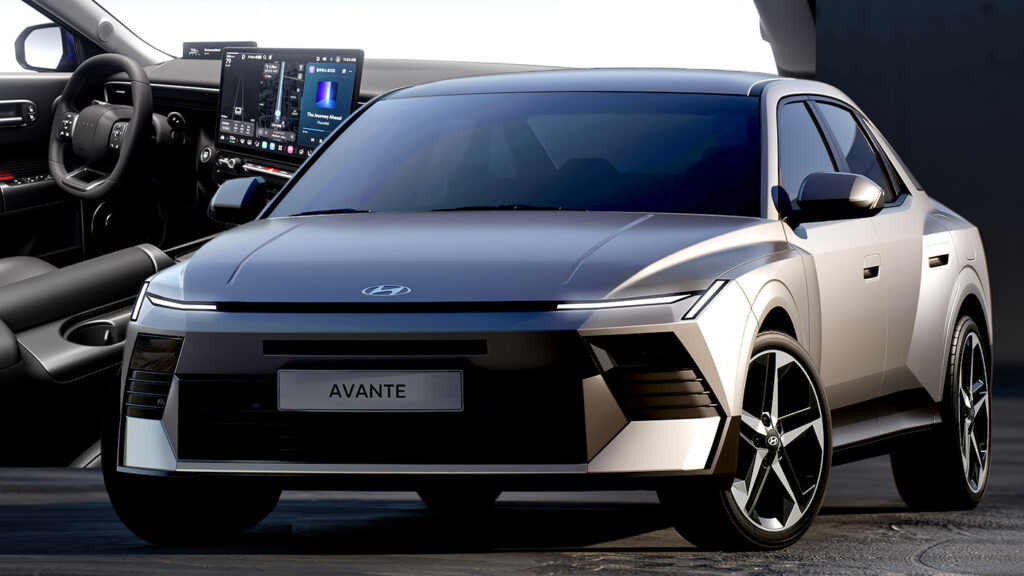
Hyundai has introduced the new generation of the Avante (known as the Elantra in North America) in the South Korean market. This is the eighth generation of the model, arriving six years after its predecessor. The compact sedan has grown in every dimension, received a sharper design, and a completely revamped interior with the latest technology, artificial intelligence, and safety systems. The gasoline and hybrid powertrains have also been updated.
Design and Exterior
The new Elantra is radically different from its predecessors. The “Art of Steel” design language gives the car a wider, more sporty stance. Sculptural fenders draw attention, while the front end splits the LED headlights into ultra-thin daytime running lights on top and the main blocks located in the bumper. The glass roof, borrowed from the flagship Grandeur, combines with muscular rear fenders and 18-inch wheels with a five-spoke design. At the rear, vertical and horizontal LEDs form an H-shaped pattern above a dual diffuser and a massive spoiler. Buyers are offered six new body colors and three interior options.
Bigger Dimensions and Spacious Interior
The new car has a length of 4,765 mm, a width of 1,855 mm, and a height of 1,425 mm, with a wheelbase of 2,750 mm. This makes it 55 mm longer and 30 mm wider than its predecessor, and the wheelbase has increased by an additional 30 mm. According to Hyundai, the extra space brings the interior volume closer to that of mid-size sedans.
Interior and Technology
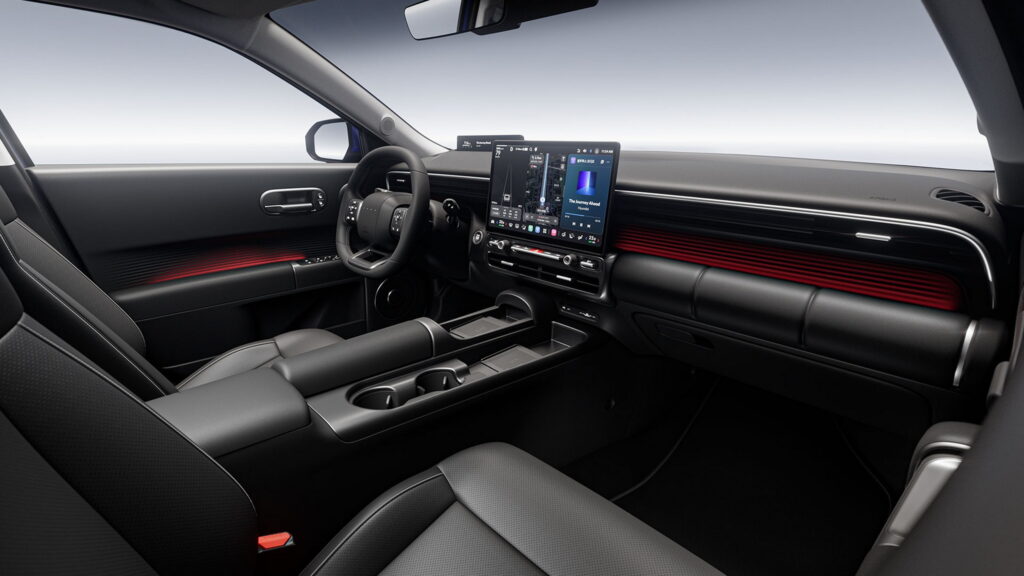
The cabin is inspired by furniture, with rounded shapes and soft materials. The central place is occupied by a 14.6-inch display, with a smaller 12.9-inch option available. Both run on the new Pleos Connect software and the “Gleo AI” generative AI assistant, already used in the flagship Grandeur. Despite similarities to Tesla and Chinese EVs, Hyundai retains physical buttons and controls beneath the screen. A small digital cluster is located near the windshield. Features include a Bang & Olufsen sound system, a built-in camera, dual wireless charging, and USB ports with 100W fast charging.
Safety and Driver Assistance Systems
The Avante is equipped with 10 airbags and a comprehensive ADAS suite, including a new navigation-based adaptive cruise control, reverse memory, remote parking assistant, SBW P-mode emergency braking, and a system to prevent accidental pedal pressing.
Powertrains
The Korean version of the Avante will be offered with two engines. The first is an updated 2.0-liter naturally aspirated gasoline engine producing 147 hp (26 hp more than its predecessor). The second is a self-charging hybrid with a more efficient 1.6-liter engine, a more powerful electric motor, and a larger battery, providing a total power output of 155 hp. The hybrid features the “Smart Regenerative Braking 3.0” system and the “Hybrid Hierarchical Predictive Control System,” which improves fuel efficiency through route prediction. There is also a “Stay Mode” that allows the climate control and multimedia system to operate while the car is stopped.
Future Versions and Availability
A new generation of the Elantra N is expected to arrive in time, with a more powerful engine, sportier looks, and sharper chassis. Rumors suggest it could get a turbocharged 2.5-liter engine, but there is no official confirmation yet. The new Hyundai Avante will likely appear at Korean dealerships later this year, followed by a gradual rollout to other markets. It is expected to arrive in North America as the 2027 Elantra. Reports also indicate the return of the Elantra to Europe after a long hiatus.
President and CEO of Hyundai Motor, Jose Munoz, stated: “The new Avante is a model that sets a new standard in its class, balancing impeccable design, interior space, safety, and digital experience.”
The new generation of the Avante demonstrates how Hyundai continues to evolve in the compact sedan segment despite the growing popularity of crossovers. The increase in size and the focus on technology, particularly the integration of artificial intelligence, indicate the company’s ambition to offer a more premium experience in this class. Preserving physical buttons in the era of touchscreen dominance could be an advantage for those who value convenience and safety of control. The updated powertrains, especially the hybrid version, are expected to deliver better fuel efficiency, which is a key factor for many buyers. The model’s return to the European market could be an interesting move, given the strict environmental regulations and preferences of local consumers.