 by
by A new look for a classic crossover
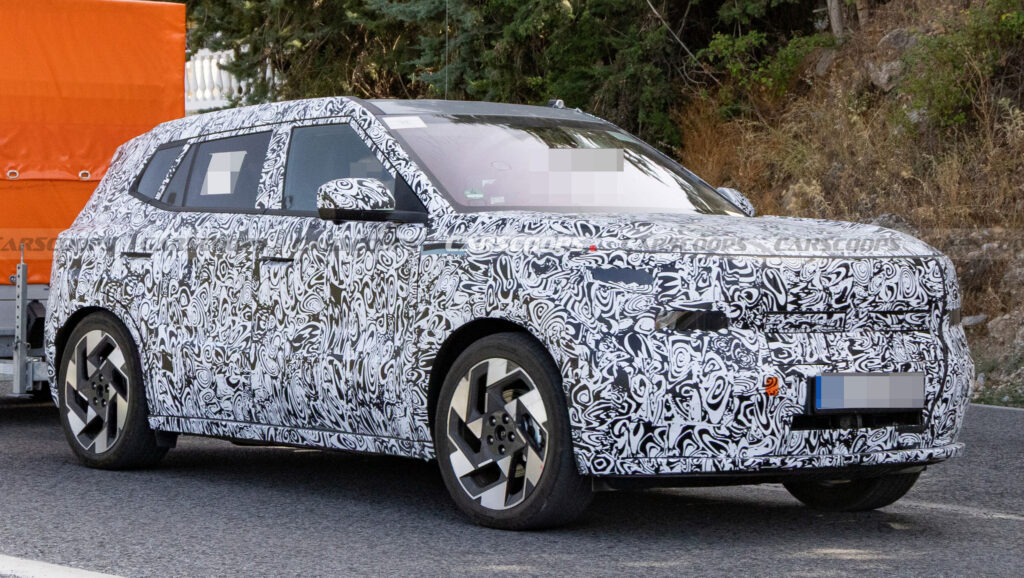
The new generation of the Hyundai Kona has already appeared in spy photos several times, but now the heavy masking has almost disappeared. It hid a real revolution: the model has been redesigned and now looks like a traditional crossover rather than an experimental hatchback. Designers made the front part smooth, with an upper zone shaped like a “shark nose” and a light strip integrated into the body. This strip is noticeably thicker than the seamless horizontal lamp, Seamless Horizon Lamp, seen on the current model.
Attention to detail at the front
Below are the headlights, shifted to the middle part of the bumper, and a radiator grille with active shutters. The latter have non-standard slats divided into several sections. A wide lower air intake and a prominent front spoiler complete the picture.
Overall, the prototype strongly resembles the image that appeared in July and showed the crossover without camouflage. However, it cannot be called an exact replica — there are several noticeable differences.
Profile and rear section
On the sides, flush-mounted door handles and a streamlined profile are visible. The beltline rises upward, making the glass area look relatively small. The roof has an angular shape, and the wheel rims are aerodynamically optimized. By the way, a passenger in the front seat decided to show the photographers the middle finger during the shoot.
The rear is designed to make you forget the predecessor’s awkward tail. It features a raked rear window, a developed spoiler, and a wider, more practical fifth door. The bumper has become rounded, and the exhaust pipe has been “hidden” from view.
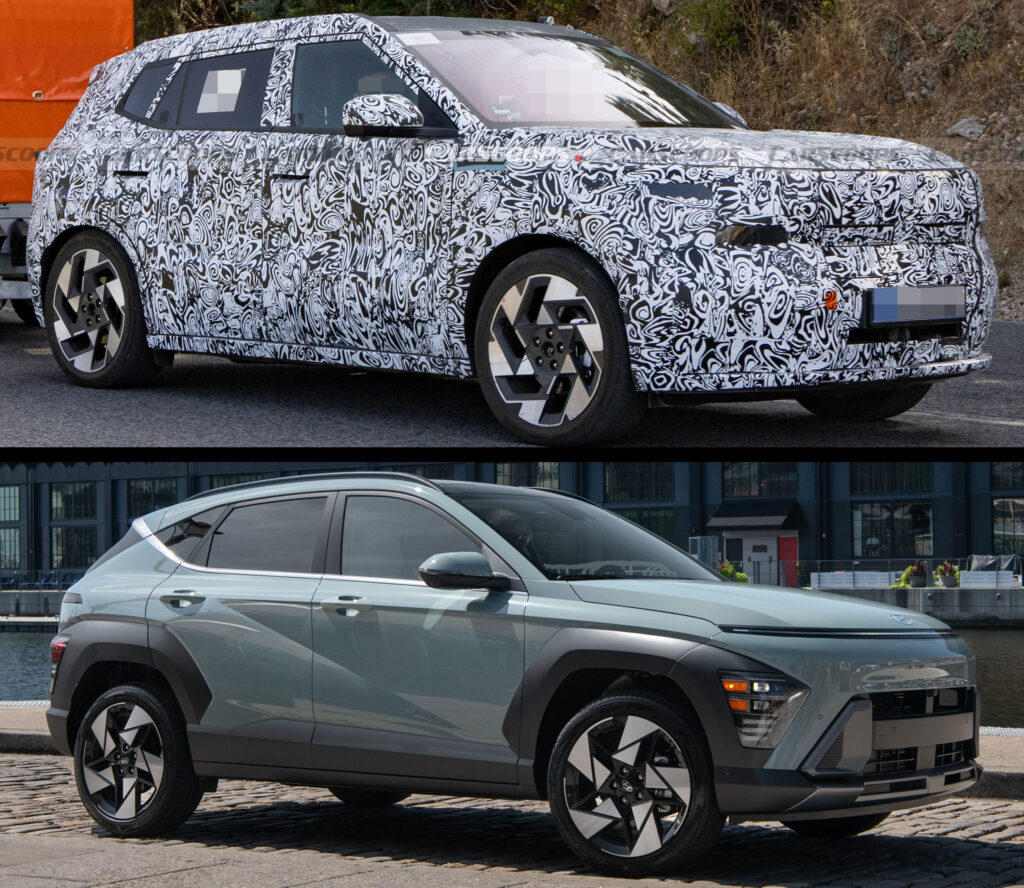
Photo: SHProshots / Hyundai
Interior: minimalism and modern technology
The interior still remains a mystery, but a minimalist finish with the new Pleos Connect multimedia system is expected. Details have not been disclosed, but one can assume the presence of a 12.9, 14.6, or 17-inch display.
Powertrains and hybrid potential
Under the hood of the new Kona, a turbocharged 1.6-liter four-cylinder engine will most likely take residence, the one used by the Kia Seltos of 2027. Its output is about 193 hp (142 kW) and 264 Nm of torque.
Because the Kona is increasingly becoming a technical twin of the Seltos, it is worth mentioning that Kia has already confirmed work on a hybrid version of the Seltos. Such a hybrid uses a 1.6-liter engine and a six-speed dual-clutch transmission instead of an eight-speed automatic. In Korea, this engine produces 104 hp (77 kW), and the electric motor adds another 43 hp (32 kW). Combined, this gives about 149 hp (110 kW). So a hybrid for the Kona is a very likely option.
Such a step indicates Hyundai’s desire to reach a wider audience: the Kona will no longer be a challenge to fans of futurism, but will become a practical everyday car. At the same time, the switch to hybrid technologies will allow the model to remain relevant in markets where requirements for efficiency and environmental friendliness are growing. Combined with a new interior and modern displays, this could make the Kona a serious competitor to models such as the Toyota C-HR, Nissan Qashqai, and Ford Puma. Therefore, Hyundai’s next step is to completely get rid of the camouflage and officially present the production version. There is not long to wait.