 by
by Mexico manufactures cars for many countries around the world, hosting factories of several of the planet’s largest automakers, yet almost no local brand has emerged from here. The new Olinia Uno aims to change that. As the first model of the first Mexican electric vehicle brand, it carries the burden of transforming the country’s mobility landscape.
Compact six-seat vehicle for the city
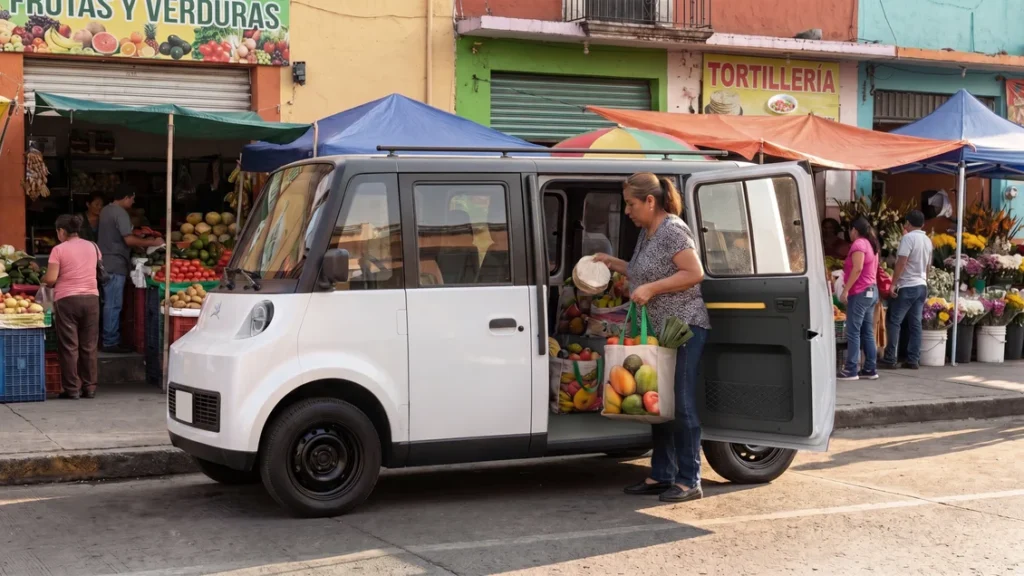
The Uno is a compact six-seat vehicle, designed in Mexico and, with support from the federal government, manufactured there as well. It does not attempt to compete with conventional consumer electric vehicles. Instead, it is positioned as a replacement for motorcycles and three-wheeled moto-taxis that flood the country’s streets.
Technical specifications and purpose
Rather than being aimed at long-distance trips and travel, the Uno is much better suited for short-distance taxi services. It is equipped with a tiny 14.7 kWh LiFePO4 battery pack powering a single electric motor outputting just 17 hp (13 kW). Should any driver dare to hit the accelerator, the top speed will be only 50 km/h.
Cost-efficiency in operation
Affordability is expected to be a key advantage of this vehicle. The Uno starts at 150,000 pesos, which is just under $8,600 USD. Olinia claims that while a conventional internal combustion engine taxi can cost up to 2.4 pesos ($0.14) per kilometer, and a moto-taxi up to 1.18 pesos ($0.07) per kilometer, the Uno will cost only 0.50 pesos ($0.03) per kilometer. When plugged into a standard 220 V household outlet, it charges in roughly four hours, making it ideal for overnight charging to be ready by morning. The range is limited to 100 km.
Today we present Olinia, an electric vehicle created by Mexican youth.
Convenience and accessibility
According to Olinia, this vehicle is perfect for “short group trips, frequent stops, people getting on and off with bags, children, and the elderly.” It features numerous grab handles inside and outside, and thanks to rear doors that open against the direction of travel (suicide doors), it can accommodate even a person in a wheelchair without the need for modifications.
Mexican President Claudia Sheinbaum brought the Uno prototype onto the stage during the car’s world premiere at the Santa Lucía military base. The design is certainly not one that inspires awe, but at least it looks functional.
This step is important not only for Mexico’s automotive industry but also for its environmental policy. Replacing old taxis and moto-taxis with electric alternatives could significantly reduce air pollution levels in cities. Although the Uno’s specifications may seem modest compared to global electric vehicles, its price and operating costs make it extremely attractive for a developing market. The success of this project could serve as a catalyst for creating other local brands and stimulate the development of electric vehicle infrastructure in a region where affordability and practicality often outweigh technological innovation.